Posted by bheidmous on Thursday, September 15th, 2011 , Posted in Past IDEAS , Comments Off
October 18 – November 7, 2011, Coburn Gallery
Presented in collaboration with Benet Hill Monastery, this exhibition comprises seventeen illuminations from the St. John’s Bible.
St John's Bible
This Bible is a special project celebrating the 150th anniversary of the Benedictine monks of St. John’s Abbey in Collegeville, MN. It is the first complete handwritten and illuminated Bible to be produced since the 15th Century. The scribing and illuminations were created using a unique combination of centuries-old tradition of craftsmanship with the latest capabilities of computer technology under the direction of Donald Jackson, one of the world’s foremost calligraphers. Sponsored by Paul Frederick Sheffer Memorial Fund for Roman Catholic Studies and the Colorado College Department of Religion.
Exhibition Events:
Wednesday, October 19, 6pm, Opening Reception at Coburn Gallery; 7pm Lecture by James Cutsinger, Professor of Theology and Religious Thought, University of South Carolina. WES Room, Worner Center on the CC campus.
Thursday, November 3, 7pm, Lecture by Michael Patella, O.S.B, Chair of Committee on Illuminations and Text, Member of Saint John’s Abbey and University. WES Room, Worner Center on the CC campus.
Posted by bheidmous on Friday, June 17th, 2011 , Posted in Past IDEAS , Comments Off
September 8, 2011
Canadys Station coal fired electricity generator
- Thursday, September 8, 12:15pm Lunch and Lecture: The Legacy of Ludlow and the Colorado Coal Field War, by Dean Saitta, Professor of Anthropology, University of Denver and reading from Ludlow by author Dave Mason Gaylord Hall, $15. Reservations required: 719-389-6606 or idea@coloradocollege.edu
- Thursday, September 8, 4:30pm, Edith Kinney Gaylord Cornerstone Arts Center Film Screening Room, Lecture by J Henry Fair, “The Power to Change.” Free.
Posted by bheidmous on Friday, June 17th, 2011 , Posted in Past IDEAS , Comments Off
September 6 – 28, 2011, Coburn Gallery
The conditions in the coal mines of early 20th century Colorado were notoriously bad, with Colorado ranking second in the nation between 1884-1912 for coal miner deaths. This exhibit will explore the history of the Colorado Coal Strike of 1913-1914 and the archaeological data produced from the excavations at Berwind and the Ludlow Tent Colony, while also attempting to contextualize these historical events in the realm of the contemporary energy industry.
Refugee Mother and child in Trinidad c 1914
The conditions in the coal mines of early 20th century Colorado were notoriously bad: Colorado ranked second in the nation between 1884-1912 for coal miner deaths. In September 1913, with the help of the United Mine Workers of America, coal miners along the eastern slope struck, left coal company towns, and established striker tent colonies along the eastern slope of the Rocky Mountains. The largest of these tent colonies, Ludlow, was established approximately 20 miles west of Trinidad. Seven months after the beginning of the strike, April 20, 1914, violence broke out between National Guard Troops stationed in the area and members of the Ludlow Tent Colony, resulting in the burning of the striker camp and 20 deaths. This event became known as the Ludlow Massacre and attracted increased national interest in the conditions of the coal miners and their families in Colorado. In 1997, archaeologists began a five-year investigation of the Ludlow Tent Colony site and the town of Berwind. Culminating in Colorado Coalfield War Project, the research produced both historical and archaeological data that helped illuminate the lives of the coal miners and their families before, during, and after the strike of 1913-1914. This exhibit will explore the history of the Colorado Coal Strike of 1913-1914 and the archaeological data produced from the excavations and contextualize these historical events in the realm of the contemporary energy industry.
Posted by bheidmous on Friday, June 17th, 2011 , Posted in Past IDEAS , Comments Off
Summer Dates: June 6 – July 15, 2011
Fall Dates: September 6 – 17
IDEA Space is closed from July 16 – September 5
Artist and an environmental advocate J Henry Fair creates large-format photographs of sites of environmental degradation that simultaneously seduce us with their extraordinary beauty and horrify us with their content. Shooting from airplanes or helicopters, Fair captures images of the pollution generated by paper mills, fertilizer factories, power plants, coal mining operations, and oil companies.
Waste Ash at Coal Fired Electrical Plant
J Henry Fair’s large-format photographs of sites of environmental degradation simultaneously seduce us with their extraordinary beauty and horrify us with their content. Shooting from airplanes or helicopters, Fair captures images of the pollution generated by paper mills, fertilizer factories, power plants, coal mining operations, and oil companies. To compel the viewer to consider the true cost of resource extraction and industrialization, Fair’s Industrial Scars are lyrically beautiful, featuring dynamic compositions and saturated colors that evoke Abstract Expressionist paintings. Occupying dual roles as artist and environmental advocate, Fair seeks to create “an aesthetic look at some of our most egregious injuries to the system that sustains us in hopes that the viewer will come away with an innate understanding of his or her complicity and a will to make a difference.”
Coal Slurry
J Henry Fair’s photographs have been featured in segments on the TODAY Show, CNN, FOX News, and WDR German TV, as well as in most major publications, including ArtNews, National Geographic, TIME, New York Magazine, Harper’s Magazine, and GQ. He has participated in group and solo exhibitions at major museums, galleries, and educational institutions around the world. In addition to his artistic practice, Fair supports a number of environmental organizations that share his commitment to changing destructive consumer habits and effecting positive change in our environment. He is co-founder of the Wolf Conservation Center in South Salem, NY, an organization that is dedicated to the protection of and education about the world’s wolf population. He is a regular contributor to NRDC’s OnEarth Magazine and blogs regularly about art and the environment. His book, The Day After Tomorrow: Images of Our Earth in Crisis was released in 2010.
Industrial Scars is made possible by support from the President’s Circle and the Colorado College Cultural Attractions Fund
Posted by bheidmous on Tuesday, February 8th, 2011 , Posted in Past IDEAS , Comments Off
IDEA Cabaret: The World is Our Canvas The Post-Studio Practice of Harrell Fletcher, Kirsten Gerdes Stoltz & Richard Saxton
Wednesday, February 23, 4:30pm, Cornerstone Arts Center Film Screening Room
Loosely defined, post-studio practice examines what happens when you take art out of the studio and into an unpredictable world. Through arts projects that are embedded within specific social, physical, or natural spaces, these artists explore the question of where, exactly, we locate the experience of creating and understanding art.
Posted by bheidmous on Thursday, January 20th, 2011 , Posted in Past IDEAS , Comments Off
Chinese Calligraphy Exhibition
February 24 – March 11, 2011, Coburn Gallery
Thursday, February 24, 4:30pm: Reception & Talk by Tamara Bentley
This exhibition features traditional Chinese calligraphy created by students in the United States and China.
Posted by bheidmous on Thursday, December 16th, 2010 , Posted in Past IDEAS , Comments Off

January 28-March 5, 2011
IDEA Space
Edith Kinney Gaylord Cornerstone Arts Center
Note: Closing reception and artist talk March 3, 4:30pm at IDEA Space.
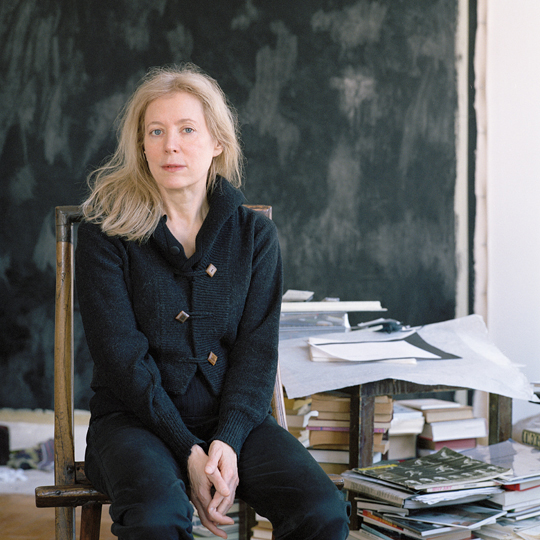
In this new series of photographs, JoAnn Verburg investigates how the intersections of memory and perspective contribute to a sense of place. Focusing on specific human and architectural subjects, Interruptions creates a visual and psychological “portrait” of Spoleto, Italy, an ancient Umbrian city where Verburg and her husband, poet Jim Moore, live part-time. Verburg has exhibited her work extensively in the United States and abroad and was the subject of a mid-career retrospective at The Museum of Modern Art in 2007.
Over the course of many years, Verburg has explored and photographed her adopted home of Spoleto, carefully selecting and frames specific views of the city, such as its steeply angled buildings, hidden courtyards, and narrow passageways. By subtly manipulating elements of focus and perspective, Verburg emphasizes the subjective nature of perception. In an essay on her recent work, Walter Liedtke, Curator of European Paintings at The Metropolitan Museum of Art, New York has observed, “Verburg has learned that all observation, including the seemingly most objective, is always subjective, selective, slanted, focused, blurred, disconnected, or somehow interrupted.”
JoAnn Verburg received a BA in sociology from Ohio Wesleyan University and an MFA in Photography from the Rochester Institute of Technology. She has held teaching positions at Yale University and the Minneapolis College of Art and Design and is the recipient of numerous honors including: a Guggenheim Fellowship (1986); multiple artist fellowships from the Bush Foundation (1983, 1993) and the McKnight Foundation (1994, 2004); and a Rockefeller Foundation Residency at the Bellagio Conference and Study Center, Bellagio, Italy (1998). She has exhibited her work extensively in the United States and internationally. In 2007, The Museum of Modern Art mounted “Present Tense,” a mid-career retrospective that traveled to the Walker Art Center. The series that comprises Interruptions has been exhibited at the Gibbes Museum of Art in Charleston, South Carolina (2010) and at Pace/Magill Gallery, New York (2009).
Verburg’s work has also been featured in numerous group exhibitions and can be found in permanent collections including the Los Angeles County Museum of Art; the Museum of Fine Arts, Houston; The Museum of Modern Art, New York; the National Portrait Gallery, Washington, D.C.; the San Francisco Museum of Modern Art; and the Whitney Museum of American Art, New York. Her photographs have been published in “Second View: The Rephotographic Survey Project” (1984), “Picturing Eden” (2006), and “Present Tense: Photographs by JoAnn Verburg” (2007).
On Thursday, March 3 beginning at 4:30pm, the public is invited to revisit the exhibition for an IDEA Cabaret event, A Conversation through Space & Time. To mark the closing of the exhibition, JoAnn Verburg and Colorado College professors Peggy Berg (Dance) and Jonathan Lee (Philosophy) will engage in a lively discussion of the themes raised by the exhibition Interruptions.
Posted by bheidmous on Wednesday, December 15th, 2010 , Posted in Past IDEAS , Comments Off

In an era of Photoshop and digital mash-ups, the casual viewer might be forgiven for thinking that David Armstrong’s surreal images are computer-generated. Armstrong’s seamless collages are created the old-fashioned way – with scissors, a steady hand, and infinite patience. The exhibition features images and text from Armstrong’s publication, The Burden of the Beholder, created at the CC Press, and featuring poetry from nineteen nationally-recognized writers. On Wednesday, January 26, 4:30pm Coburn Gallery will host an opening reception featuring a gallery talk by David Armstrong and poetry readings by authors featured in the publication. The reception is free and open to the public.
Posted by bheidmous on Wednesday, December 1st, 2010 , Posted in Past IDEAS , Comments Off
Harrell Fletcher: Corentine's Turtle
Read More »
Posted by bheidmous on Saturday, November 20th, 2010 , Posted in Past IDEAS , Comments Off

IDEA Cabaret: A Conversation through Space & Time
Thursday, March 3, 4:30pm, IDEA Space
Featured artist JoAnn Verburg and Colorado College professors Peggy Berg
(Dance) and Jonathan Lee (Philosophy) will engage in a lively, public discussion of
the themes raised by the exhibition Interruptions. How do we truly come to know a
place? How does physical awareness of a place affect our perceptions?