By Marissa Banuelos
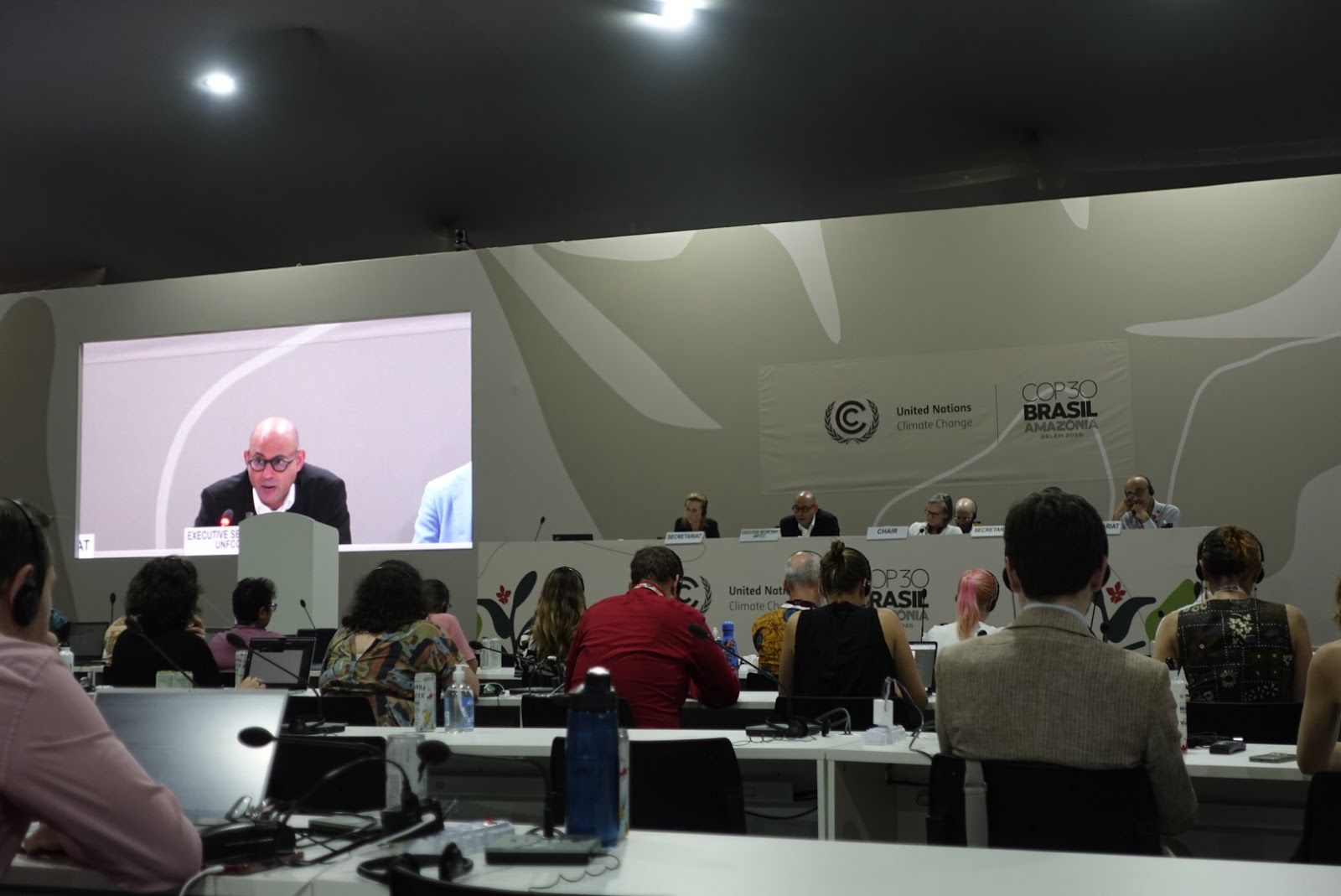
On Tuesday November 18th, the Executive Secretary Townhall Meeting with Observer Organizations, the civil-society component of UNFCCC, was held. These town hall meetings are a place where observers can ask questions about negotiations, make suggestions, and comment on the process to Executive Secretary Simon Stiel himself.
Constituencies are bodies of observer-organizations with similar interests. Below is a list of constituencies and their associated acronyms:
BINGO: Business and Industry non-governmental organizations (NGOs)
ENGO: Environmental NGOs
IPO: Farmers, Indigenous Peoples Organizations
LGMA: Local Government and Municipal Authorities
RINGO: Research and Independent NGOs
TUNGO: Trade Union NGOs
WGC: Women and Gender
YOUNG: Youth NGOs
There was one concern that took center stage: frustrations over the “militarization of COP30.” For many, COP30 was seen as a breath of fresh air for civil actions. The 3 previous COPs were held in authoritarian governments that didn’t allow civil actions outside of the venue. Various constituencies stated they felt their freedom to express themselves was squandered by excessive military presence.
On Tuesday November 11th, Indigenous and non-Indigenous protestors breached security and entered the venue. In reaction, Stiel wrote a letter to the COP30 President Ambassador André Corrêa do Lago calling for increased security. This letter was leaked and led to constituencies blaming Steil for the “militarization of COP” at the town hall.
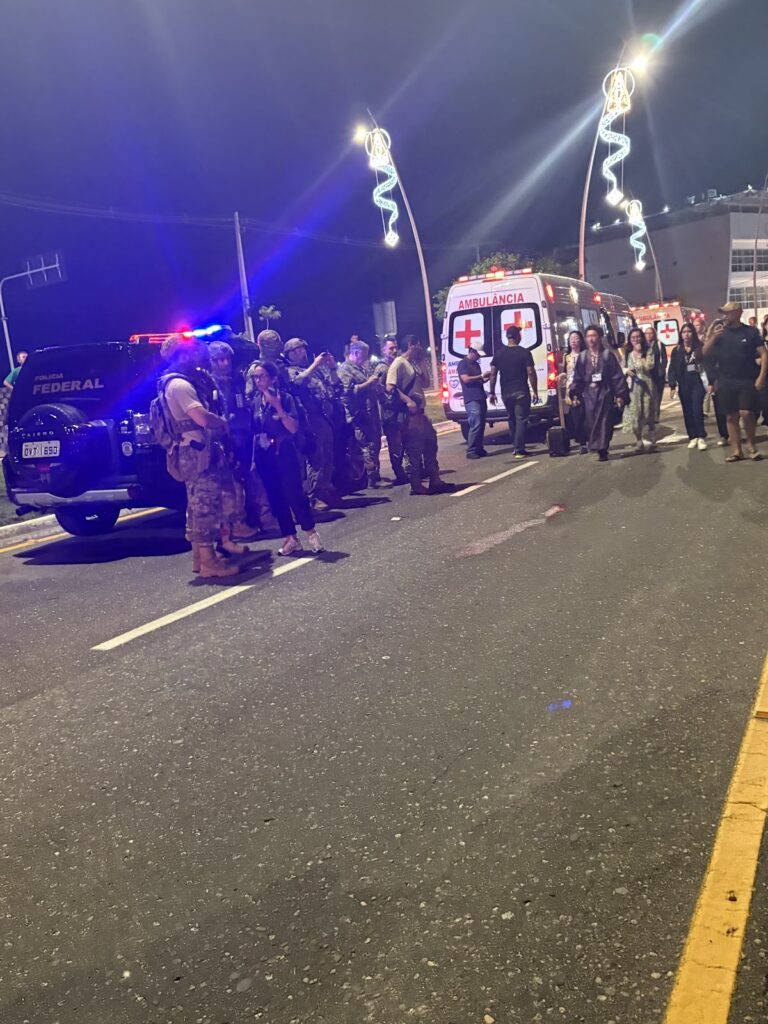
On the evening of the protest I was meant to meet my classmate Noah Furseth at the exit to grab dinner. Instead, I stumbled upon a huge commotion at the exit. I found myself in a flustered swarm of people being directed one way, then another, until we were finally directed to exit the venue.
I plugged in my dead phone to make sure I could contact someone if I needed to. There was no air of urgency. I watched as swaths of people left the venue, in what seemed to be a mood of indifference. When my phone turned on I saw texts with alarm emojis urging evacuation of the venue from some of the COP WhatsApp chats I was in. The contrasted urgency of the text and calm demeanor of delegates was perplexing. It didn’t feel dangerous or even urgent. Outside the venue, I saw 3 ambulances and many police cars. I watched as one delegate took a selfie with the vehicles.
The seriousness of the situation was uncertain. Some media outlets covered the protest as a disturbing and violent protest, some not so much, and others celebrated the fact that a disruptive civil action finally happened in the UNFCCC.
Still, the event made me question my assumption of COPs being implicitly safe. If these protesters could make it in, who else might be able to? What if a shooter had made it in? Coming from the US, the threat of public shootings is not something ever far from my mind.
I was not only questioning the safety but also the evacuation procedures. Without alarms, evacuation was urged by text and word of mouth. What if there were a fire? Havalin, my classmate and I pondered this together after her arrival late that night.
My question would be answered all too soon. On Thursday, November 20th there was a fire. In the absence of alarms, we were evacuated by word of mouth; luckily no one was injured. The fire, though, is another story I won’t delve into here.
Regarding the protest, part of me was glad that Indigenous people had made it in; they made a ruckus, and even though it may not have been portrayed well in the media, their presence and demands to be considered touched me. Protesters demanded that their lived experiences of climate change and the extractivist industries causing the crisis be considered in negotiations.
In the best of situations, their presence would have touched negotiators. I don’t think the action had the intended impact. This year’s outcomes, while not passed yet, seem to be removing human rights language from negotiated texts, let alone protection of Indigenous rights.
The following Friday, Indigenous people held a peaceful protest. The entrance was blocked and military guards abounded. Since then, military presence outside the venue has been stark.
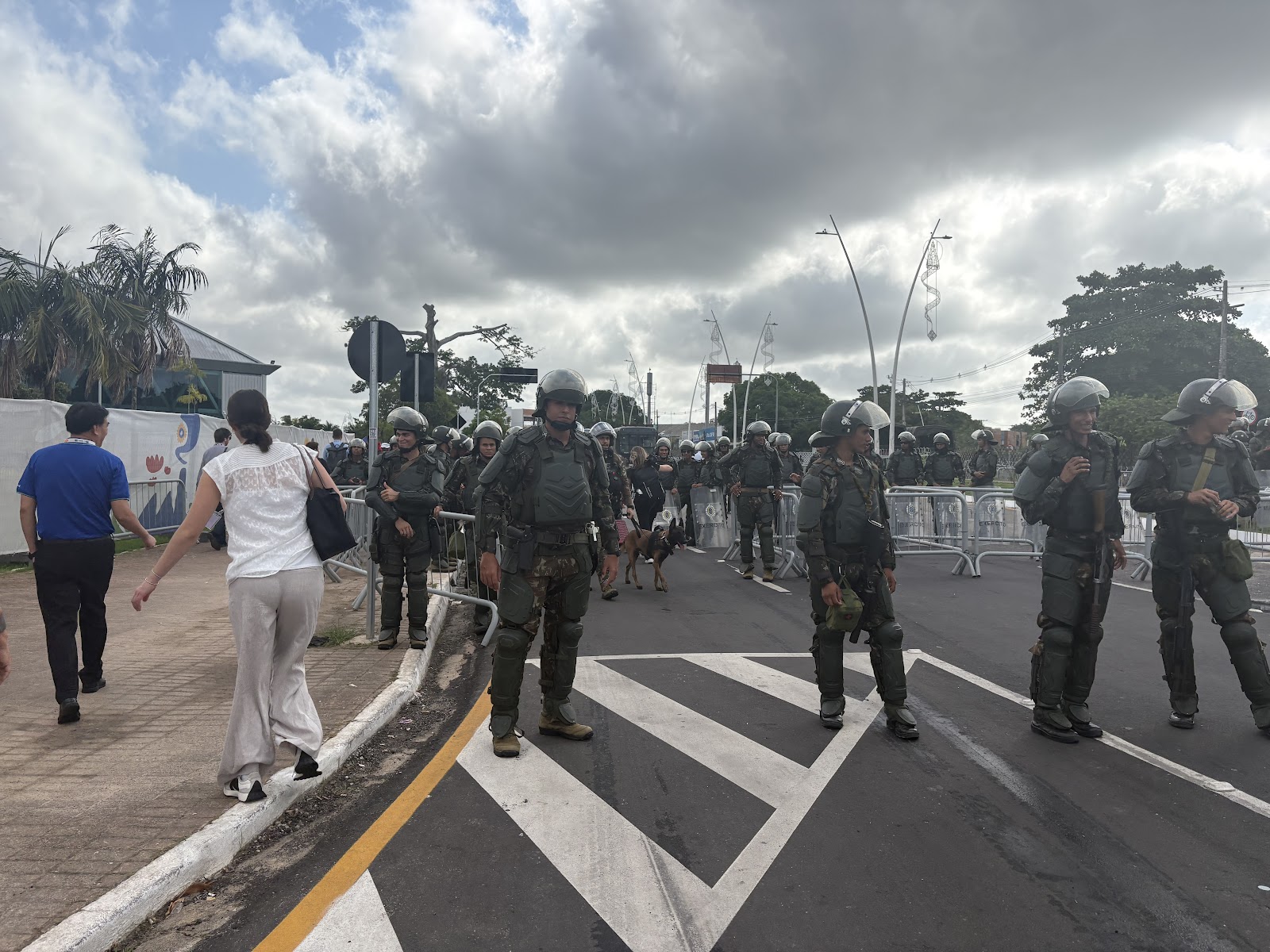
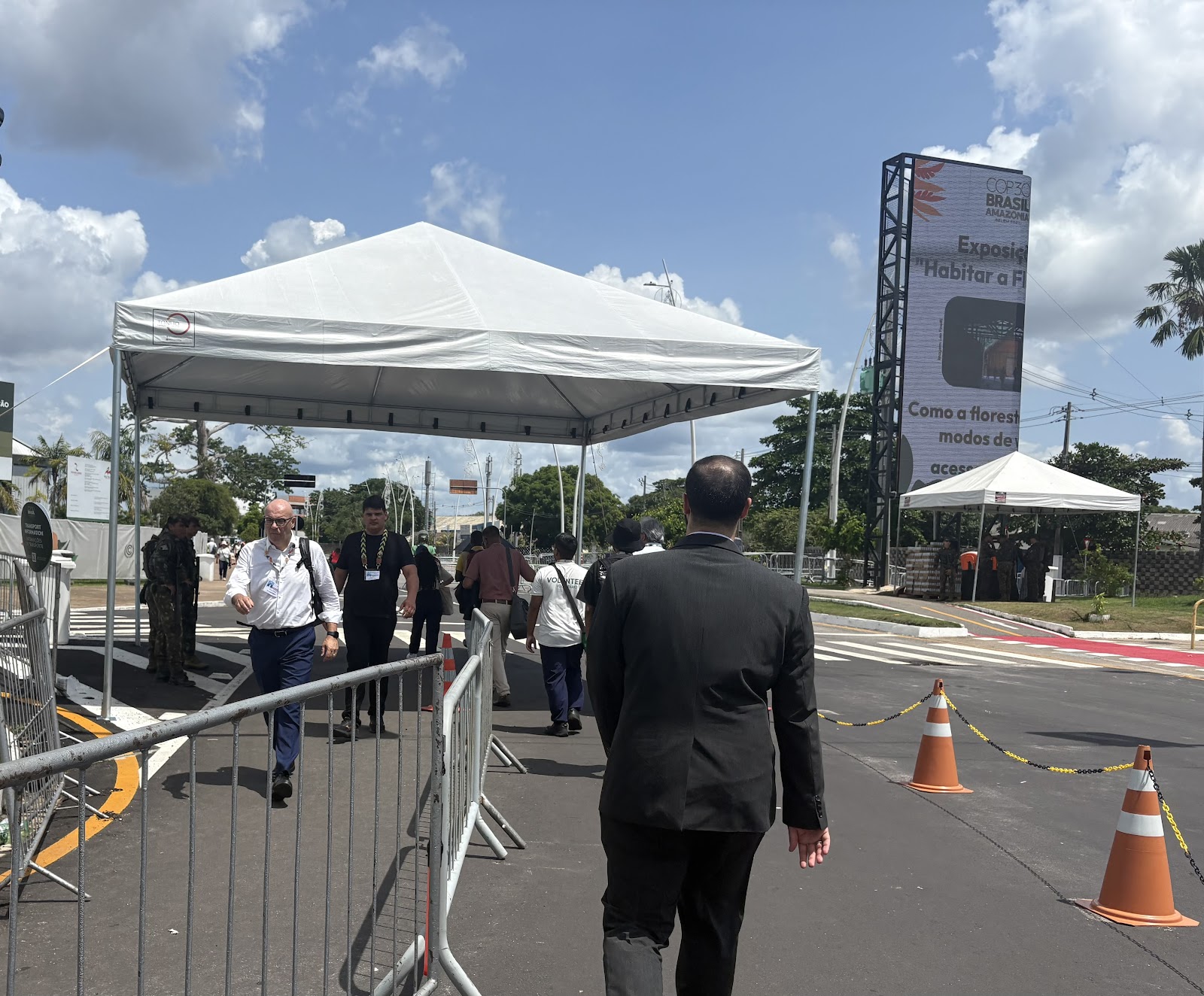
The largest display of military presence was on the day Brazilian President Lula came to the venue. Two days later, there was a huge dial-back of military presence. This could be in part because of what unfolded in the town hall or the fact that the anticipated high level people had already come and gone.
Returning finally to the town hall, the session began with unsuspecting and warm remarks from Simon Steil. He recognized and praised the energy, constructive engagement, and direct and indirect impact that observers bring to the UNFCCC processes. He then shared the status of negotiations before opening the floor to observers.
Before opening comments to individual observers, the nine constituencies of the UNFCCC got a chance to speak. The town hall observer’s remarks began with BINGO. They asked pointed questions related to COP processes and outcomes.
Then, Rashita, on behalf of ENGO took the floor and rather than posing questions, offered a statement with a “profound sense of disbelief and anger.” In a somewhat patronizing manner, she said, “Maybe you don’t remember the UNFCCC was established in 1992 in this very country.” She began speaking to the lack of progress but more poignantly claimed that “this power [of the UNFCCC] is actively silencing people… the UNFCCC had been a source of violence, oppression, and the misuse of power.”
Rashita was referring to what seemed to be an excessive military presence following the Indigenous Peoples’ protest on Tuesday evening. “Overnight there was more intimidation.” Fences had been put up, and tanks and military presence were vastly scaled up.
ENGO’s position argued that this silences Indigenous peoples, and those who are the most vulnerable. Further, “silencing their voices goes against everything this process stands for.” The militarization outside the venue does not allow civil society to organize outside of COP; it is “wrong and profoundly disheartening.”
She shared that ENGO had written a letter signed by 225 observer organizations for Stiel in his response to his aforementioned letter to Corrêa do Lago. This letter also included concerns over the heat and flooding inside the venue during the first week.
“We want to raise objections to whose comfort you are working for.”
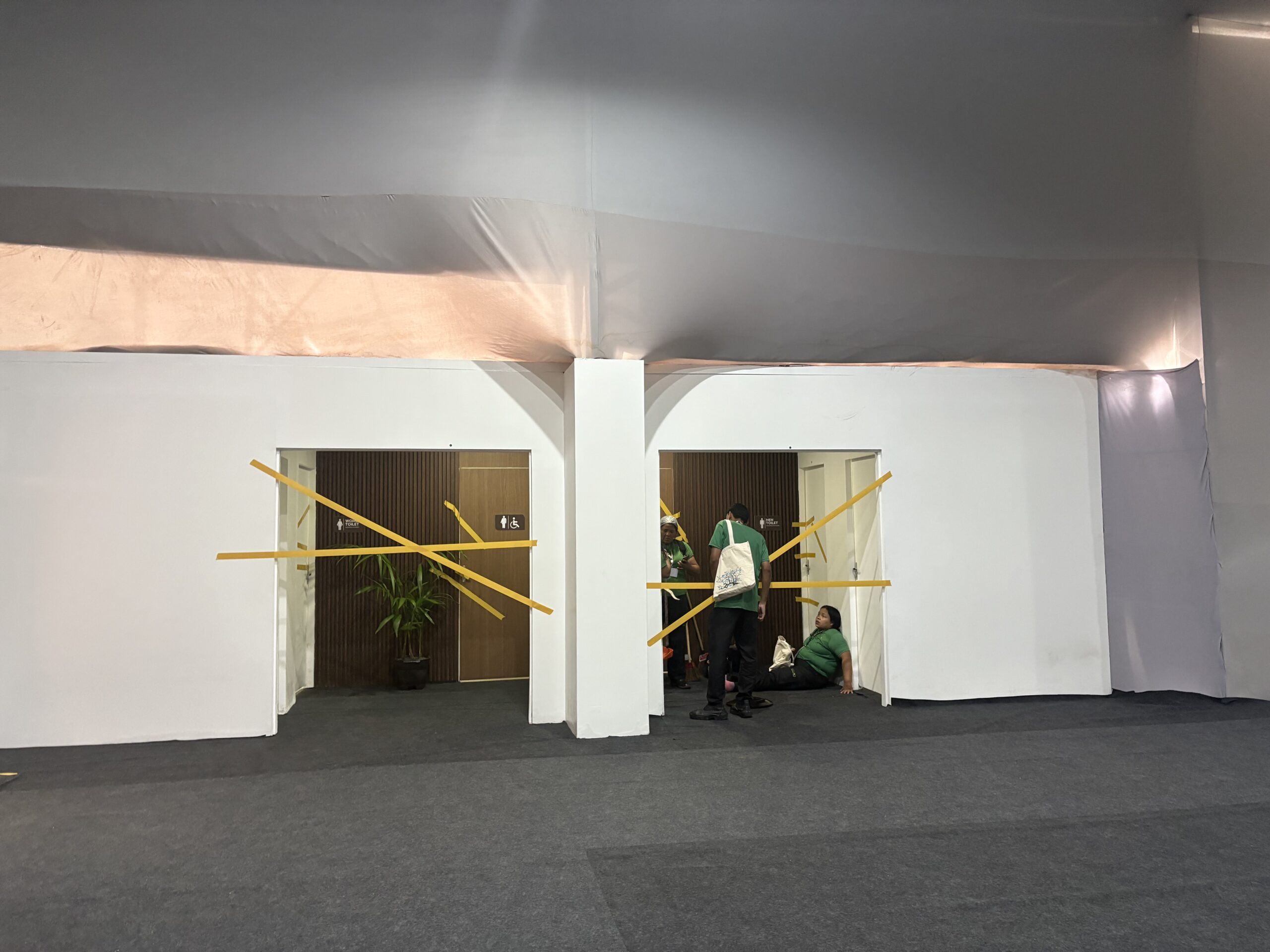
“In your letter, you mentioned thefloods at the venue but people are facing the real floods in countries that are most impacted and we are supposed to be here on their behalf… Frontline communities are living in life-threatening floods, and climate impacts. They don’t have the privilege to complain to the presidency.”
ENGO added that the 1600 fossil fuel lobbyists and 532 Carbon Capture and Storage lobbyists present combined with the militarization of COP culminated not in “a procedural failure but a failure of legitimacy.” Despite such failure, Rashita added, 70,00 people marched (at the Saturday “People’s March,” the first open march since Glasgow in 2021) in Belém and “will not be intimidated.”
ENGO’s claim was loud and clear: We are supposed to be here representing the most vulnerable. COP is supposed to be a place where expression through actions is protected by the UNFCCC and the militarization that immediately followed Steil’s letter to the Presidency obstructed their ability to do so. Meanwhile, it sent a clear message about whose comfort is important.
Rashita finished her remarks by handing Simon Steil ENGOs widely endorsed letter.
Steil walked to meet her, shaking her hand before returning to his seat. After a thick moment of silence, Steil began to speak.
“Rashita, I take what you have said very seriously… The UNFCCC is all about supporting peaceful civil action. And, we have a responsibility in upholding that. That is something I hold extremely seriously.” He paused before adding, “What happened last Tuesday was not a peaceful protest… I also have a responsibility to protect the 10s of thousands of people in this facility. There were security breaches. Those breaches were not our responsibility but the responsibility of those at the federal level.”
He shared there was “zero consideration of what they were representing or not representing.” Continuing his remarks he emphasized his responsibility to the delegates who have been impacted within the facility. “Shifting this to an alternative intent.. is utterly false,” he emphasized the complexity of finding the right balance between civil activities outside of the process and within UNFCCC facilities. He thanked Rashita before addressing BINGO’s concerns. His composure was calm but his remarks were comparatively short.
I sympathized with him and the idea of responsibility that was central to his response. It’s also important to consider that while Stiel wrote the letter he or even the UNFCCC, didn’t have jurisdiction over the type of or scale of security the Brazilian government would respond with. At the same time, I was grateful for Rashita’s powerful voice in this space.
The floor opened again to LGMA’s questions on the role of cities and local governments in climate action and on the possibility of improving their role. Attention was quickly shifted to TUNGO who addressed the “Executive Secretary” not Simon Stiel or Mr. Stiel. Steil briefly interrupted, “Simon please.” The TUNGO representative continued asserting that Steil speaks as the Executive Secretary of the UNFCCC; in resonance with Rashita, he claimed Steil’s remarks led to the militarization of this space.
“As trade unions, [they] see infringement on the right to expression [is] happening everywhere.” TUNGO additionally called for the protection of rights to protest to be more explicitly delineated within host country agreements. The speaker regarded the unfortunate incident as “an important lesson to learn.”
RINGO followed, first thanking Stiel for the opportunity to speak. The representative then, pragmatically, asked about future initiatives to address these issues. RINGO, unlike other constituencies, is a non-advocacy entity.
Diverging from the topic, the farmers of IPO gave statements on matters relating to negotiations.
Steil responded to questions regarding negotiations first before circling back to the militarization matter. Alongside very pragmatic remarks related to his responsibility, Steil raised that if he had not taken seriously what happened on Tuesday, he would be questioned on his role in providing a fit working condition. He asserted these were the last comments he would make on the matter.
The WGC representative was up next, touching again on militarization. “We hear you and your responsibilities… Your reaction has clearly triggered a military response. If this has not been your intention we urge you to clarify with the presidency.” From their perspective, they do not feel safe and protected. After commenting explicitly as a feminist who could not condone such displays of military power, the WGC moved on to another controversial issue, the fossil fuel lobbyists at COP. Having worked together to increase the integrity of the process, they wanted to know more about how the UNFCCC can address conflicts of interest.
YOUNGO, in agreement with remarks made previously, called for the voluntary disclosure of non-conflict of interest for people who have ties to fossil fuel industries. They called for a clear definition of conflict of interest. They also touched on the lack of “youth” and “intergenerational equity” in negotiation texts. They asked how the Secretary was monitoring this language as well.
Steil responded that the secretary had not been flat-footed with matters related to transparency. After the Bonn summer intersessional meetings that lead into COP 2 years ago, they introduced disclosure measures for funding and affiliation, which is another step forward in the process. Adding nuance, he told us, this is a party-driven process and some saw these actions as too fast and too far so they as the secretariat must be very pragmatic given the environment they work within.
Steil shared that he too would like to see intergenerational equity in the texts. He offered that the secretary could implement monitoring on negotiation texts similar to what they do for gender. “We will look at that.”
He added a comment that “goes across constituency groups,” he called on everyone to lobby negotiators. “You have powers too; use those powers to go through parties to get what you want included in the texts. Use the opportunity here and in Bonn to influence texts. You can influence texts.” He called on observers (constituencies and not) to use their connections to make change.
His call to action and deep care for the process was undeniable. When I hear Stiel speak, I often find myself with a renewed sense of hope as I am reminded of why this process is valuable and malleable. Even under scrutiny, he seems to unwaveringly value observer input.
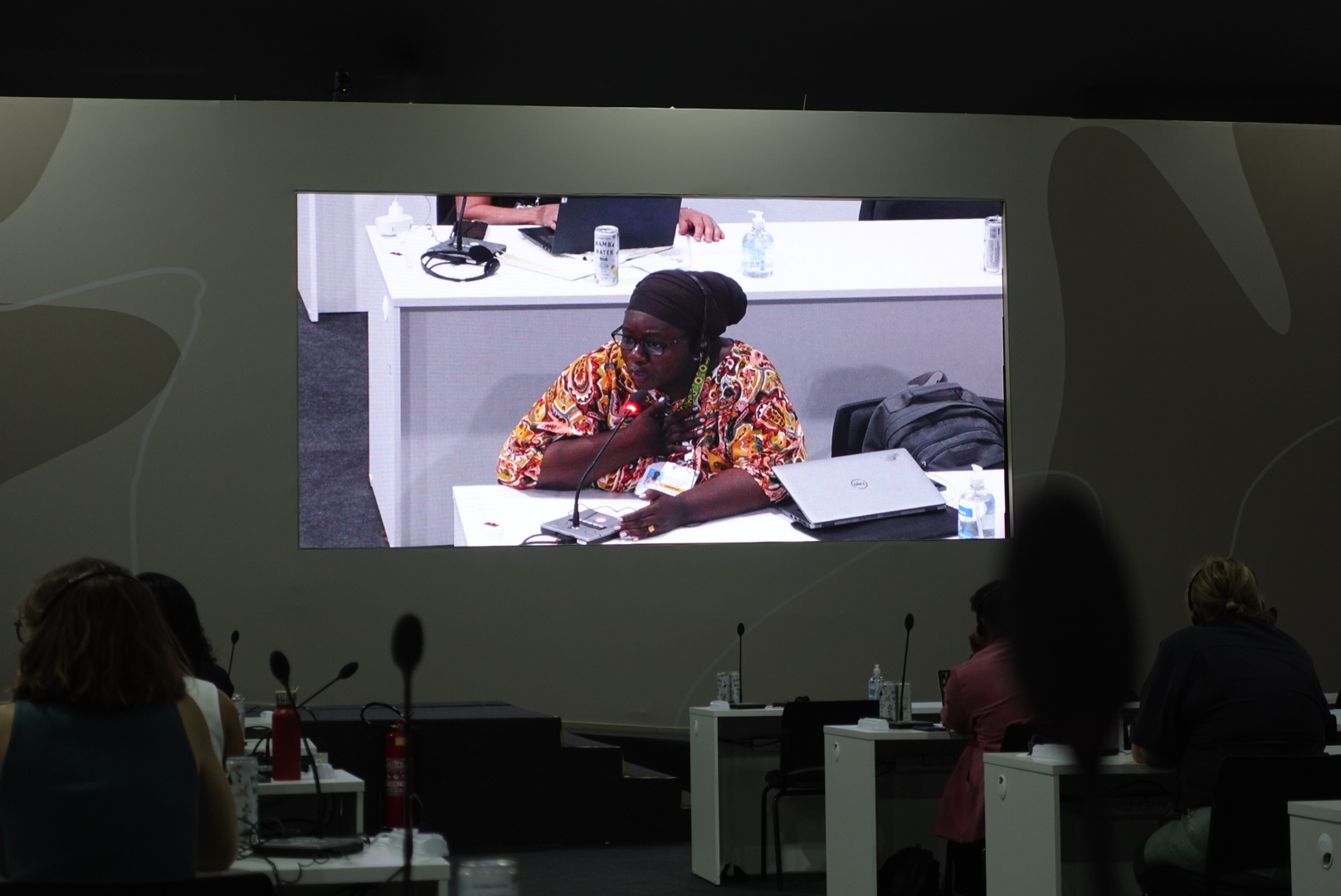
As the floor opened up to individual observers, we were all left with one more powerful story. A woman, once again commented on the militarization of COP this time with a more personal touch. She appreciated the response of the secretariat. Still, she added, there are people at this conference who are coming from active war zones. For them COP was a promise of safety that no longer feels true. “Coming to the UN space and seeing tanks and armed military officials— that is not safe for us.”
More than the affective reality, as someone with a mobility disability she was directly impacted by the increased security. Before COP she had worked tirelessly with the secretariat to be able to bring her cart into COP to help with her mobility issue. After Tuesday, she could no longer bring it inside the venue.
Stiel responded more emotionally than he had before. At the core of his closing remarks were “I hear you. I hear you” and that he “will reflect very very seriously on what has been brought up today.”
Stiel responded more emotionally than he had before. At the core of his closing remarks were “I hear you. I hear you” and that he “will reflect very very seriously on what has been brought up today.”
This town hall meeting moves unresolved within me.
Observing Steil amidst controversy impressed me. Steil told us this was the first conversation he had about this; no one had brought this to him before. As an audience member, at times the town hall did feel like an ambush with constituency after constituency condemning Steil. A professor I spoke with who had been attending COPs since COP1 shared that usually things are done very procedurally in the UNFCCC; something like this would normally be announced before a meeting. Steil didn’t make a fuss of this though. He was a master of pragmatism. He responded with deep reflection while carefully walking the line of explanation and accountability.
Stiel may have provoked more security, though not necessarily the excessive displays of military personnel and weaponry that amounted to militarization. Dozens of military men displaying automatic rifles did feel intimidating. It also seemed like a disproportionate response given protesters who breached the premises did not have weapons. It felt symbolic rather than founded on practical safety concerns. To that extent, I empathize with what that response might symbolize especially for people coming from active war zones. Additionally, what does it signal that a body of the UN, originally founded to avoid world wars, appeared to be in a military zone?
I wonder what a more holistic and peaceful model of safety might be. What would safety mean for the woman with a disability issue if security wasn’t heightened and violent people were to breach the venue? Would she actually be safer?
Another question I can’t quite answer is this: Is there safety that is truly inclusive?
What I do know is that a secure premise does not need vast displays of personnel and arms. After the military scaled back, I could see how a different configuration and numbers of men changed the affect significantly and still, their automatics would likely be able to protect the venue under a coordinated attack.
It seemed non-militaristic approaches to increasing the safety of the venue were not explored. An alarm system and well marked exits remained absent. In catastrophe they can protect people from imminent harm like infiltration or fires. Based on the evacuation procedure following the fire, improvements weren’t prioritized. The inaction toward other safety precautions alludes to a problematic first resort to military presence.
Overall, I was glad to hear the coordination between constituencies and their powerful remarks. Another point of my respect and appreciation was in hearing militarization issues come up in a space about climate change. In the main streams of climate discourse I am in, these twins of destruction and degradation are not often elaborated together. Yet, they are inseparable. For example, military emissions are often not accounted for in greenhouse gas stocktakes because they are done only voluntarily. Genocides like that of Sudan and Palestine are inseparable from vast environmental damage and collapse of associated carbon cycles. Moreover, across the globe military intimidation is inhibitory of civil actions that drive ambition. Increased temperatures will lead to increased risks of armed conflict.
I hope this confrontation, however controversial, opens a wider mainstream discourse on climate and militarism. This intersection will continue to be relevant to the COP and beyond; especially as COP31 returns to Türkiye, another authoritarian government.