Written by Noah Furuseth 26′
Rushing from negotiations, to pavilions, to food, to side events, I found the COP30 venue to be a maze of people planning for what they will do next, almost like a little city. As a first time COP attendee, I was curious where people would go during the rare but valuable moments of rest in between their stops. Was the event space designed to invite delegates to have a break and maybe even a chat in their busy schedule?
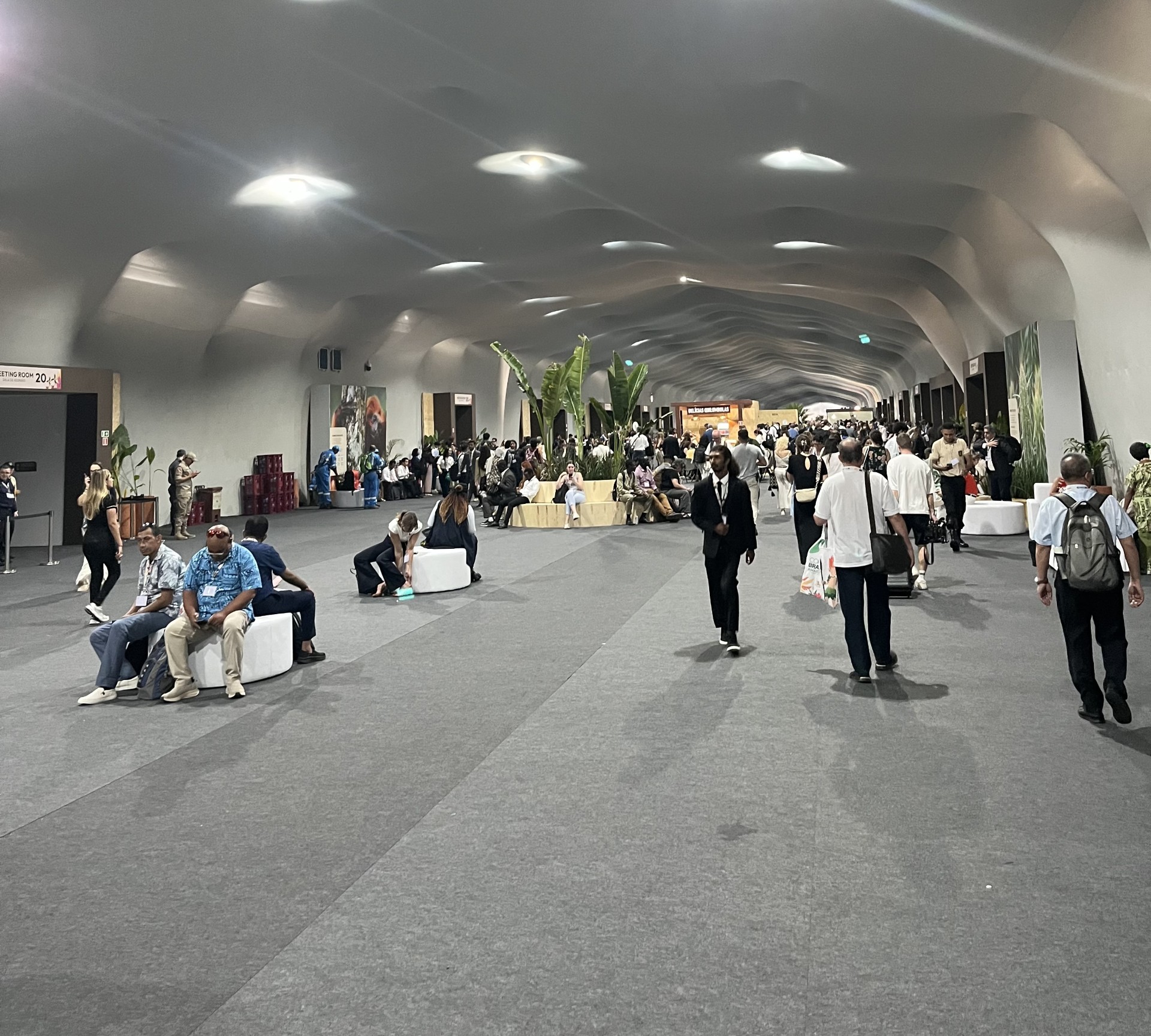
This is what third-places are all about. At my home institution called Colorado College in Colorado Springs, Colorado (yes that’s a lot of Colorados) I am developing my senior thesis about what third-places – places neither home nor work/school – have to offer for us in our cities that have so much spatial separation marked by concrete, roads, and a lack of biodiversity. What I’ve found is that not only do humans crave familiar and leisurely places that provide a break from home (first-place) and work/school (second-place), but we also seek out spaces to build relationships. These relationship improvements can be with ourselves, friends, strangers, the land itself, and what’s most overlooked, other species. When a space has an identity tied with our established or establishing relationships, that is when spaces become places. At COP30, I found numerous settings all around the venue that were evidently inviting people to be there, and consequently facilitating dialogue. Though I spent most of my time in the Blue Zone (where negotiations take place, requiring a “badge” credential to enter), I still found third-places in the publicly- accessible Green Zone, just with less diversity because the room was smaller and could not accommodate as many people. These third-place designs are a vital component of these global conferences and their outcomes, while also reflecting the importance of places that encourage dialogue in the places we live in.
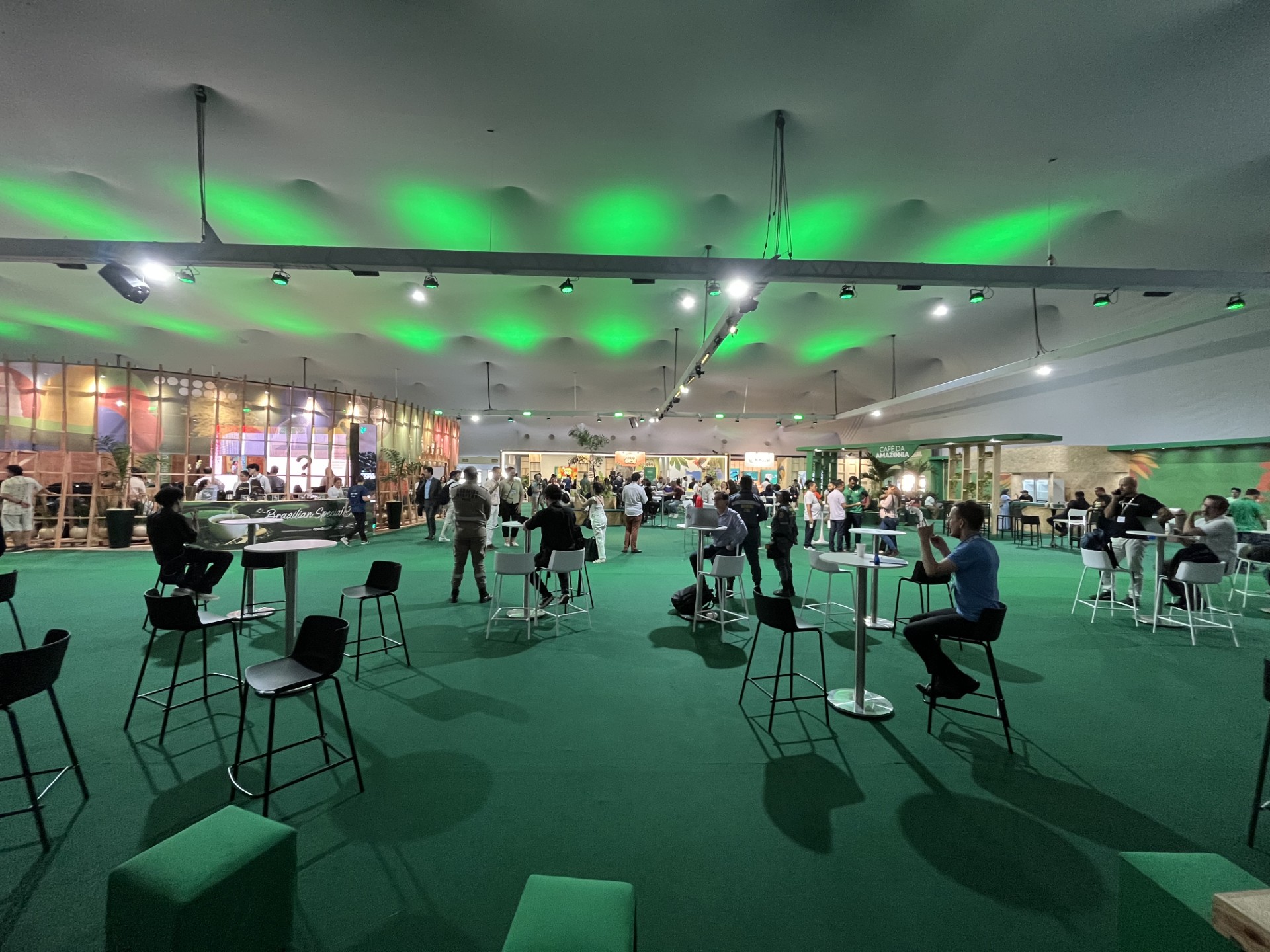
I was pleasantly surprised by the diversity of seating arrangements and areas that attracted people to “pop a squat” (a fun American-English phrase meaning “to sit” I was sharing with other attendees) some of which stood out to me more than others. The first configuration of physical space I immediately noticed upon entry were circular wooden benches that surround an assortment of jungle-themed plants in the center, some of which were not native to Brazil. If you attended COP30, chances are you probably sat down here at one point, or at least saw how they were almost always filled with people using them. This seating style was plotted along the main “highway” that connected everything at the venue together. The large plants served almost as a beacon for those looking for a place to get off their feet for whichever reason it may be, including to eat, work, socialize, or simply people-watch.
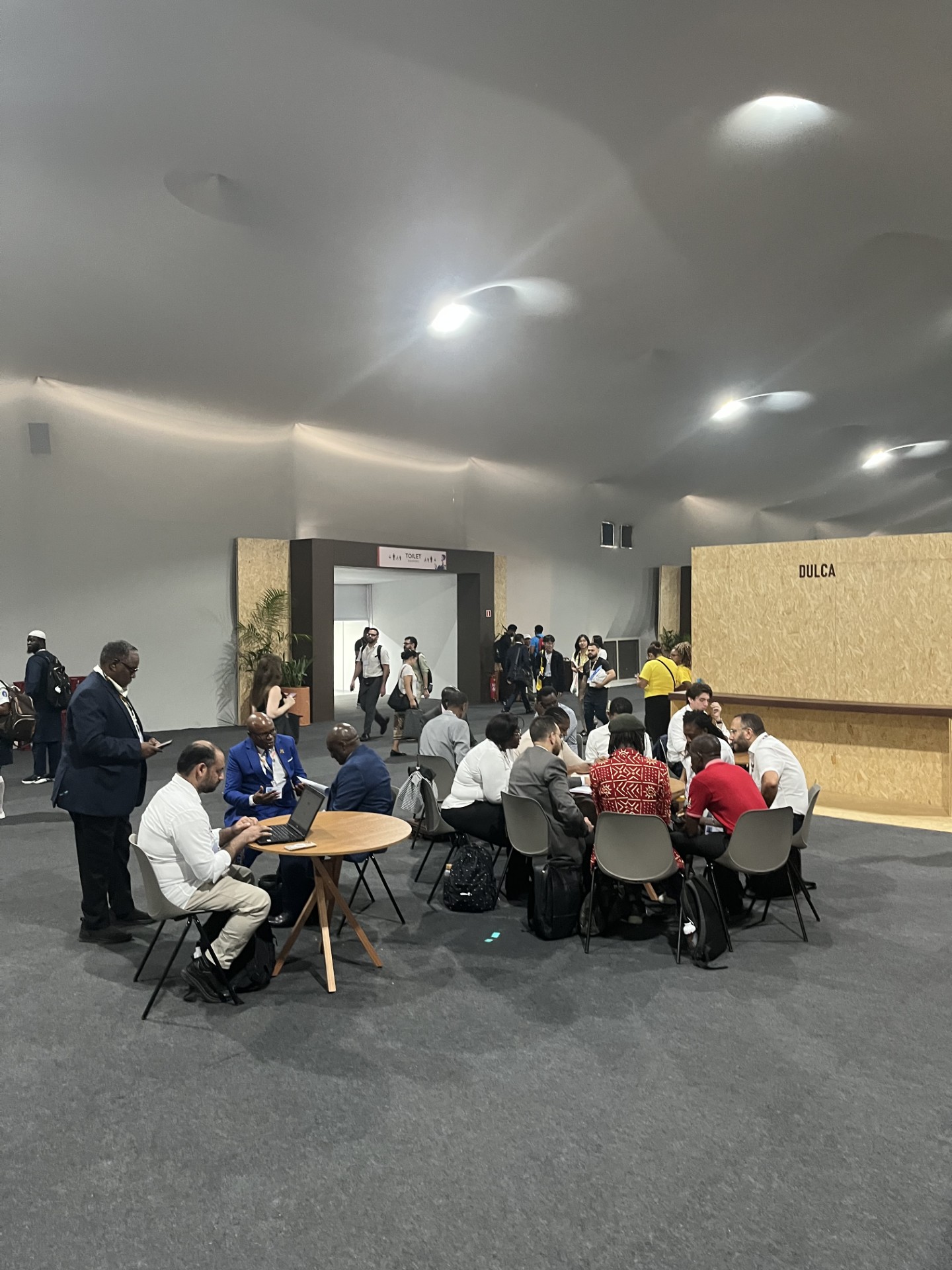
In this same strip was a string of food stands that were accompanied by small round tables with moveable chairs. Moveable chairs are powerful because they give users the autonomy over where they sit and with whom they sit. I saw people eating at these tables of course, but they were also commonly used for groups to meet, with laptops laid out and filling the small circle, their discussions abounding. The moveable chairs mean that users can place themselves together with the varying number of people who need to meet, and in a circle facing each other, contrasting with the outward facing wooden circle bench with the plants previously mentioned. These tables and chairs were likely one of the key places negotiators could have met to plan and also debrief on their negotiation meetings, which a Malawian negotiator told me was extremely important for political bloc groups to do in order to have collectively understood priorities and goals.
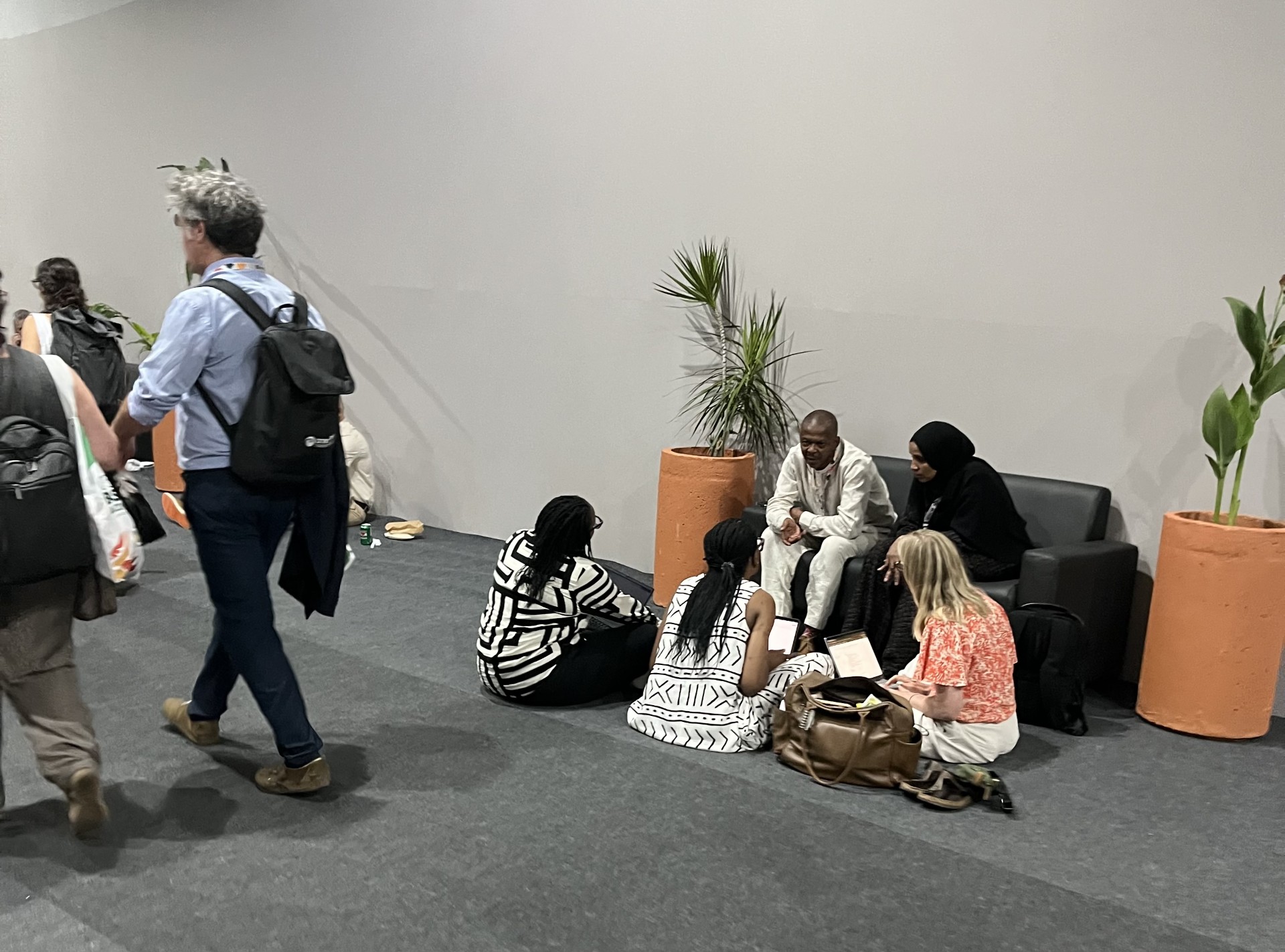
In some of the offshooting hallways and in the main walkway too were sofas with individual seats on both ends on the wall, offering more seating arrangements for intentional gatherings. The wall meant proximity to a power strip with outlets that served an additional amenity for many to keep their technological devices alive. These long sofas were also ideal for those that needed a quick snooze, as it was the most comfortable option in the entire venue for such a restful activity. Without outlets to charge devices and sofas to nap and charge oneself, a COP that is low on energy can be difficult to navigate.
However, not all gathering spaces were for sitting. The smell of burning cigarettes was a reminder to everyone passing by that people congregate in designated areas to smoke. I came across two main spots that served this function, one being an outdoor corridor from the main hall to the side event and exhibit section, and the other from the main hallway to a partially outdoor row of food options. I was not a user of these smoking spaces, but every time I walked by them I saw people chatting while having their cigarette break. In fact, I’ve often heard smokers say that the temporary social break from their schedule is a compounding reason for them to smoke a cigarette. This same area was also used by non-smokers. Because it was so hot and humid outside, I find it difficult to pinpoint why these non-smokers gathered in these outdoor sections of the venue. Perhaps they were enjoying the greenery of the plants above and around them, or were even drawn into the space because of the presence of people already gathering. This goes to show that even when spaces have not been intentionally designed to accommodate people for a break, users will inevitably create these spaces on their own.
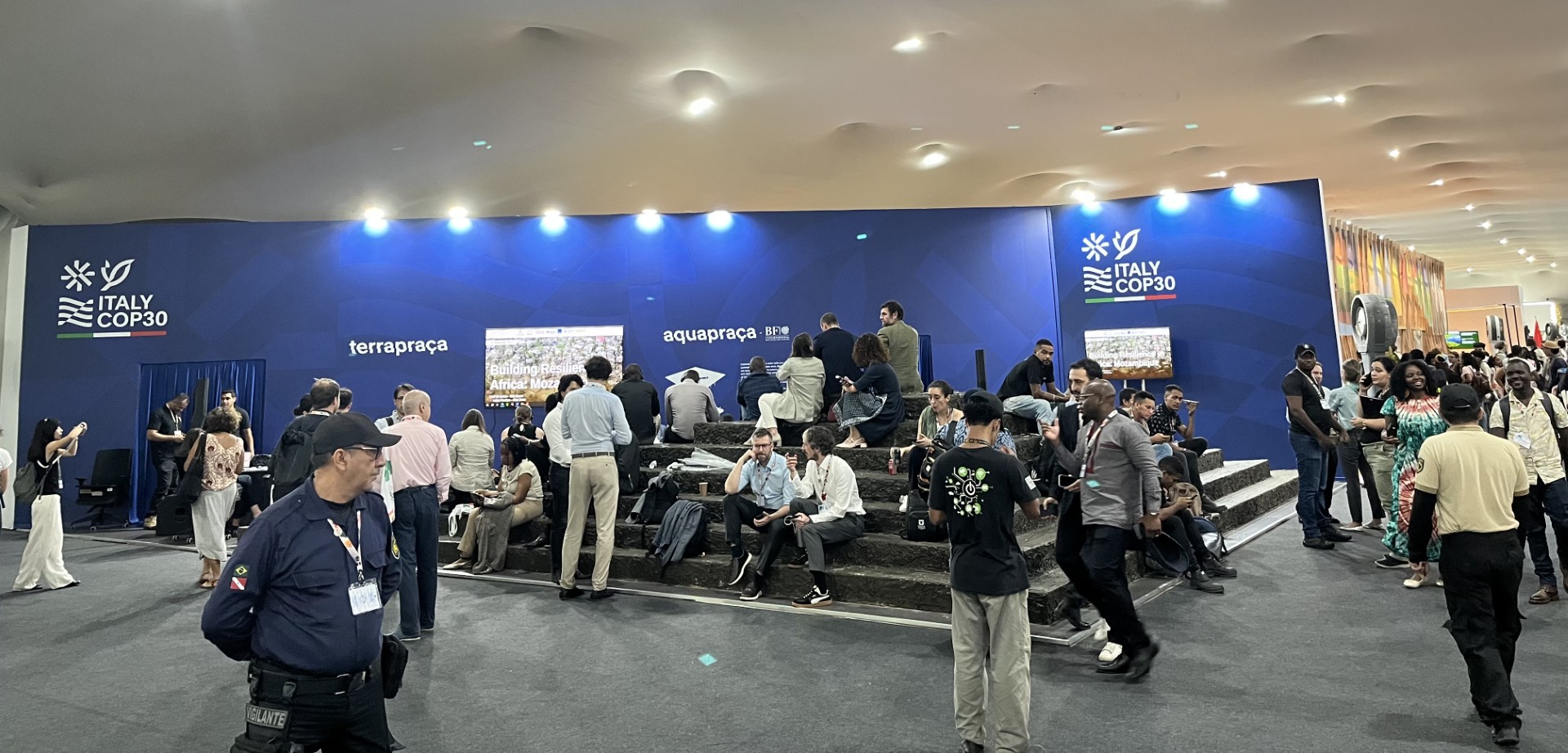
As I have mentioned with the moveable chairs, spaces that allow people freedom to orient themselves in their own way is very important for attracting users. One of my favorite examples I saw of this was the seating arrangement at Italy’s pavilion, which featured a large stair step pyramid that created a myriad of ways people could configure themselves. Every time I passed by the design I saw people sitting on it, and I contribute its wide use both to the openness of seating and its unique design that stood out from other pavilions that almost made you just want to sit to try it out. I can’t ignore that it was also right along the main pathway of the venue, but even the other pavilions in the same area were not being used as much as this was. I met someone from Italy named Ginevra, who I described to my admiration for the design and its significance in creating well-used third-places. She had never heard of a third-place before, but related the concept to an Italian word “piazzare” that means place, and is often used to describe when people hang out in the streets which I find so serendipitous to the theme. Pavilions were a fantastic opportunity to experience the unique designs that curators could bring to the COP space, often tying in unique cultural twists, whether it be in decoration or construction.
Pavilions and exhibits were a popular place that people gathered and incorporated another important aspect of third-places which is having “regulars.” The term “regulars” refers to those who consistently visit a place, and this frequency is how users build their relationships with others and anticipate positive outcomes for future visits. For example, the pavilions offer seating, special events, and speakers to initially attract and accommodate attendees. At first these involve meeting strangers and getting to know the pavilion, but upon repeated visits one may find themselves going to particular pavilions because they are expecting conversations with people they’ve already met. This creates incentives to make the journey over and spend their time there. I did not have any pavilions I regularly visited, but I was a regular at a food stand called Amuara Vegan. This allowed me to build relationships with the workers and chat about our day, thus making me look forward to getting a bite to eat. These places we are regulars at help us establish a sense of belonging, and can make events like the COP that are filled with tens of thousands of strangers seem less socially daunting.
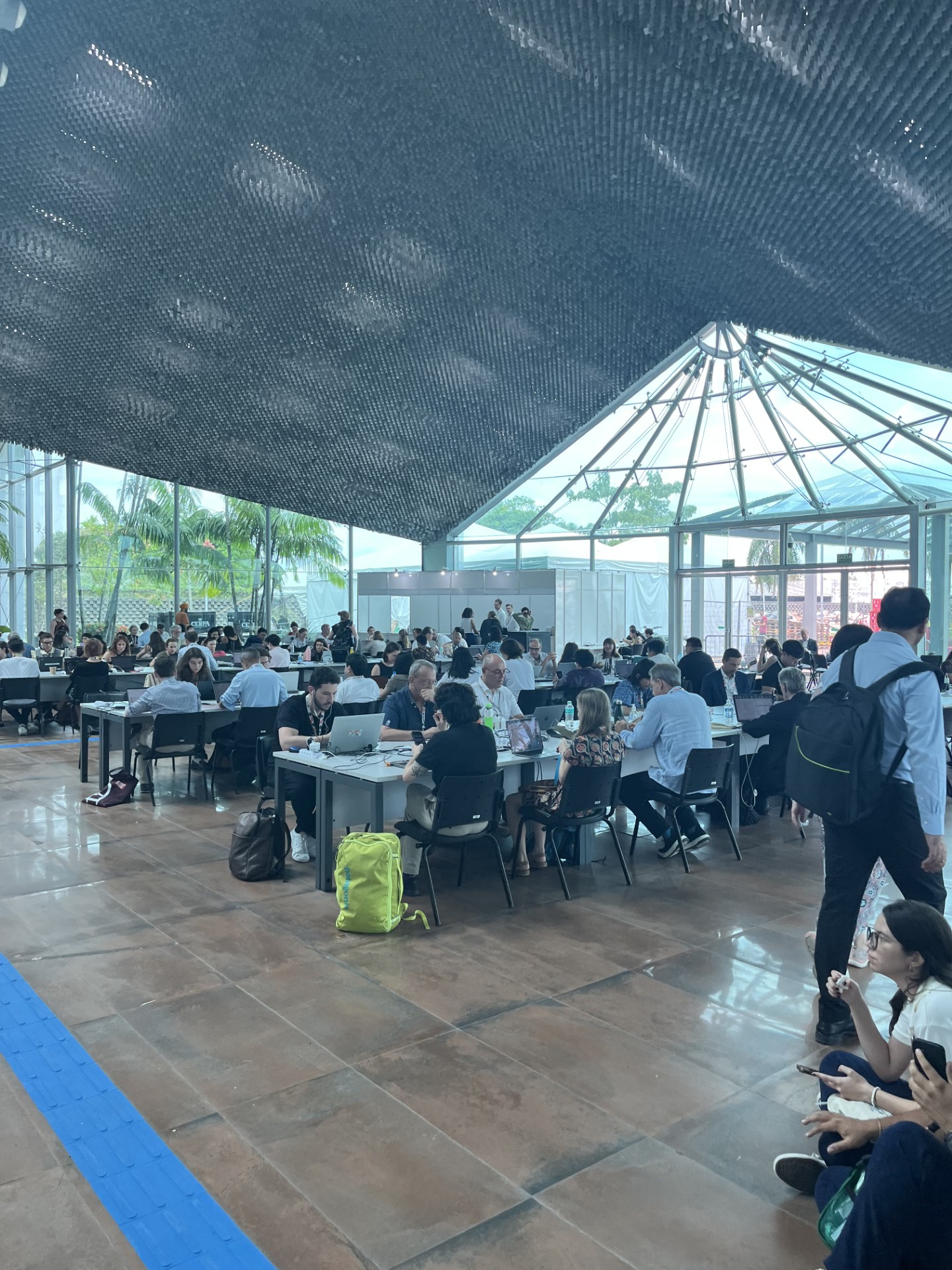
The COP is not a city or town where the traditional concept of third-place is usually studied and well-understood, but it does not mean that its application holds no place in this unique, two-week long social configuration of people from all over the world. The primary objective at COP is to reach global consensus on a collaborative and multilateral approach to address Climate Change, and third-place theory can inform more intentional and inclusive designs for social spaces at events like the COP. Just as one needs a third-place on their street to build relationships with neighbors and establish a sense of community, the COP needs them for the same reasons too.
I know I am not alone in having met people from all around the world at this conference. My sense of global community grew with each conversation, and that’s exactly how we make our efforts scalable. This is an event where every interaction matters, where each person you meet might lead you on a different course of life, where every person has something valuable to offer (even a fossil fuel lobbyist offers insight into how Climate Change’s biggest opposition sees the world). We leave this conference with not just notes from side panels and negotiations, but with stories and connections from the people we met and perspectives from around the world that influence our own plan of action upon arrival back home. I want people to understand that within every city, town, neighborhood, village, or conference, there are crucial points of contact that dramatically influence our perception of where we are and who we live among. Third-places have never been more important as during these times of such dramatic polarization and separation from what makes us feel whole; connections. They offer a break from our busy lives and help us continue to pursue building relationships even in times of leisure.
I’m overall pleased with the third-places I witnessed during my one week at COP30, and hope they teach us something about the third-places, or lack thereof, in the diverse locations we all come from. Where are your third-places and what have they done for you? For Climate Change? We must also ask ourselves, what can we do for them?