Where the negotiations fell short, where momentum surged, and what still feels possible.
That’s a wrap for COP30.
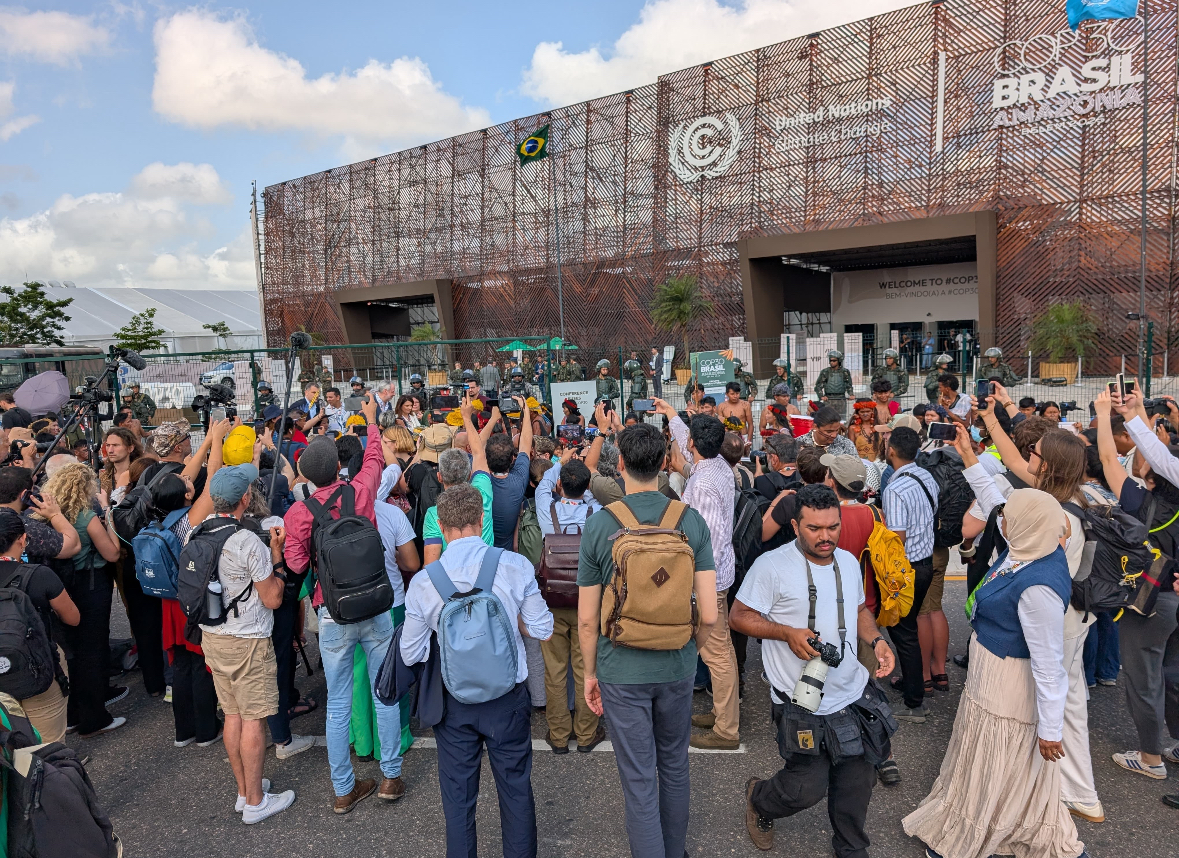
After taking a week to reflect, process, and make sense of everything I learned, saw, and experienced, I am still trying to find the right words. COP30 was a tumultuous summit—from the fire to the protests to the surreal heat and flooding inside the venue.
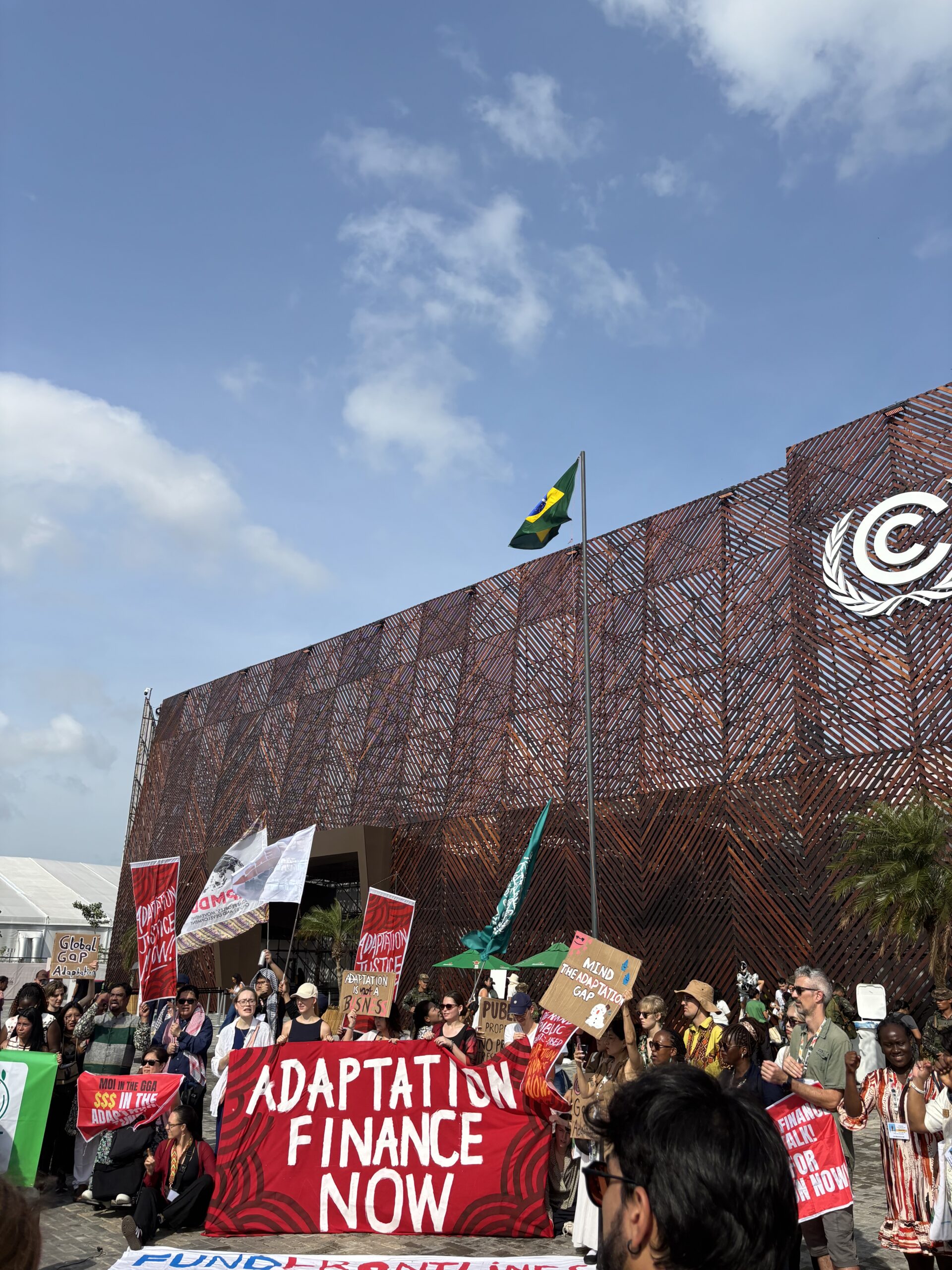
If there is one thing COP30 didn’t lack, it’s drama. And yet, within the exhaustion, chaos, confusion, and despondence, there was also a strange clarity for me, a kind of rawness, a reminder of what it means to keep going not because it’s easy, but because it matters, and because sometimes continuing is the only thing there is to do.
But I’m also leaving with a deep frustration. Not with multilateralism itself, but with consensus. How can urgent progress be made when a single petro-state can sideline years of work with one obstruction? For decades, countless decisions have been abandoned, diluted, or deferred because of a handful of objections. How can urgency possibly emerge from a process like that?
This frustration crystallized during the closing plenary, where the final negotiated decisions were brought forward for adoption. Countries clashed over procedure, and Colombia spoke up, insisting on a reference to fossil fuels in the final text. Russia, Saudi Arabia, and India pushed back, sharply criticizing Latin American delegates.
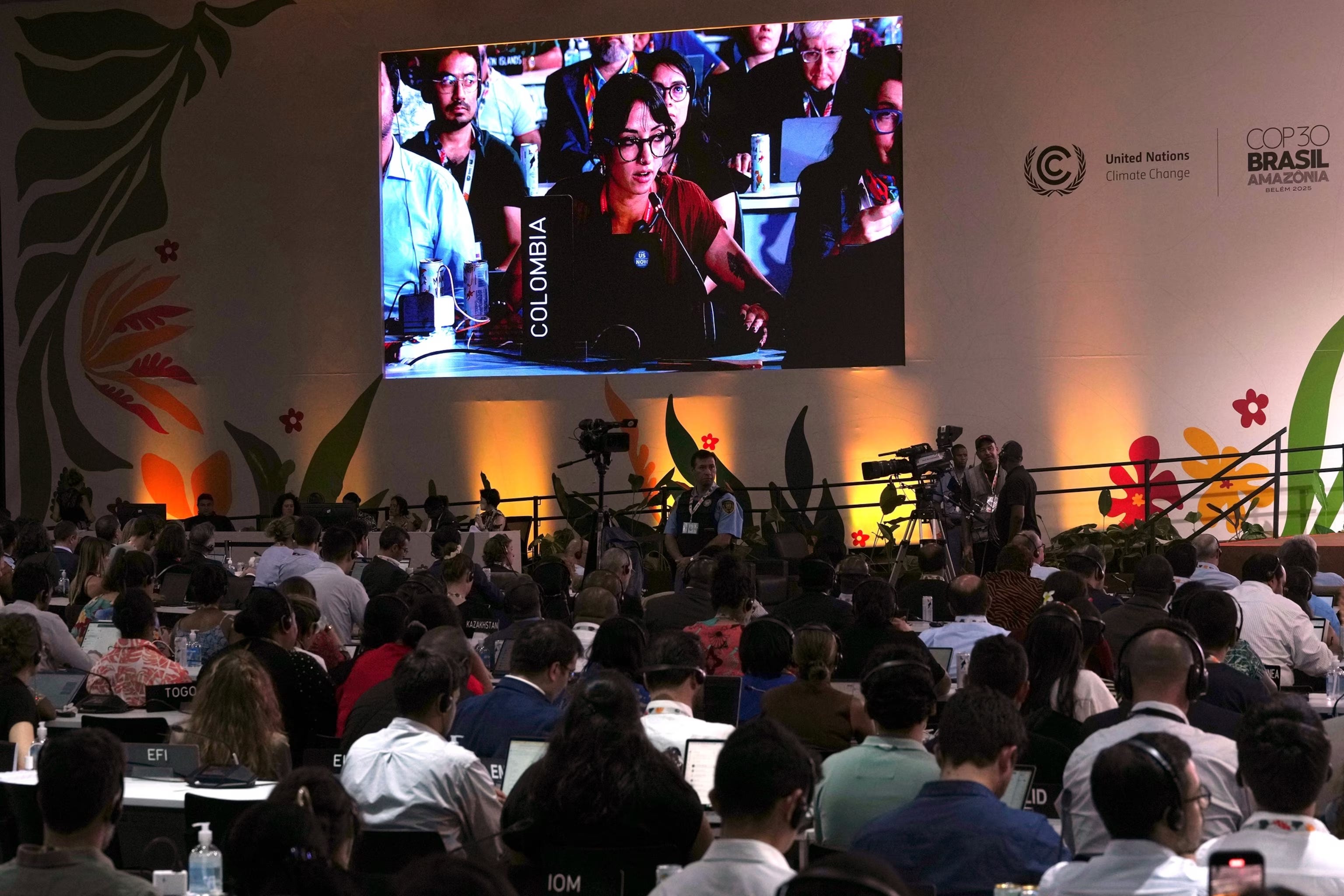
Russia went so far as to chide them:
“My comrades and colleagues from Latin America… I want to use this as an opportunity to launch an appeal to you to refrain from behaving like children who want to get your hands on all the sweets…”
Panama responded with striking clarity, turning Russia’s words back on them:
“Regarding the statement made by Russia, children are extremely intelligent and visionary… we wish we all behaved like children to work for a better future instead of all futureless adults.”
The COP President briefly suspended the proceedings, then returned to confirm that the decisions would stand.
After watching that plenary, I felt more certain than ever that the real question isn’t whether multilateralism should continue, but whether consensus can.
How much longer a process built on unanimity carry the weight of such a pressing crisis?
So what came of the negotiations—and of the conference itself?
Billed as a COP of “truth” and “implementation,” COP30 was expected to mark a decade of tangible progress since the Paris Agreement. Countries did agree to a new “global mutirão,” an overarching decision calling for tripling adaptation finance by 2035 (later than many hoped), and announced the “Belém Mission” to strengthen collective emissions-cutting actions.
But when you boil these texts down, they ultimately lack the ambition and rigor of implementation that this moment demands. There were no new roadmaps for transitioning away from fossil fuels or reversing deforestation. And rising tensions on issues like the Gender Action Plan, “unilateral trade measures” and ongoing finance shortfalls, revealed deep divisions blocking meaningful progress.
A real and just energy transition relies on two things: a clear plan to phase out fossil fuels, and serious money for adaptation. COP30 ended weak on both, at least in its formal outcomes.
More than 80 countries even pushed for a roadmap to transition the global economy away from fossil fuels, building on commitments made two years ago in Dubai. The coalition included many climate-vulnerable nations alongside the UK, Germany, and even oil producers like Mexico and Brazil. But major fossil-fuel exporters, including Russia and Saudi Arabia, opposed any process or timetable that would move the world away from oil, gas, and coal. In the end, the final agreement contained no reference to fossil fuels at all, a clear retreat from recent momentum.
Still, one of the most significant developments took place outside the negotiated text: the announcement of a new global conference dedicated entirely to phasing out fossil fuels. To be held in Santa Marta, Colombia, a fossil-fuel producer, and co-hosted by the Netherlands, the birthplace of Shell, the conference is meant to complement the UN climate process. Colombia’s Environment Minister Irene Vélez Torres described it as a space centered squarely on the “completely clear” need to phase out fossil fuels.
Other outcomes emerged as well. Countries reached agreement on a Just Transition mechanism and on the Gender Action Plan, both crucial tools for advancing equitable climate action. But the Gender Action Plan faced fierce pushback, with some countries attempting to roll back already-agreed language, “gender” itself included. Many negotiators and observers described this as part of a broader, troubling pattern: the rise of coordinated attacks on gender and human rights within the negotiations, fueled by global conservatism and emboldened authoritarianism.
The Just Transition mechanism, pushed strongly by civil society groups as the Belém Action Mechanism, recognizes that decarbonization must go hand in hand with social and economic equity. Yet, as many asked, what is any mechanism without financing, political will, and a time-bound plan to wind down oil, gas, and coal?
For the first time in UN climate negotiations, countries also agreed to formally discuss how trade can support, rather than hinder, climate progress, a small but meaningful step.

What, then, do these uneven outcomes tell us?
- That few countries were willing to give up power or money.
- That global finance remains unresolved, with no agreed figure for what must be delivered.
- While language on climate justice improved, commitments on how to achieve it did not.
- And that once again, wealthy nations protected their fossil-fuel interests rather than the people most affected by the crisis.
In Belém, Indigenous peoples and frontline communities made the message unmistakably clear: real climate action means ending fossil fuels and delivering the finance long demanded by those on the frontlines. The final text of COP30 shows who still benefits from delay: the fossil fuel industry and the ultra-rich, not the communities living the consequences every day.
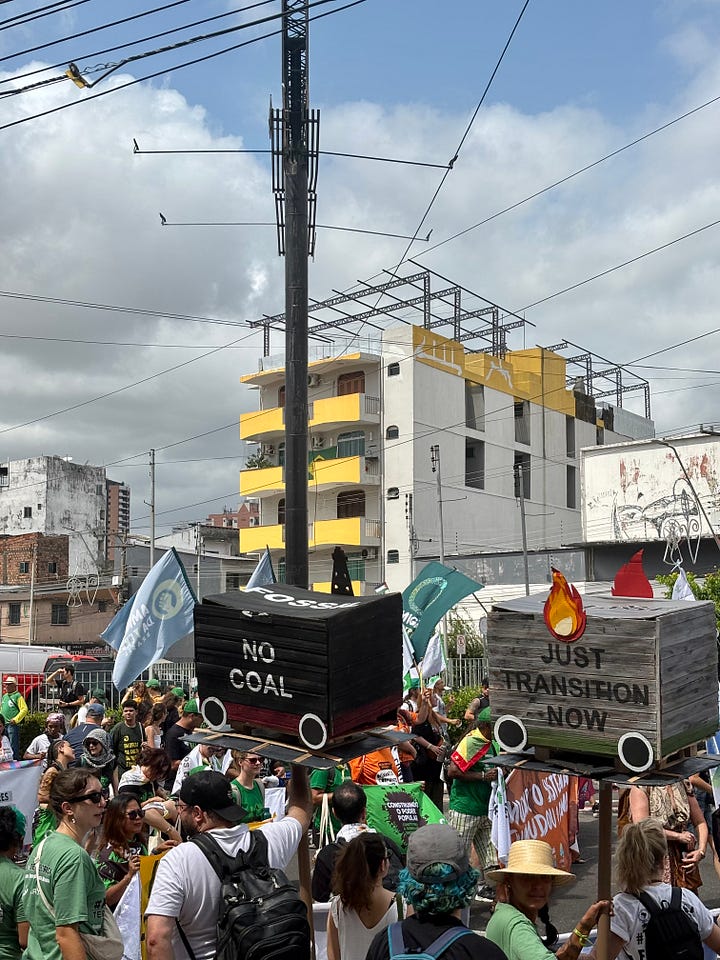
Yet the courage in the streets of Belém sparked real momentum. What began as a single country calling for a fossil-fuel phase-out roadmap has grown into a coalition of 80 nations pushing for it. That momentum will carry into the new fossil fuel phase-out conference in Colombia next April. And countries did agree to triple adaptation finance, even if on a timeline far slower than climate-vulnerable nations hoped.
In his closing remarks, Executive Secretary Simon Stiell insisted that “multilateralism is alive and kicking.” It may be rough, it may be disappointing, but it is still standing—and for now, still moving.
Beyond the headlines:
COP isn’t only about the draft decision texts; it’s also about the bilateral deals and smaller action agreements forged behind the scenes. In many ways, that’s where real progress can be seen.
- Tropical Forests Forever Facility (TFFF), a proposed $125 billion fund launched by Brazil to reward tropical nations for forest preservation, which secured about $6.7 billion in initial commitments from countries like Norway, France, and Indonesia.
- An existing $1.8 billion pledge for forest and land tenure was renewed and complemented by the “Intergovernmental Land Tenure Commitment.” This commitment, made by 15 governments, aims to officially recognize 160 million hectares of land held by Indigenous Peoples and local communities.
- The Sustainable Fuels (Belém 4x Pledge), led by Brazil, Italy, Japan, and India with support from 23 other nations. This initiative commits to quadrupling the production and use of sustainable fuels by 2035.
- Over 40 countries endorsed a call to action to fight wildfires, the leading cause of forest loss last year.
- Brazil launched the Bioeconomy Challenge, a global platform to increase investment in sustainable forest economy markets.
- Efforts to reduce methane emissions included the No Organic Waste Plan, aiming for a 30% reduction by 2030, supported by a $30 million commitment.
- The World Health Organization launched the Belém Health Action Plan, endorsed by over 30 countries, to report progress on climate-related health risks.
Concluding thoughts:
The world is not on track to limit global warming to 1.5°C. Under current policies, global emissions are projected to fall by only just 12% by 2035—far short of what the science demands to avoid catastrophic warming, according to the Intergovernmental Panel on Climate Change.
It’s easy to feel discouraged by the negative news coming out of COP30 and the climate space more broadly. But beneath the headlines, real progress is unfolding. Clean energy and electrified transport are expanding at rates that were unimaginable a decade ago. Countries investing in the green transition are seeing the benefits firsthand: new jobs, growing economies, improved energy access, and cleaner air.
Since 2014, the global warming trajectory has fallen by more than a full degree Celsius. Over that same period, the cost of clean energy has plummeted. Onshore wind costs have dropped by 70%, and the prices of solar and batteries have fallen by 90%. Solar is now the cheapest form of electricity almost everywhere in the world. Solar capacity is being deployed at fifteen times the rate predicted in 2015, and global wind capacity has more than tripled.
Last year, 93% of all new electricity capacity added worldwide was renewable—mostly solar. Clean energy investment is now outpacing fossil fuels at a ratio of two to one. Two decades ago, installing a gigawatt of solar took nearly a year; today, it can be done in just fifteen hours.
The clean energy transition is happening faster, at a larger scale, and with more economic momentum than almost anyone predicted.

We are still far from where we need to be. But acknowledging progress matters. It reminds us that change is possible, trajectories can shift.
I left COP30 frustrated by what wasn’t done, but also sobered by what remains possible. Consensus may fracture ambition, but coalitions can still grow. The formal text may be weak, but the world outside it is shifting in ways that cannot be unwritten.
COP30 didn’t deliver the breakthroughs hoped for. But, I’ve had to keep reminding myself that the story of climate action has never lived solely in the negotiation halls. It lives in the coalitions that form despite the barriers, in technologies advancing faster than expectations, and in the people and countries pushing harder each year for what science and justice demand.
Still, this moment requires an honest reckoning with whether the rules we’ve long relied on, consensus chief among them, are capable of serving the world we are trying to save. COP30 didn’t give us the roadmap. But it did reveal that more and more hands are reaching to draw one anyway.
This COP has been hard and exhausting, raw and textured and colorful, wildly unpredictable. And through all of it, I’ve learned so much.