BY ESA CHEN ‘25
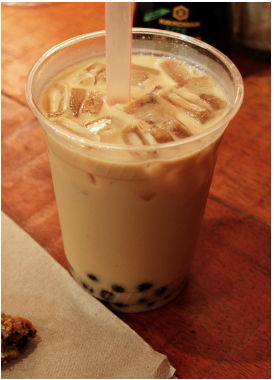
Bubble Milk Tea, also known as Boba Milk Tea or Pearl Milk Tea, is famous and popular among many countries worldwide. Even so, do you know anything about where it all started?
Bubble Milk tea is a beverage that was first created in Taiwan in the 1980s. It is typically made by putting chewy tapioca balls called pearls or boba into various kinds of tea. The most common varieties are to put black pearls into milk tea and white pearls into green tea. There are hundreds of different combinations and flavors to try. Many shops offer sizes and flavors of pearls as well as various kinds of teas both with or without milk. The drink can be customized even further by choosing how much ice and sugar is added. Due to its special and sweet taste and aesthetically pleasing appearance, it has become popular in many parts of the world. World Tea News predicts that the market for bubble milk tea will be worth $4.3billion by the year 2027.
The roots of Bubble Milk Tea can be traced back to the 1940s. In 1949, a man, Chang Fan Shu opened a tea shop selling iced tea mixed in cocktail shakers. This method added a silky and rich texture and fine air bubbles on top of the iced tea. The resulting iced tea was named “Bubble Tea,” which serves as the basic element of Bubble Milk Tea. Who added the tapioca balls to the Bubble Tea? As a matter of fact, there are two businesses that claim to have invented Bubble Milk Tea. The tea shop Chun Shui Tang in Taichung claimed that Bubble Tea was invented by Lin Hsui-Hui in 1985 when she added milk and tapioca balls to black tea. Initially, she shared the recipe with friends who were addicted to the “QQ” texture of bubble tea; “QQ” being a colloquial description for foods with a chewy texture. Because of its popularity, the store added Bubble Tea to its menu in 1987. The Hanlin Tea Room in Tainan, Taiwan claimed that Bubble Tea was invented by its founder, Tu Tsun-Ho in 1986, who was inspired to add white tapioca balls that he brought at the Yamuliao market. He found that adding cooked tapioca balls into milk tea would add texture. Because the round shiny black and white tapioca balls resemble pearls, Bubble Tea is also marketed as Pearl Milk Tea in Taiwan. For both these tea houses, claiming to have made “the world’s first cup of Bubble Milk Tea” has been very important to their business strategies and they have gone to court to secure their claims. After 10 years of litigation, the court finally determined that because bubble tea has a long history and is not patented, anyone can prepare and market it. Soon, another kind of tapioca ball that is larger and chewier than the one called pearls appeared on the market. In order to distinguish them, people called small-sized ones “Pearls” and big-sized tapioca balls “Boba.” According to the Merriam-Webster Dictionary, the word Boba is borrowed from Chinese bōbà and is alleged to be colloquial or slang for “large breasts” (a reference to the spherical shape of the tapioca balls). Thus, Bubble Milk Tea is also known as Boba Milk Tea.
In the 1990s, beverage shops began using automatic sealing machines to mass produce “take-out Bubble Milk Tea,” which became very popular. With the entry of large chain stores and beverage manufacturers, Bubble Milk Tea has become one of the best-known Taiwanese beverages. Due to its unique texture, the introduction of numerous varieties of flavors, and its Instagram friendly aesthetic Bubble Milk Tea is popular in Asia as well as the rest of the world.