By Chloe Jung ’27
On May 16, 1961, General Park Chung Hee, back dropped by an unstable democratic system “paralyzed by internal rivalries,” social stagnation, and an impoverished people, successfully launched a military coup, historically marking the death of the Second Republic and the birth of his 18-year-rule as ‘president’ of South Korea. The following two decades would be ones of radical demonstrations, indignant dissidents, and a newly written autocratic constitution called the Yushin Order. It was amidst this era of censorship, demonstration, and military rule that the godfather of Korean folk music arose.
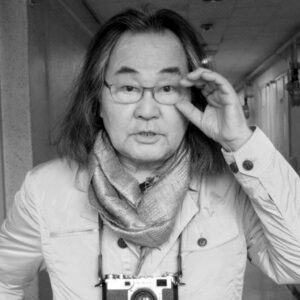
Han Dae Su, born in Busan on March 12, 1948, was a child of both the West and East. His father, an aspiring student of nuclear physics, left Han with his mother at an early age to pursue his studies at Cornell University in the United States but vanished shortly upon his arrival. After his father’s mysterious disappearance and his mother’s remarriage, Han decided to venture across the Pacific to New Hampshire and New York and it was there that he began to write his songs, heavily inspired by the raging folk music scene and the hippie movement of the 60s. But his father’s sudden reappearance with a white American wife left Han confused and despondent and, after a sympathetic and pleading invitation by his mother, he returned to Seoul in 1968.
Performing in clubs and bars, Han found an eager audience in the youth of Seoul. One day, a performance of his was stumbled upon by Lee Baek Won, a producer for TBC (one of the two TV channels of that time) who offered him a spot on his nighttime variety show after listening to his set4. His performance on TBC the next night was a raging success and Han found himself getting recognized in town and on the street. His notoriety was put on pause when he was drafted for mandatory Korean military service in 1971 but immediately upon his return in 1974, he released his first album (“The Long, Long Road”) with the famous song 물좀주소, (mul jom juso) translating to ‘Gimme Some water.’
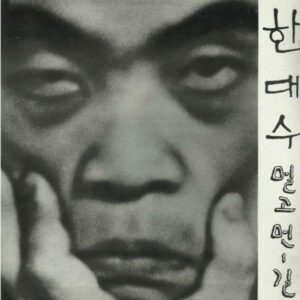
However, his successful musical career was not going unnoticed. Culturally, there had already been discourse circulating about the wild American hippies and their crazed rampage of sex, drugs, and ‘freedom.’ Politically, South Korea and the U.S., while not adversaries, held a rocky relationship throughout the Yushin era. The two countries had mutual dependence in that Park, despite his “nationalist inclinations and deep-rooted distrust of U.S. intentions,” could not completely detach South Korea from U.S. support and protection, especially after the Korean War. The United States on the other hand, while unsupportive of Park’s authoritarian regime, understood South Korea’s essential role as an “outpost of the ‘free world’ to contain communist expansion in East Asia” This long haired Korean man who sang about love, freedom, and peace, and whose music emanated the rock and folk styles of America’s finest– there was no doubt in the government’s mind where Han stood. “The Long, Long Road” and the following album “Rubber Shoes” were both subsequently banned in South Korea until the late 80s, when the Yushin era finally came to a close.
The anti-government title that Han earned among the youth caused his songs, especially 물좀주소 (Gimme some water), to become anthems for the many protests for democracy that permeated the 70s and 80s. The students in particular belted them with fiery vigor as they marched through the streets, pleading for civil liberties and freedom of speech. But in an interview with Han by the Korean Herald, Han denounced this political title. He spoke confidently that, despite the misinterpretation of both the authorities and the activist youth, his songs were about his “thirst for love.” He was “hungry for love and freedom,” but freedom was interpreted politically.”
This phenomenon of a man’s unintentional but profound effect on history truly hit me hard. The world was not perfect in Han’s time nor is it perfect now– we see its suffering every day, whether through the news, social media, or word of mouth. But love and the love of love exists everywhere, not only in the sphere that we deem ‘political,’ and it is this omniscient status that shows its true power. Let us continue to love everywhere we go, no matter the time or person. We may find its effects snowballing into a much greater movement, just as Han’s love did.
Bibliography
Britannica, T. Editors of Encyclopaedia. “Park Chung-Hee.” Encyclopedia Britannica, October 22, 2024. https://www.britannica.com/biography/Park-Chung-Hee.
Hoo-ran, Kim. “[Eye Interview] ‘Peace and Love Is the Best Vaccine!’” The Korea Herald, November 19, 2020. https://www.koreaherald.com/view.php?ud=20201119001090.
Kim, Byung-Kook, and Vogel, Ezra F., eds. The Park Chung Hee Era : The Transformation of South Korea. Cambridge: Harvard University Press, 2013.
Korea.net. “Korean Ceramics: A Rich Heritage.” Korea.net, 2014. https://www.korea.net/NewsFocus/Culture/view?articleId=118133.
Matt VanVolkenburg. “Hahn Dae-soo’s 18-day rollercoaster ride of fame in 1968”. The Korea
Times, 2020. https://www.koreatimes.co.kr/www/nation/2024/10/113_300615.html.