Friday, December 5

2024-2025

Winter Trip to Japan (24-25)
2024-2025

Winter Trip to Japan (24-25)

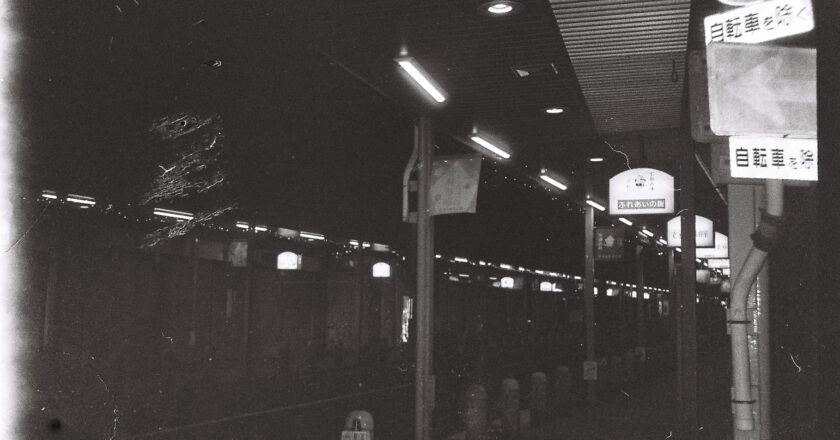
By Chloe Jung '27 ‘mono no aware.’ From December 23, 2024 to January 13, 2025, as I traveled the expanse of mainland Japan and the small island of Okinawa, I employed this nebulous yet poignant Japanese aesthetic philosophy as a lens through which to explore the cultural, urban, and natural landscape that I saw before me. Roughly translated to “the pathos of things,” mono no aware essentially refers to the transience of nature that mirrors the transience of all things, including humanity. First coined by literary critic Motoori Norinaga (1730 – 1801), it became a way to express that, despite the finite lifespan of all things, there is true beauty in the ephemeral and impermanent. In order to make my own artistic understanding of mono no aware digestible, I utilized the resources pro...
UXO Laos
2024-2025

UXO Laos

By Gina Jeong '25 Can you recall some of basic life skill lessons that your school provided you in your elementary school? During the discussions of scenarios where we see somebody in need of help, we are always taught to offer help by asking ‘may I’ instead of ‘can I’ Why is that so? This is to prioritize the interest of the aid-receiver over the aid-giver. If the action is performed under a reversed interest, unnecessary or even actions that could worsen the recipient’s situation may be performed. Hence, education emphasizes the prevention of unintended consequences by the aid-giver.   The field of humanitarianism is a profession greatly driven by the human capacity for empathy. It is within our nature to desire to help alleviate the suffering of others, when we see others in a sit...
Dusun Ethnicity in Borneo and Catholicism
2024-2025

Dusun Ethnicity in Borneo and Catholicism

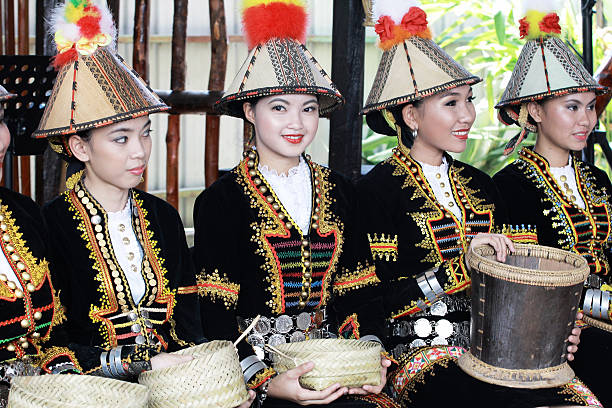
By Gina Jeong '25 Sabah is a state in East Malaysia, located on the northern part of Borneo island. From the early historic accounts of this region, Sabah, with its old name as Barune, was once ruled by Java in the 14th century. Towards the end of the 14th century going over to the 15th century, the Sultanate of Brunei, and the Sultanate of Sulu took over the power of the Northern Borneo region. Their territorial extent stretched along the northern coast of Borneo, and into the land of the north. The regime held political and economic power until the 18th century, when Sabah became a British protectorate. Alfred Dent, the leader of the British North Borneo Company made a treaty with the Sultan of Brunei and Sulu. During this period, BNBC was given full authority to the development of te...
2024-2025

Why Kyrgyzstan Does Not Support Ukraine

By Karolis Margis '26 During my 2 month long stay in Kyrgyzstan I discussed many issues of great importance. Living in a host family provided ample opportunities for discussions. One topic was particularly interesting to me and the locals - Russia’s full-scale invasion of Ukraine.   Two main narratives were predominant - the Western one and the Russian one. The Western narrative is familiar to many of us - Ukraine was invaded in 2014 after the fall of a pro-Russian Yanukovich regime, which culminated in a full-scale invasion in 2022. While many young and liberal students in Bishkek, the capital city of Kyrgyzstan, supported this view, another opinion was much louder. Many, especially older people, expressed the view that Russia’s invasion was a necessity in order to defend its securi...
Pho-King-Wing Review
2024-2025

Pho-King-Wing Review

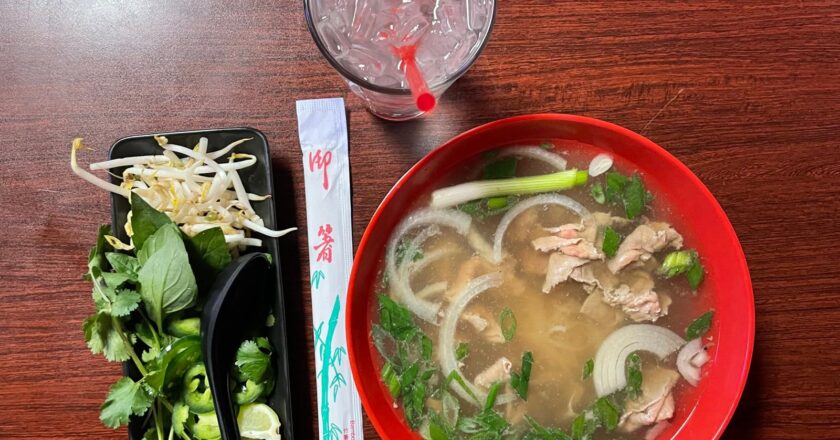
 By Gina Jeong '25 Living as an international student CC, I had to go through many trial and error to find the perfect Asian restaurant to my taste. Having spent a good chunk of my childhood in Laos, my family’s Sunday brunch was always Vietnamese Pho. Turns out that such family tradition has led me to crave Pho no matter where I am.  Pho is a Vietnamese noodle soup that consists of meat broth – usually beef, sometimes chicken – and rice noodles of different widths. Today, Pho has become a very popular dish worldwide. Pho is often served with a plate of fresh veggies that contains bean sprouts, coriander, lime, and Thai basil. Sometimes, you can add fried bread on the side to soak up all the good stuff from the soup. Pho restaurants will always have a tray of different sauces: ch...
Gamelan: Strange and Beautiful Art at CC 
2024-2025

Gamelan: Strange and Beautiful Art at CC 

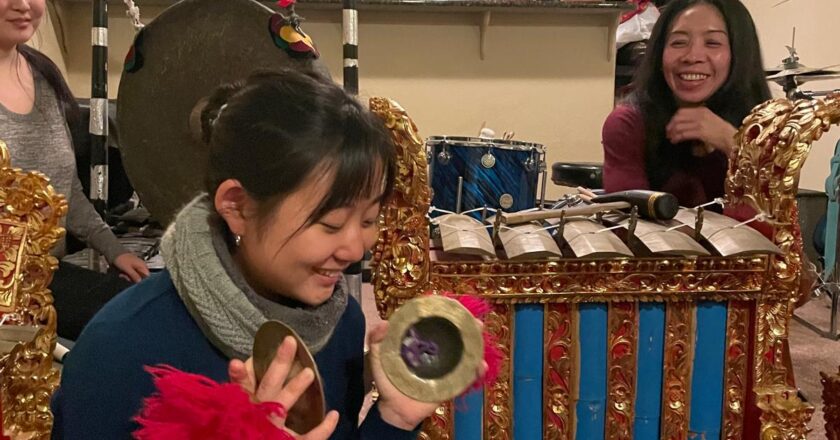
By Gina Jeong 25' When I was a freshman, which was when I had just arrived in the US specifically in Colorado Springs, I quickly learned that the city does not have good Asian restaurants. Hence shortly after my class with Pak in Block 6, I joined the ensemble because Ibu – CC’s Balinese dance instructor and Pak’s wife – cooks amazing Balinese food, every time we perform at Music at Midday. Since then, I have been part of CC’s Gamelan Ensemble – Gamelan Tunjung Sari – until now, my last senior semester at CC. Gamelan has been very special for me, for it created a homely space, a human environment, and fun rehearsals. Although not all songs were easy to pick up, and there would be days when Pak would give me the ‘glare,’ it was always worth all the time put into practice when our show wa...
2024-2025

Why Do We Know So Little About Central Asia? 

By Karolis Margis '26   When I tell students at CC about the time I spent in Kyrgyzstan, all sorts of reactions occur. A recurring theme among these reactions is confusion. My favorite one was “I hear Kurdistan is a dangerous place.” I found that many students have trouble pronouncing the country’s name, let alone pointing to it on the map. Unfortunately, the same story goes for the other 4 countries of Central Asia: Kazakhstan, Uzbekistan, Turkmenistan and Tajikistan. The knowledge about this region is not hidden - anyone who’s interested can binge-read thousands of wikipedia articles about it. However, this topic is rarely found among the interests of our students. Now let’s take a look at why this is the case.  First of all, one may point out that it’s a region so far away from...
2024-2025

Soviet Nostalgia: Why Do Kyrgyz People Long For the Soviet Union?

By Karolis Margis '26   In the US, we are used to hearing awful things about the Union of Soviet Socialist Republics (USSR), otherwise known as the Soviet Union. It was a totalitarian state, which came to existence after a violent revolution in 1917. It was built with the promise of creating communism - an economic system with no private property or money, where the state would fulfill the needs and wants of its citizens. However, it never achieved this vision of communism - money was never abolished and the lack of essential goods (be it food or toilet paper) was a source of many jokes. Given this, one might be surprised to learn that in Kyrgyzstan there is a general sentiment of nostalgia for the Soviet Union.   This sense of nostalgia was the topic of my research during...
2024-2025

Asian Studies Open House

By Karolis Margis '26 The end of Block 3 saw one of the major events of the Asian Studies department this year. On a snowy afternoon of the 8th of November students flocked the Gaylord Hall to attend the Asian Studies Open House. The possibility of enjoying a Korean lunch was not the only attraction. The event was a great opportunity for students to learn about the Gaylord Prize - an annual prize of up to $1,200 for students doing research related to the department. Three students who won the prize in 2023 presented their projects during the event.  The first to present was Kalie Chang ’26. Her project was an exploration of her Taiwanese heritage. While she is a speaker of both Mandarin and English, she decided to learn more about the Taiwanese language, the native tongue of her ...
Dr. Reginald Jackson on “Slave Dramas and the Question of Personhood in Medieval Japanese Performance”
2024-2025

Dr. Reginald Jackson on “Slave Dramas and the Question of Personhood in Medieval Japanese Performance”

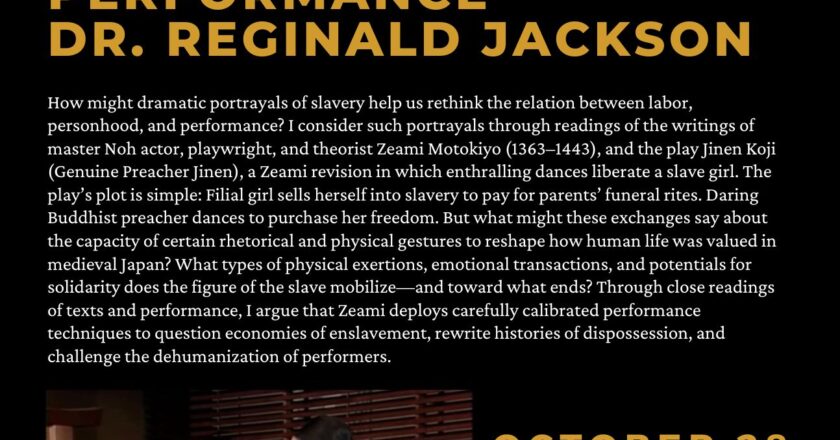
By Chloe Jung '27 This year’s Pacific Area Studies Annual Lecture, organized by the Asian Studies Department Program at Colorado College, hosted esteemed scholar and teacher of Japanese literature, as Reginald Jackson from the University of Michigan. Dr. Jackson earned his B.A. in East Asian Languages and Civilizations from Amherst University in 2001 and his P.h.D in East Asian Studies from Princeton University in 2007 before joining the Asian Languages faculty at Yale University and University of Chicago. In 2015, he entered the University of Michigan as a scholar of ancient Japanese literature and has since expanded his studies into areas such as performance, race, and queerness. He is now the Associate Professor of Premodern Japanese Literature and Performance at the University o...