Categories
Uncategorized

Buses, Sidewalks and a Shuttered Coal Plant: Yolanda Avila’s Vision for a Sustainable Colorado Springs

By Bella Houck

When Yolanda Avila walks into a room, she doesn’t so much take up space as open it. At the Tutt Library, she arrived with what I can only call a “large polar bear” of a service dog, a warm smile, and a presence that was somehow both steady and electric.

She laughed easily, slipped between stories of childhood, policy fights, and salsa orchestras, and spoke with a warmth that made me want to curl up and listen.

Yolanda is blind. She is also a former Colorado Springs City Councilmember and Utilities Board member who has helped reshape the way this city thinks about transit, infrastructure, climate, and who growth is actually for.

Because for Yolanda, climate and sustainability aren’t abstract debates. They are sidewalks that end mid-block, a coal plant that never shuts off, a bus that doesn’t come on Sunday, a blind woman asking: Who is this city designed for?

Yolanda’s relationship with Colorado Springs began when her father, a Mexican American soldier, was stationed at Fort Carson in 1958. Her family moved between postings in France, Texas and Germany, but Colorado Springs remained the constant.

“So since the age of three, I lived here off and on from 1958. This is my city.”

Her childhood landscape included places that now define the region’s outdoor identity:

“We visited the Garden of the Gods often, Manitou Springs, Cave of the Winds, the Air Force Academy. We did a lot of just staycations.”

Those early “staycations” anchored her sense that land, water, and community here are inseparable. That sense never left.

Defying the Script

Yolanda moved to the southeast side of town at 12 and married young, having her first child at 16–17. She didn’t finish high school during her marriage, something she always regretted.

Eventually, as a single mother of two, she returned to school.

“I am going to go get my education so I went to Pikes Peak Community College, got my GED, and then I got my AA from there. Transferred over to Colorado College, and graduated here in ’85. I was a single parent. I was a nontraditional student. I really don’t know how I did it with two kids, a job.. but I still kind of live that way.”

After graduation, she worked for nonprofits helping women move from public assistance into training and jobs before moving to California and eventually becoming a criminal defense investigator for the Orange County Public Defender’s Office.

There, she helped organize defense investigators after discovering that prosecutors’ investigators –  “all ex-cops, all white men” – made 25% more. They didn’t win full parity, but they did win a 17% raise and step increases.

Her life in California was full: a career she loved, salsa dancing, a new car with a moonroof, nights driving beneath palm trees in Newport Beach.

Then, three years into her career, she was told she was going blind.

“This was not the plan. I was like, ‘What am I going to be able to do as a blind person? Am I going to just have to go on disability and go home… and die?’”

Instead, she adapted. She trained at the Braille Institute and changed how she investigated cases, bringing interns into the field while she listened, coached and corrected. Many of those interns went on to become attorneys, judges, and FBI and CIA staff.

Her world changed, but her core practice didn’t: see the system, organize people, push it to be fairer.

“What Happened to My City?”

In 2011, Yolanda retired and returned to Colorado Springs to be near her mother, who was turning 90. What she found shook her.

“2011–  a third of the city lights were out. I walked a lot, and if there were sidewalks, they were deteriorating. The intersections were so dangerous, sometimes the sidewalks would just end in the middle of a block, and I’m like, where do I go? What do I do?”

Near her Southeast home, a bridge on Airport Road had been built in 1964 without pedestrians in mind. Its drainage channel is filled with mud and ice.

“I could tell people in wheelchairs were going out on Airport Road. I was like, this is a death trap.”

Bus service ran Monday-Friday, ending at 5:30 p.m. No Sundays.

“Lord, what happened to my city?”

She began showing up at City Council and the Pikes Peak Rural Transportation Authority, arguing that transit was not a luxury but a basic public service – just like roads and bridges.

“I can’t even go to church on Sunday because you don’t run buses on Sunday! I feel like I’m on a curfew.”

Within three years, organizing with others, she helped secure seven-day bus service, longer hours, and more frequent routes.

Her experience navigating Colorado Springs without sight had made infrastructure intensely personal. A sidewalk, bus route or intersection could determine whether someone could safely participate in their own city. Soon, she would bring that understanding into decisions about Colorado Springs’ environmental future, too.

From Coal Plants to Bus Stops: Climate, Up Close

On City Council and the Colorado Springs Utilities Board, Yolanda’s lived experience as a blind transit-dependent resident collided with big-picture climate and energy decisions.

At public utilities meetings she had once attended “just for fun,” she heard debates over the Drake coal plant downtown. The board resisted naming a closure date, convinced coal was cheaper and fearful that rate hikes would anger residents. Reliability was king.

When she got on the board, the context had shifted:

“What’s really the timing now, we’re moving into renewables. Solar and wind, they’re still expensive, but they’re getting less and less expensive.”

Drake, she notes, was nearly 100 years old and belched pollution continuously because, unlike modern gas turbines, it couldn’t simply be switched off. Nixon, another coal plant, was “spewing 2,000 pounds of CO₂ every hour because there’s not a switch to turn it off and on. You have to keep it running all the time.”

Her approach to the transition was pragmatic. She supported using natural gas turbines as a bridge:

“There’s not a 24 hour warm up. It’s a switch. You use it instantly. And when you don’t need it, you turn it off. They’re used for peak hours, people want their heat in the winter, and they want their air in the summer.”

Drake was fully closed in 2022 – 13 years ahead of the initial 2035 target. Yolanda is aware: the gas turbines still emit “600 pounds  of CO₂ an hour when they’re on.” But they can be shut down when demand drops, unlike coal.

At the same time, she never let go of what climate justice looks like at street level. Under her leadership, more than $2.7 billion went into roads, bridges, sidewalks, ADA ramps, and traffic signals. She pushed for more frequent, later-running buses, especially in Southeast. She championed Panorama Park, a 13-acre park in her district, redesigned with community input and accessibility in mind, now a regional destination and winner of the 2024 Colorado Lottery People’s Choice Starburst Award.

She also fought for inclusionary zoning and affordable housing across the city, arguing that “teachers, firefighters, police officers, baristas” should not be priced out of neighborhoods by speculative development and water-allocation politics.

In a warming, growing city, she sees climate resilience as whether people can afford to stay, breathe clean air, and move safely, not just whether the grid hits a renewable percentage on paper.

A Different Kind of Vision

Being blind on council was its own battle.

“It’s not easy being blind on counsel,” she says. Presenters would point to slides: “Oh, see this chart here? The purple line indicates… I’m like, ‘what the heck are they talking about?’”

Accessibility improved during her tenure, but she still often had to insist on descriptions and formats that allowed her full participation.

That experience shaped her politics. She talks about governance as needing to see the whole globe, not just the slice in front of your face:

“If you’re looking at a globe, you’re only seeing this part of it. If you’re on city council, it’s like you’re standing on the top and you’re looking around.”

From that vantage, climate, disability, housing, transit, and economic development aren’t separate issues. They’re facets of the same question: Who gets to belong in the Colorado Springs of the future?

Yolanda’s answer is rooted in five generations of her family who have lived here at the same time, from a grandfather born in the 1800s to a great-grandson born in 2024. That continuity gives her both urgency and patience. She points to past leaders who built reservoirs and early transit as shoulders she stands on, even as she challenges today’s decision-makers not to stall on buses, housing, and cleaner energy.

She is hopeful, especially about younger generations:

“You all give me a lot of hope, I see a service that this generation wants to bring to the table, and curiosity. I do hope that that curiosity stays.”

The Pikes Peak Climate Archive seeks to capture how global forces — climate change, water scarcity, energy transitions — play out in local lives.

Yolanda Avila’s story is one of those lives.

It begins with a little girl in a military family walking Garden of the Gods and returns, full circle, to Southeast Colorado Springs, where a blind woman and her polar-bear service dog fight for buses that run, sidewalks that don’t end in the dark, and a city that understands climate justice as the right to move, breathe, and stay.

She doesn’t claim purity, but she insists on honesty about trade-offs, about data centers that drink potable water yet fuel our digital lives, about light rail that might seem “too Denver” but could knit an increasingly sprawled region together.

Above all, she insists that sustainability and equity are not competing agendas.

They are the same project.
Categories
Uncategorized

Awareness to Action: Richard Skorman and Environmental Advocacy in Colorado Springs

Richard Skorman’s environmental awareness originated prior to his political career, shaped by his upbringing in Akron, Ohio. Raised in an industrial city characterized by rubber factories and pollution, including the well-known Cuyahoga River fires, he witnessed firsthand the consequences of environmental neglect. These formative experiences informed his understanding of the connections among industrial activity, pollution, and community well-being.

Motivated by a desire for natural beauty and a healthier environment, Skorman chose to attend college in Colorado. He explained, “I got into schools in Colorado because I wanted to be in a beautiful place.” This decision represented a pivotal moment, situating him in a region where outdoor life, open space, and environmental preservation are integral to both lifestyle and identity.

Skorman’s initial years in Colorado were not characterized by environmental activism. However, exposure to the region’s landscapes, environmental films, and conservation initiatives gradually strengthened his commitment. These influences eventually led to active engagement, including organizing environmental film festivals, leading major conservation projects, and contributing to local policy development. This evolution from personal experience to public action demonstrates how Skorman’s background directly shaped his sustained involvement in environmental issues, ultimately establishing him as a central figure in the environmental and political landscape of Colorado Springs.

Environmental Awareness

Skorman’s environmental awareness deepened significantly after he returned to Colorado Springs and founded the first U.S. Environmental Film Festival in 1990. Through organizing the festival and watching many environmental films, he was exposed to a wide range of climate and ecological issues, many of which demonstrated the urgency of environmental degradation. Although he had previously been aware of issues like industrial pollution, such as the burning of the Cuyahoga River, this experience marked a turning point where environmental concerns became more personal.

This exposure led Skorman to recognize the long-term consequences of environmental neglect. The films and discussions with national experts helped him understand that many of the environmental crises predicted decades ago are now becoming a reality. This realization shifted his perspective from passive awareness to a more urgent concern about sustainability and accountability.

A key moment in this shift is captured when he reflects, “What are we leaving future generations?” This question illustrates how his awareness evolved into a moral concern, emphasizing intergenerational responsibility. Rather than simply acknowledging environmental problems, Skorman began to see the need for action and advocacy. This film festival served as a catalyst, moving Skorman from general awareness to active engagement and a deeper commitment to environmental responsibility.

Local Environmental Action and Policy: Land Conservation and Open Space

At the time, significant portions of the city’s mountain backdrop were under threat from rapid development. Areas now protected, such as Cheyenne Mountain State Park and Red Rock Canyon Open Space, were once slated for large-scale housing projects, golf courses, and even resort development. These plans reflected broader development pressures that prioritized economic growth over environmental preservation.

In response, Skorman collaborated with fellow Colorado College students to create what became the Trails, Open Space, and Parks (TOPS) initiative. This was designed to proactively protect land that would otherwise be developed. Skorman described spending years organizing efforts on the ground to build support for conservation. These efforts were effective, ultimately preserving the majority of the targeted land and shaping the city’s environmental landscape for future generations.

A crucial component of the TOPS initiative was securing public funding through voter support. As Skorman explains, “We got the voters a tenth of a cent sales tax that we could use to buy land that was going to get developed.” This measure created a dedicated funding stream for conservation, generating millions of dollars initially to support land acquisition and the development of trails and parks. This initiative also marked a political milestone: it was the first time voters approved a tax increase under the constraints of the “Taxpayer Bill of Rights,” demonstrating strong community commitment to environmental protection.

Pollution and Public Health

Skorman also reflects on the intersection of pollution and public health, particularly through the case of the Drake Power Plant. As a coal-fired facility located within a valley in the center of the city, the plant created significant air pollution that affected nearby residents. Due to the city’s geography, pollution would settle in lower-lying neighborhoods, exposing those living there to higher concentrations of harmful emissions.

This situation reveals patterns of environmental inequality. Communities close to the power plant, such as the Mill Street neighborhood, faced greater health risks. Skorman emphasizes that those “stuck in the middle were breathing the pollution,” illustrating how environmental hazards are often unevenly distributed.

A striking example of the health consequences is reflected in his personal account: “And she lived by the power plant and died of lung cancer at 45 and never smoked.” This story underscores the suspected link between prolonged exposure to pollution and serious illness, even in individuals without typical risk factors. The broader system failed to fully recognize or address the extent of the harm caused.

Water Systems and Environmental Impact

Skorman’s experience also highlights the interconnected nature of environmental systems, particularly in relation to water management. One pivotal moment occurred during a major storm event early in his time on city council, when infrastructure failures led to a large-scale sewage release into Fountain Creek. As he put it, “About 100 million gallons of raw sewage went directly into Fountain Creek.”

This event revealed both the vulnerability of urban infrastructure and the broader consequences of local environmental decisions. Pollution entering Fountain Creek does not remain confined to Colorado Springs; it flows downstream into the Arkansas River, affecting multiple regions. This example underscores the importance of viewing environmental issues as interconnected rather than isolated, with local actions producing far-reaching impacts.

In response, Skorman became involved in watershed initiatives aimed at improving water quality, reducing pollution, and mitigating flood risks. These efforts demonstrate the importance of long-term planning and regional cooperation in addressing environmental challenges.

Community-Based Environmental Activism

Beyond formal policy efforts, Skorman has also been involved in grassroots initiatives that emphasize community participation. One such example is Richard’s Rubbish Roundup, a volunteer-based program focused on cleaning up waste along local waterways and public spaces. The initiative operates on a weekly basis, engaging community members in hands-on environmental work.

As Skorman explained, “We go every Tuesday…30, 40, 50 volunteers…picking up garbage.” This consistent, small-scale effort has resulted in the removal of significant amounts of waste while also fostering a sense of collective responsibility among participants. This form of environmental action highlights the importance of ongoing maintenance and local engagement, potentially sparking larger policy initiatives. It demonstrates that meaningful environmental change often requires both institutional action and sustained community involvement.

Structural Challenges and Limitations

Despite these efforts, Skorman acknowledges the structural challenges that complicate environmental sustainability in Colorado Springs. Rapid population growth, limited water resources, and infrastructure designed around automobile use all contribute to ongoing environmental pressures.

As he noted, “We’re basically a semi-desert that shouldn’t have so many people.” This statement reflects the fundamental tensions between environmental capacity and urban expansion in the region. Much of the city’s water supply is imported from external sources, raising concerns about long-term sustainability in the face of climate change and increasing demand. Additionally, reliance on car-based transportation contributes to air pollution and limits the effectiveness of environmental initiatives, as solutions must account for existing systems and patterns of development.

The Role of Local Politics and Youth Engagement

Throughout his career, Richard Skorman has emphasized the importance of local political engagement in addressing environmental challenges. Unlike national politics, local government provides more direct opportunities for community members to influence decision-making processes and advocate for change.

As he stated, “You can make a big difference in local politics. You really can.” This perspective reflects his belief that meaningful environmental progress often begins at the local level, where policies related to land use, energy, and infrastructure are determined.

Skorman also encourages younger generations, particularly students, to become involved in these processes. By attending meetings, engaging with policymakers, and contributing to local initiatives, individuals can play a direct role in shaping environmental outcomes. His emphasis on accessibility and participation underscores the potential for continued community-driven change.

Categories
Uncategorized

From Tomatoes to Barbed Wire: How One Colorado Ecologist Sees Climate, Capitalism and the Future of the Front Range

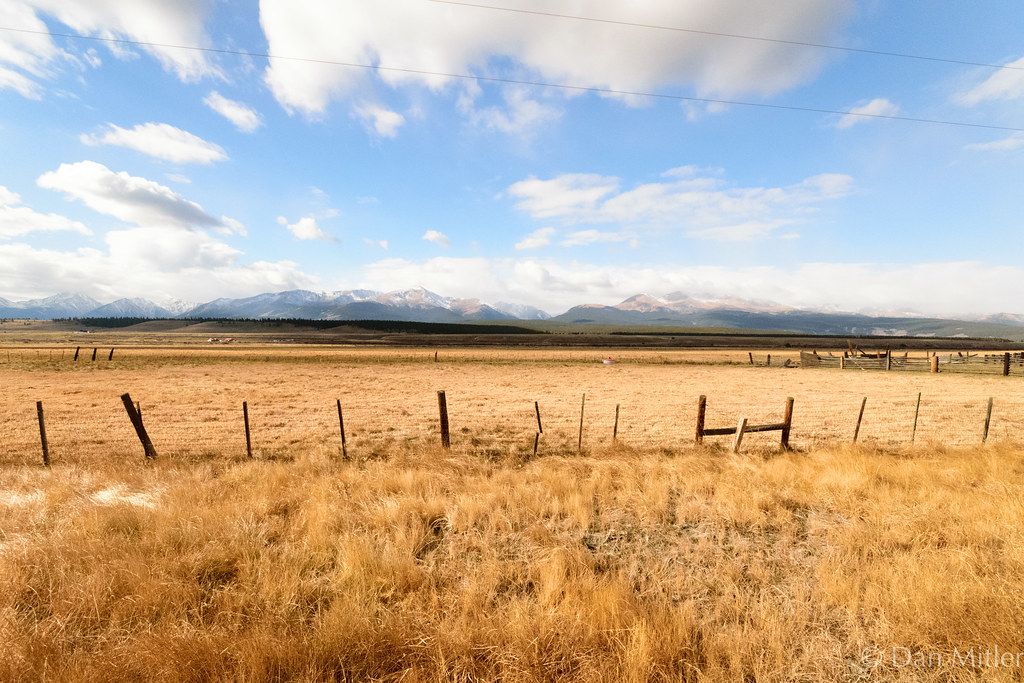
“Colorado plains” by DJM Photos is licensed under CC BY 2.0.

By Bella Houck

COLORADO SPRINGS, Colo. – When longtime ecologist and Colorado College educator Lee Derr wants to explain climate change, he doesn’t start with charts or policy papers. He starts with tomatoes.

Colorado Springs, he says, is one of the fastest-warming metropolitan areas in the United States when it comes to nighttime temperatures, a shift most people sleep through.

“You will see that Colorado Springs is one of the metropolitan areas of the United States of the 48 contiguous, that is showing some of the highest increases in nighttime temperatures,” Derr said. “And the population’s asleep then, and they don’t care about nighttime temperatures. They only care about daytime temperatures, so no one is noticing it. But as a gardener, it’s way easier to grow tomatoes now.”

For Derr, a gardener with 40 years of notes on frost dates, the signs of a changing climate are written in soil and seed. “I have 40 years of experience when the last frost was in the spring, when the first frost was in the fall. And I can see a creep that is shortening the winter,” he said. “[Winter] used to be about September 15 to May 15. Now they’re probably back about October 15 to April 30.”

This interview was conducted as part of the Pikes Peak Climate Archive, an ongoing project documenting local stories of climate and environment change around Colorado Springs.

A Life in the Field

Derr’s path to becoming one of the region’s most outspoken ecological voices was not straightforward. Raised in Pennsylvania Piedmont, he came west to Colorado State University for school, worked in outdoor education in Summit County, raced bicycles for a time and eventually found himself in a sixth-grade science classroom.

“I said I would never be an educator,” he recalled. “I would have taken that bet a million to one.” But colleagues who watched him work with kids at places like Keystone Science School urged him toward teaching. “They said you can’t do this forever,” he said of seasonal outdoor work. “So… I ended up teaching sixth grade science.”

Derr later began mentoring graduate students in education and eventually joined the faculty at Colorado College as an adjunct, working with Master of Arts in Teaching (MAT) candidates in science education. In recent years, he stepped back from formal teaching and now pieces together work as a contract land steward with Palmer Land Conservancy, visiting conservation easements across the region.

He jokingly calls this phase “retreading, not retiring.”

Ranchers, Retirement and the Price of an Acre

On the plains east of the mountains, Derr sees another front in Colorado’s climate and justice story: who can afford to stay on the land.

As a contract land steward, he visits ranches and farms protected under conservation easements–legal agreements that limit development and keep land in agricultural or open-space use.

“For about 50 years, by an act of Congress and the IRS you are capable of severing your development rights.” he said. “So keeping the land intact as a singular property. And the easement is a document that determines the uses that are now permissible.”

His first easement visit was with an 84-year-old rancher named Robert, on Colorado’s shortgrass prairie.

“I said, ‘Why did you do this?’ And he said, well… ‘See that ridgeline over there?’ He said, ‘I don’t know what the internet is, but that land used to be a ranch of 24,000 acres.’ And it was sold and they platted it… and you then are capable of selling those individual plats,” Derr recalled.

“In Colorado, it’s usually 35 or 40 acres,”. Once that happens, the old ranch landscape is gone. “Once you break it up, it will never be an ecologically sustainable system,” Derr said. “And this is in the short grass prairie of Colorado.”

Behind those choices, Derr says, are economic realities.

“Most ranchers are cash poor,” he said. “If they have 10,000 acres in Colorado, it takes at least 40 acres per Animal Unit, at least. So, 4000 acres, allows you to have 100 cows. 100 cows– you might have had an annual reported income of $30,000, $40,000. You have no way of building up a retirement.”

“So for many families, if the children didn’t want the ranch, the only way you can retire is to sell off your land,” he said. Other ranchers often cannot afford to buy it. Developers can.

Easements as a Different Kind of Deal

Conservation easements, Derr argues, change the math.

“The nice thing about a conservation easement is that it diminishes the value of the land, the accessible value,” he said. On the outskirts of Colorado Springs, that means “the principal person who is going to buy it is a developer.”

“What it does is diminish the land value, because it’s going to stay in agriculture,” he said. “And now someone can probably purchase it who can afford to keep it in ranching.”

Colorado sweetens easements with tax credits, which landowners can sell to corporations for cash. Those credits are valuable to companies with large tax bills but not to older ranchers with low taxable income. “Tax credits are saleable, [developers who] want them can buy them for about 92 cents on the dollar,” Derr said. “They save eight cents… and then that money goes to Robert.”

Derr offers another famous example from western Colorado: a peach orchard under easement near Palisade.

“The family was a 30‑year‑old couple, and they had two kids and they had just purchased a peach orchard that was under easement because they could afford it, and all the current peach growers were all 65 and above, and they’re ready to retire,” he said. The easement gave older growers some remuneration and ensured the land stayed in agriculture.

The younger farmer had gone to school for computer science, Derr said, and brought “skills in internet marketing” to the orchard.

“So if it wasn’t for conservation easements, there would not be a Palisade peach,” Derr said.

“Water drop on barbed wire fence” by ♥ ~ Chaurasia ~ ♥ is licensed under CC BY 2.0.

Bison to Blue Stem

Derr’s work on the plains is informed by a long ecological view of the Great Plains grasslands, including eastern Colorado.

“Before the westward expansion… bison, pronghorn, elk, grizzly bears. Everybody was out there on the prairie,” he said. Bison herds, held together by wolves, acted like a moving mowing and fertilizing machine. “You never came back to the same area unless it was good grass,” he said. 

“The grasslands all the way from mid-Kansas, to the Rocky Mountain Front were the grasslands [that] evolved with this periodic mowing.”

One of his key examples is blue stem, a deep-rooted grass in the central and northern plains. “Blue stem… has roots that are 16 to 25 feet deep,” he said. In drought, “blue stem say, ‘No problem.’”

The arrival of private property and fencing disrupted that system.

“What we did was we invented barbed wire, and we shot all the bison,” Derr said. “And so with barbed wire, you can throw a cow out there… and you let them eat what they want to eat, they go around and they say, ‘I like this plant, I like the blue stem because it’s highly nutritious, but I don’t like this other stuff’. So what happens over a couple years you have all these less desirable plants and the biodiversity crashes.”

“You put one horse on 40 acres, it’s toast,” he added.

Powering Colorado: When Capitalism “Works” for Climate

If barbed wire and subdivision show capitalism’s role in ecosystem decline, Derr also points to a very different story in Colorado’s electric grid.

“Right now, the cheapest form of energy for the electric grid is renewables,” he said. “Because you’re not paying every day to buy more coal or oil. Once you have the infrastructure, you’re no longer paying, except you’re paying a little surcharge to the landowner who has those.”

He traces Colorado’s shift to a 2004 citizens’ initiative.

“Through the 90s, the people of Colorado kept getting wise and saying, we need to have renewable energy. We need to move to renewables. And one of the parties at the state level kept pushing for more renewables, the other party kept resisting.”

When lawmakers hesitated, citizens threatened to go around them. “They polled the citizens of Colorado, and they said, ‘If you don’t pass this as representative government, we’re going to do a citizens initiative’, which is a change in the state constitution,” he said. “In 2004 we voted that by 2025 we would have 25% renewables.”

Utilities responded by investing in efficiency and building wind and solar. “We outstripped what the citizens wanted us to do,” Derr said. “We almost doubled it. 43% of your electrical energy is renewables.”

Who’s Responsible?

For all the policy shifts and market signals, Derr comes back to a harder question: what is the responsibility of individuals in an unequal world?

“If I hop on a plane, if I drive my car, if I consume carbon– does the individual have a responsibility? What does my little contribution do?”

He is skeptical of carbon credits, including those used by institutions like Colorado College to claim “carbon neutrality.”

“Do carbon credits really count?” he asked. “There’s a lot of evidence that they’re not worth the effort. They give you a feel good–‘I’m a good person.’”

He worries that some proposed geoengineering schemes, such as putting reflective aerosols into the upper atmosphere, are attractive precisely because they fit a familiar pattern: high-tech solutions, financed by capital, deployed at scale, with uncertain consequences.

“There’s lots of money in Wall Street who are willing to throw money into geo engineering, which is, instead of cutting back on our carbon, we’re going to manipulate the planet,” he said. “If you pay someone to do it, you bet they will do it without thinking of the consequences. Because every plant on this planet, if you reduce the solar incidence, plants are going to feel it first.”

For Derr, the questions are larger than one ranch, one wildfire season, or one city’s renewable portfolio. They are about how a state like Colorado, wealthy by global standards, ecologically diverse and politically divided, chooses to use its land, energy and power in a warming world.