Category Archives: CC Special Collections

the building that never was

Cutler New West imaginary


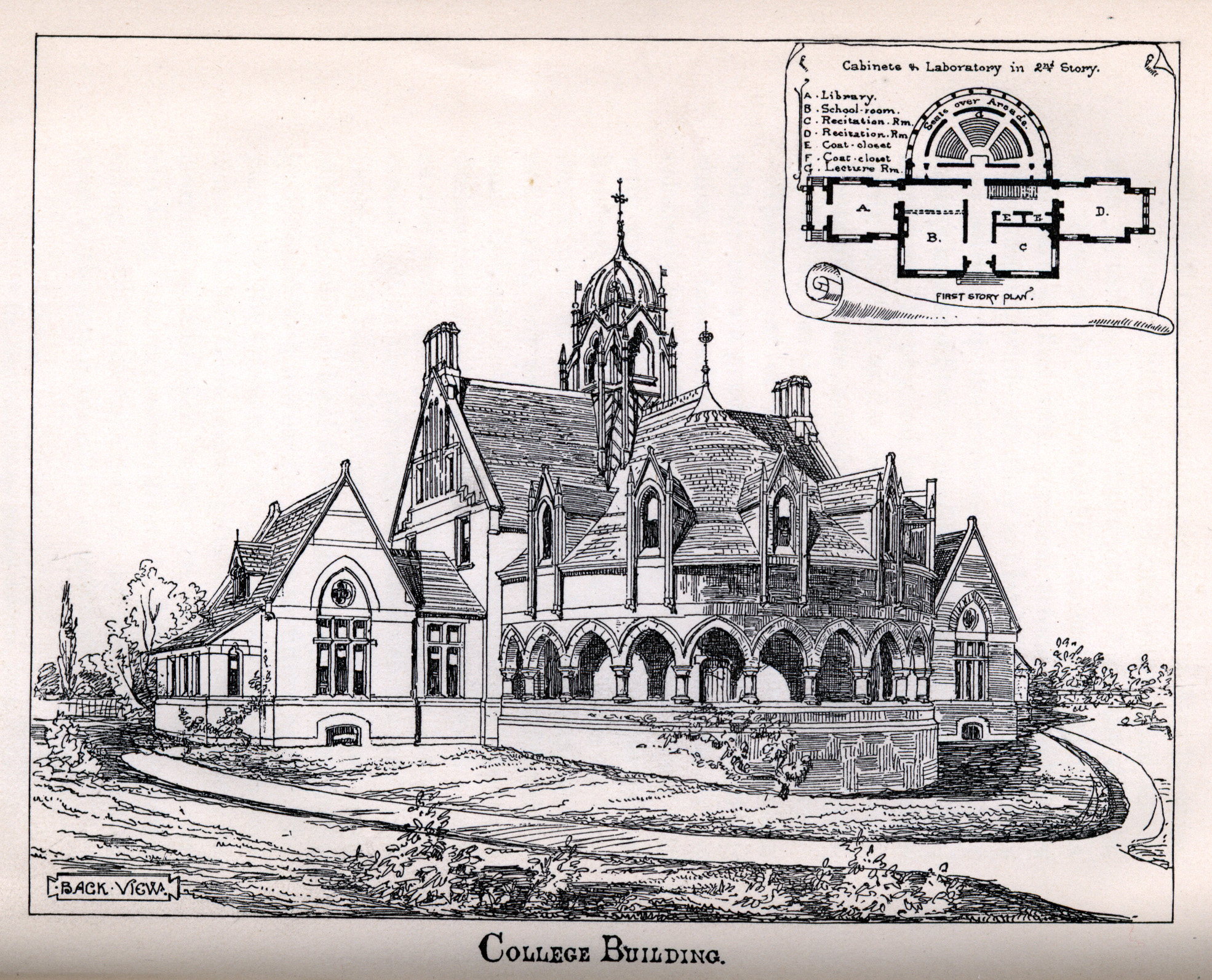
This illustration is from E.P. Tenney’s The New West, published 1878. It shows — or purports to show — the western facade of Colorado College’s Cutler Hall (also known as Palmer or simply “The College,” depending on the date).

Doesn’t it look enticing? A potential CC student could picture herself sitting with classmates and faculty in rocking chairs on that big back porch, talking together about Aristotle as they gazed out at a glorious Pikes Peak sunset.

Except that the porch, indeed the whole western piece of the building, was never built.

Nothing in The New West suggests that this illustration is any less real than the illustration of the building’s eastern facade, and indeed, at the time, they were equally imaginary. In 1878 the college did not yet have a freestanding building and operated out of a storefront in downtown Colorado Springs.

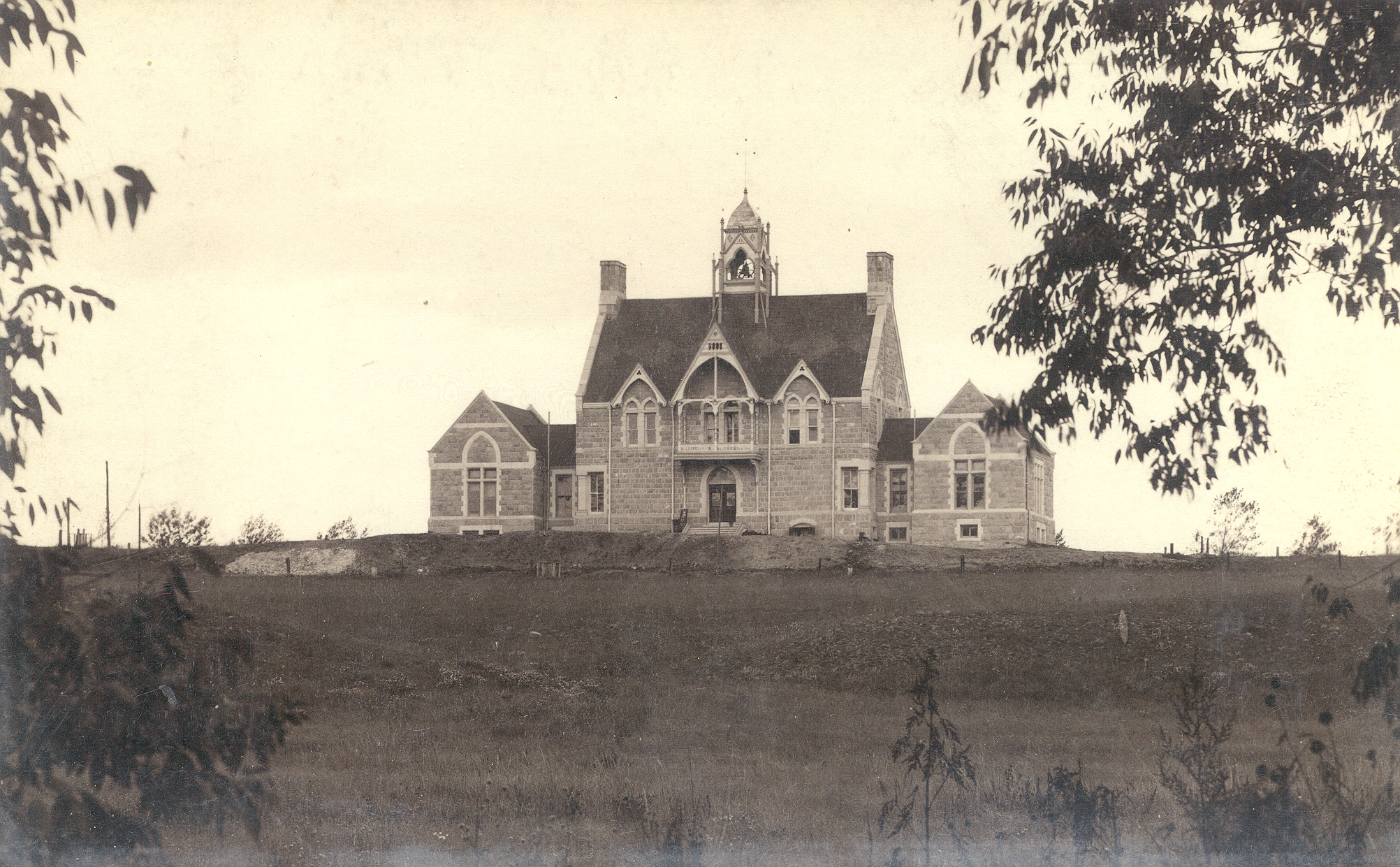
The middle piece of the planned building opened for classes in 1880, looking rather lonely out on the prairie:

Cutler1878

Around 1882, wings were added:

Cutler exterior 1883But the western-facing bit was never built.
1794 Wollstonecraft

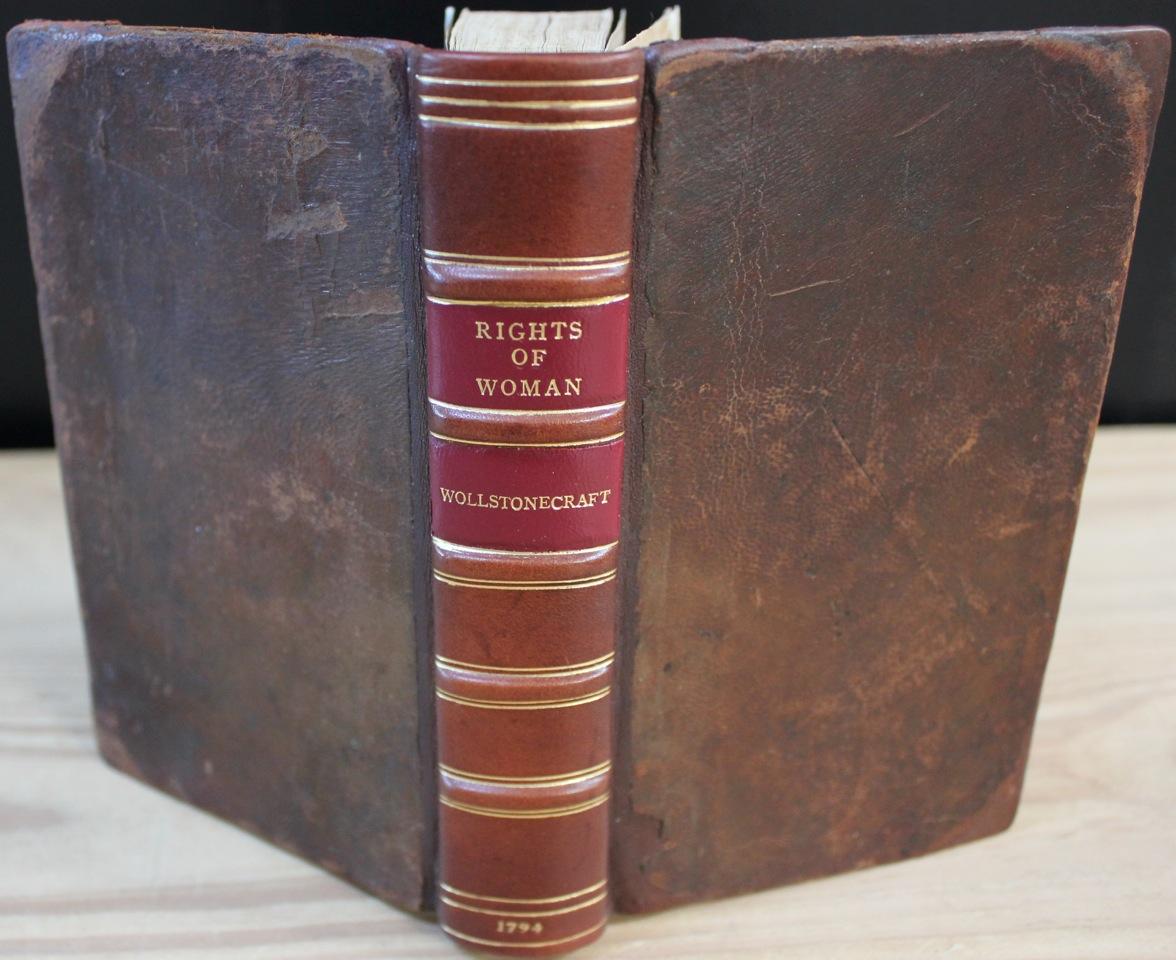
wollstonecraftThe first edition of Mary Wollstonecraft’s Vindication of the Rights of Woman, published in London in 1792, currently sells for about $20,000 (if you can even find one on the market). Too rich for our blood! We recently acquired a copy of the third American edition (Philadelphia, 1794) for a fraction of that price. (About a twentieth, if you must know.) Our edition was published toward the end of the author’s life: she died in 1797.

Colorado College students read this text in a number of classes (English, Philosophy, Feminist and Gender Studies). Perhaps an enterprising student will take the opportunity to compare this edition with earlier and later editions we have in electronic and paper form.

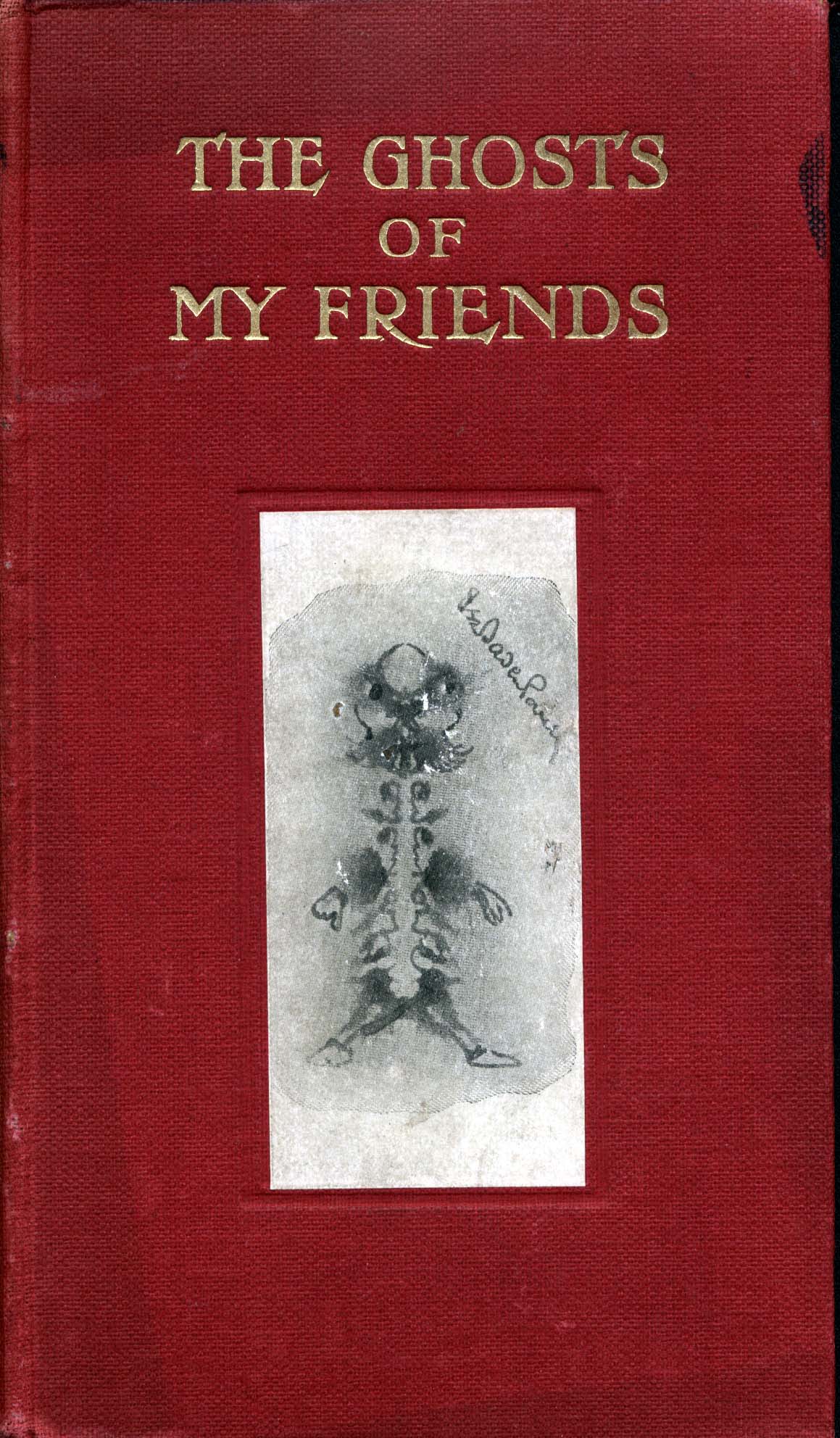
The Ghosts of My Friends

ghosts

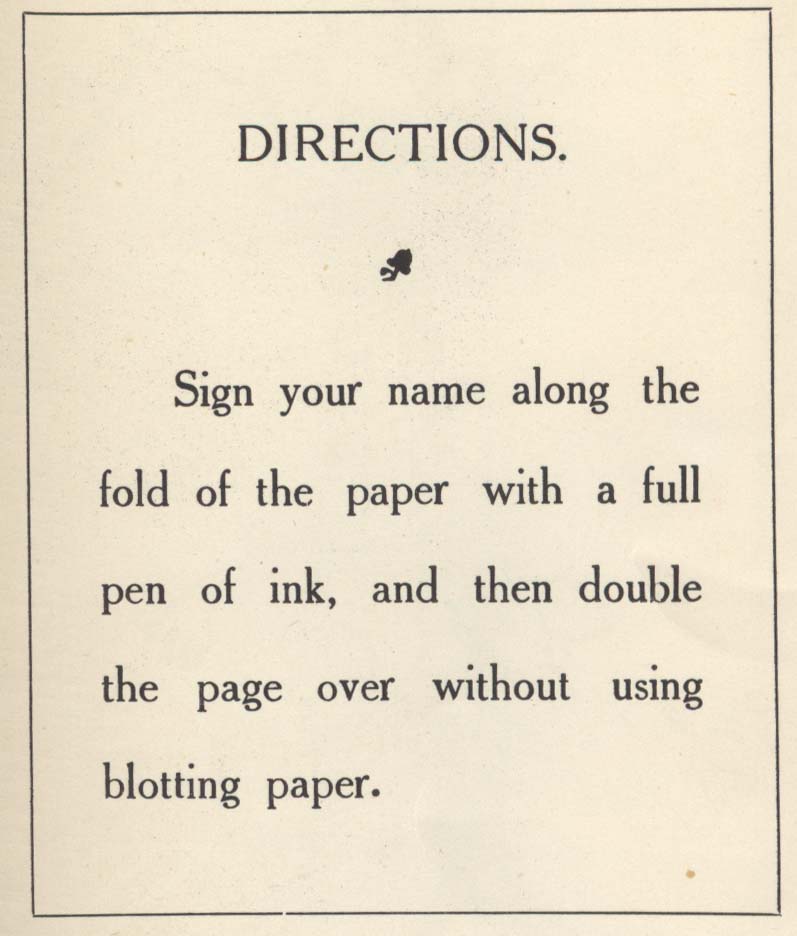
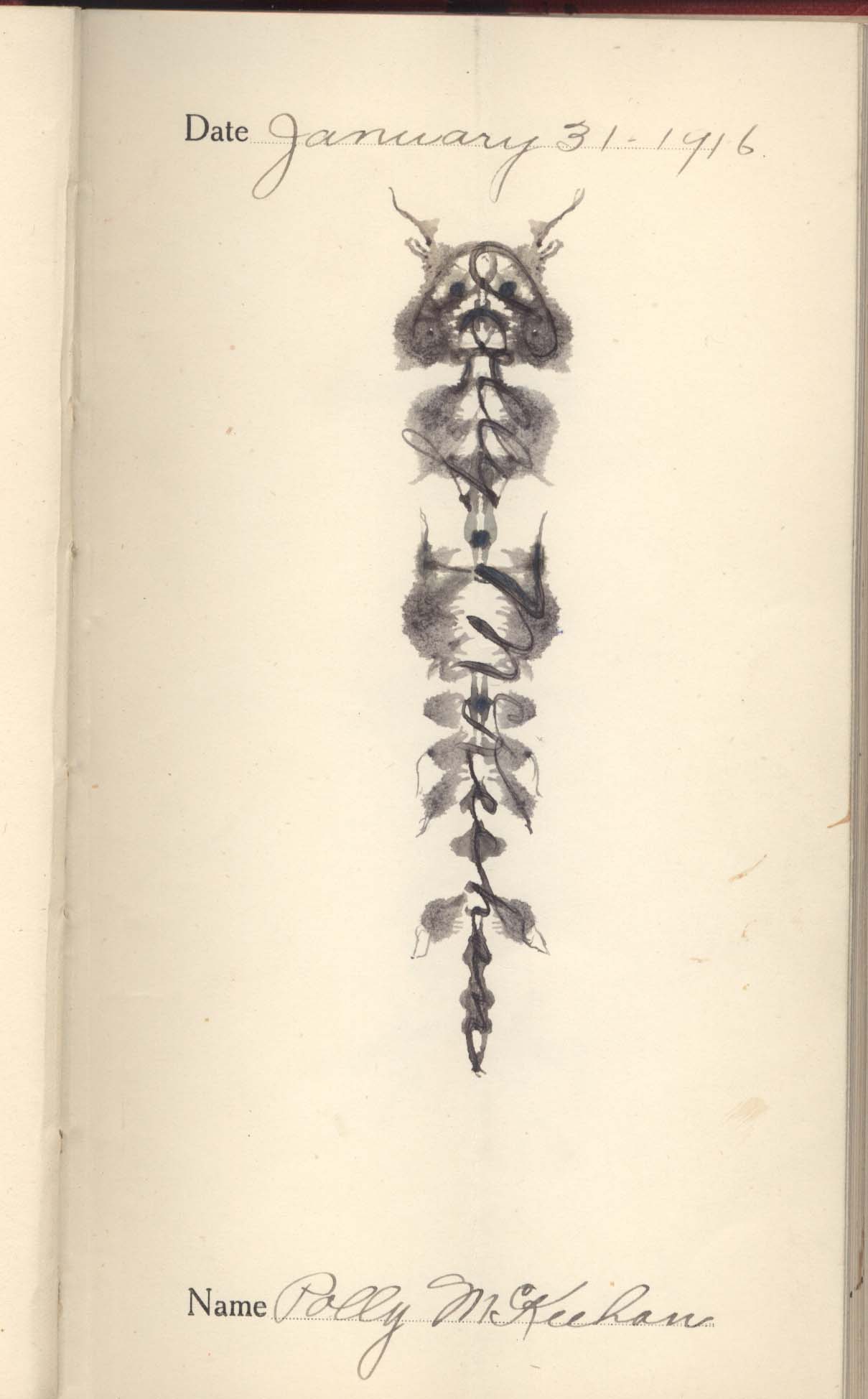
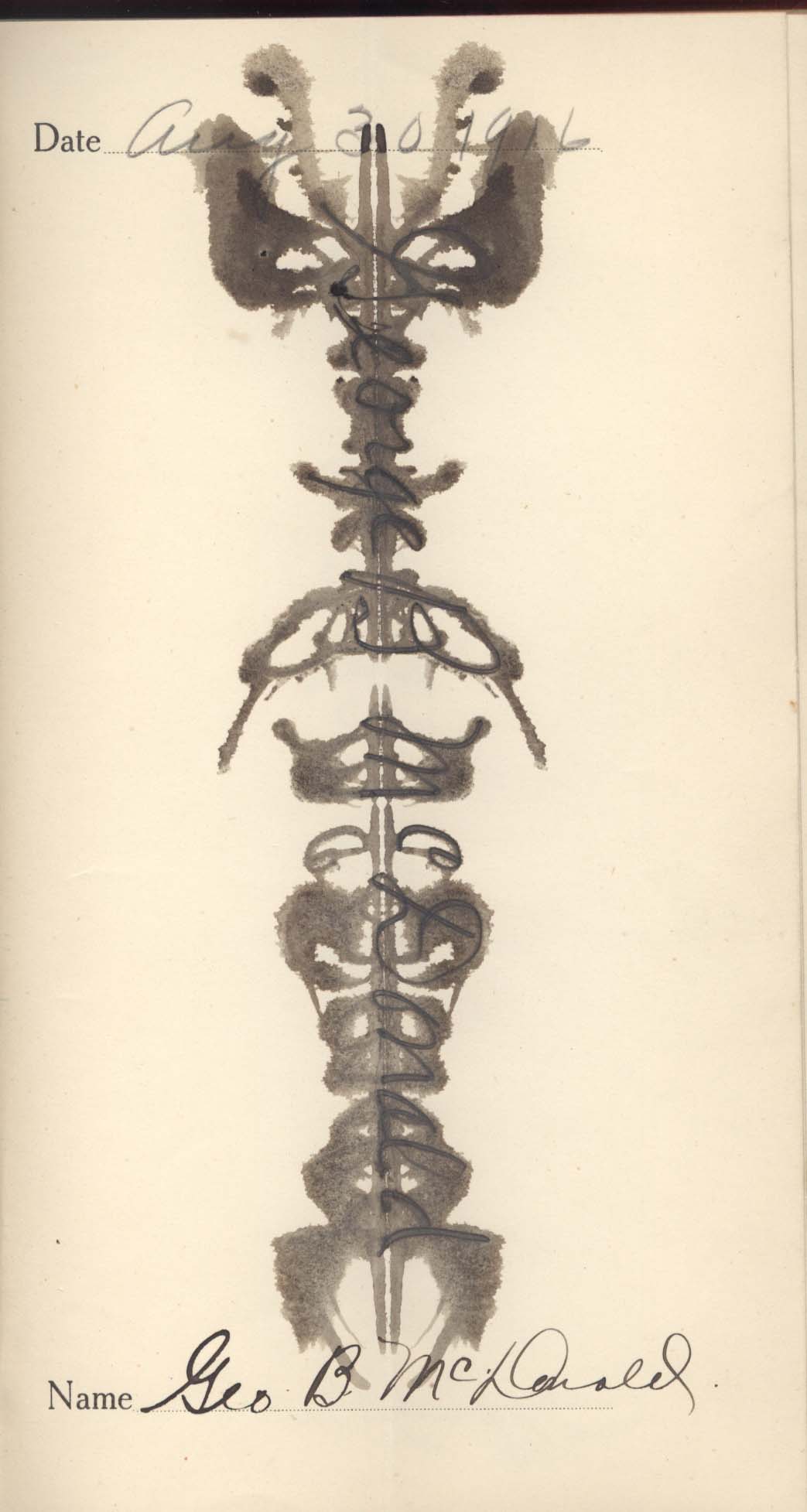
ghostsinstructionsThe Ghosts of My Friends is an autograph book with a twist. Published in the early 20th century, it’s a near-blank book meant to be used for sideways signatures to be turned into “ghosts,” that is, humanoid (or ghostoid) shapes representing the signers.


The “ghosts” pictured here were made in 1916 from the signatures of Polly McKeehan and Geo. B. McDonald.

ghostsexample ghostsexample2
There are about 40 copies of The Ghosts of My Friends in U.S. libraries. Each one, of course, would contain different ghosts. We brought our copy out recently during a class discussion about identifying people from their handwriting. This book takes that idea a step further, suggesting that a person’s handwriting is that person in a profound way.


An “indestructible” Mother Goose

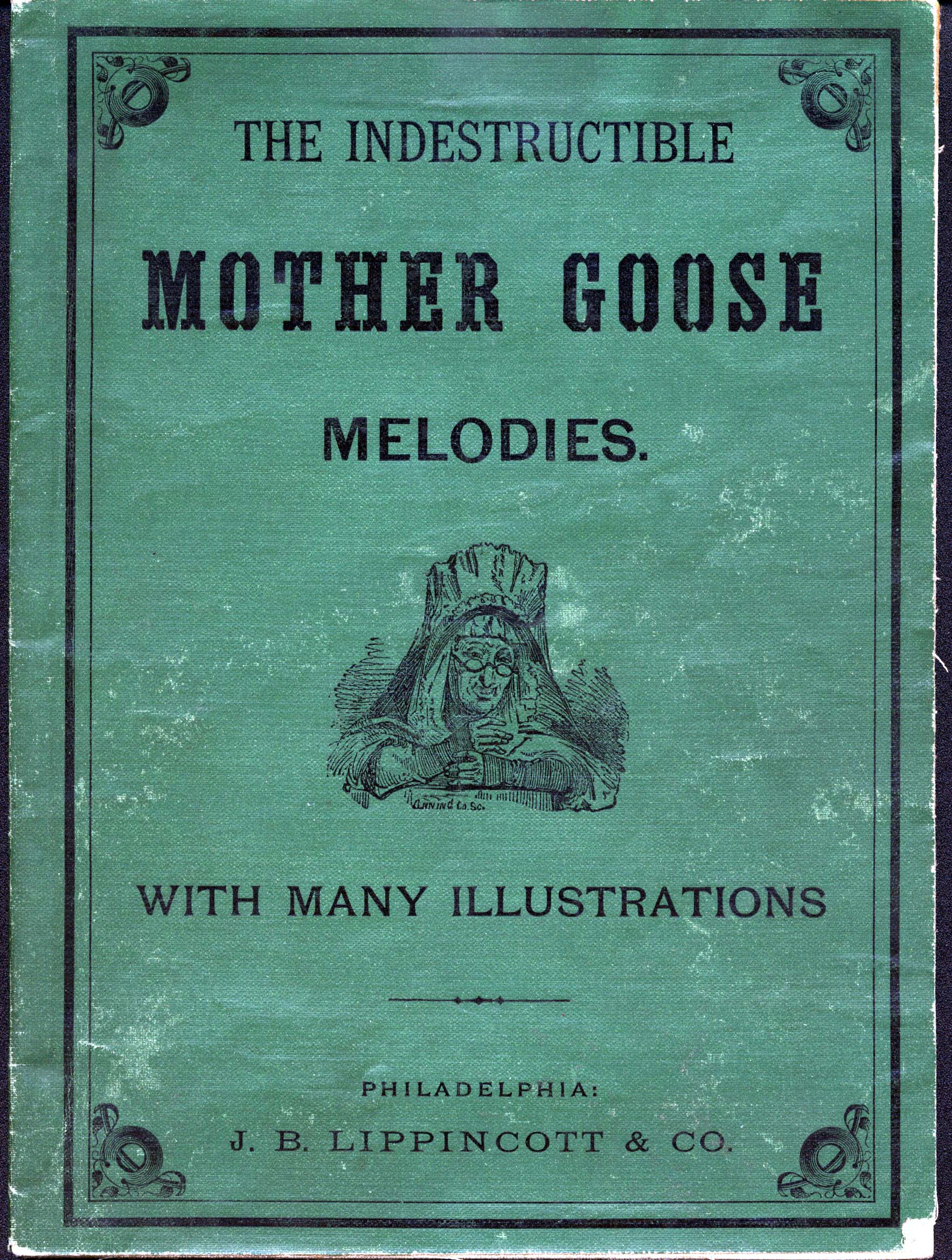
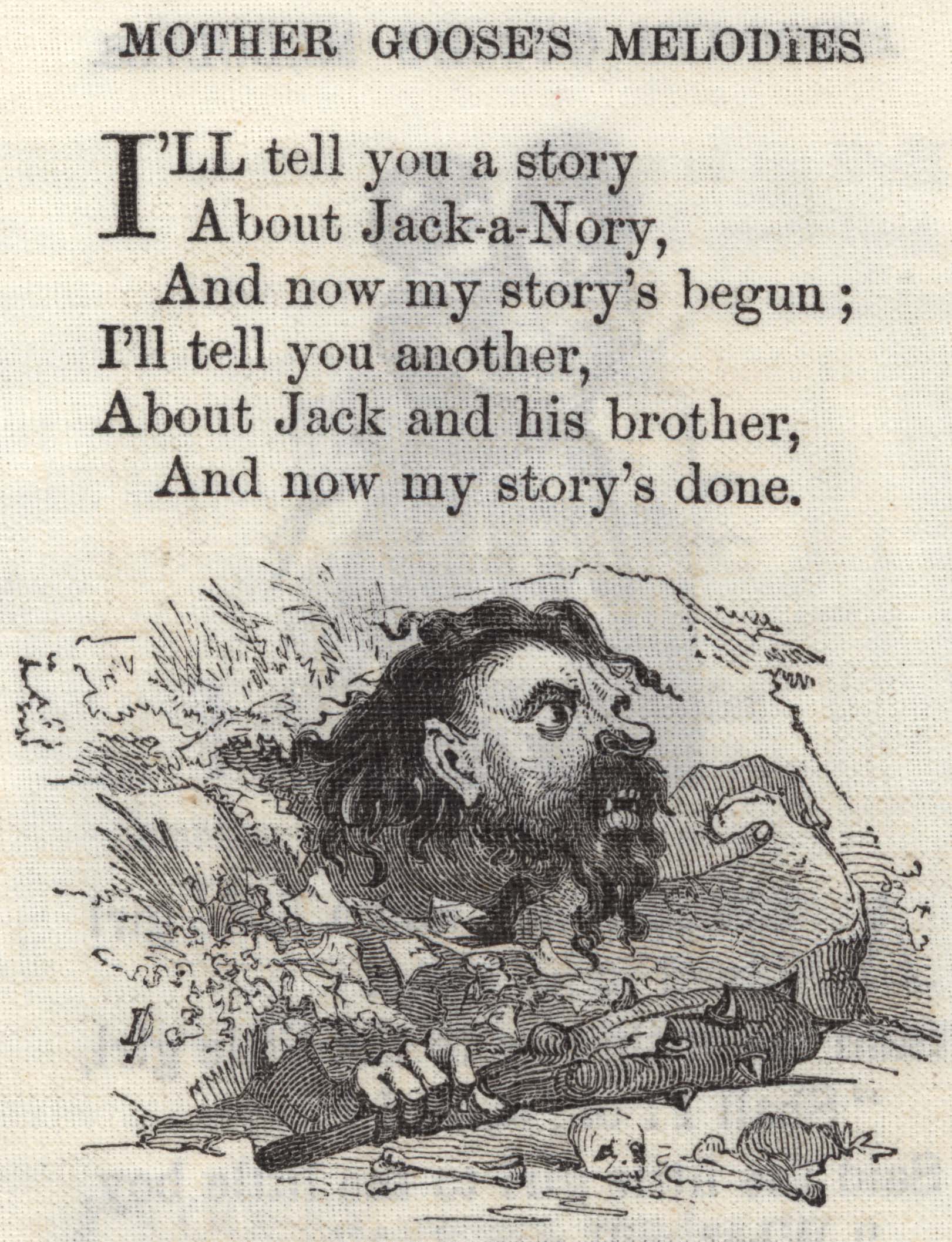
Special Collections recently purchased an “indestructible” 19th century edition of Mother Goose, Mother Goose’s Melodies: containing all that have ever come to light of her memorable writings. Philadelphia: Lippincott, 1879. What makes it indestructible, you ask? It’s printed on coated linen, so the book is chewable, droolable-on, and unrippable. (If you click the image on the right, you’ll see that the page is made of cloth.)

mothergoose mothergooseinterior

This isn’t the first “indestructible” edition ever published. The London firm Addey & Co. advertised its “Indestructible Books for Children” printed on “cloth expressly prepared” as early as 1856 (see the ads in the back of George Measom’s Light from the East). American firms also published “indestructible” books around this same period.

While some might argue that all books should be indestructible, it seems particularly useful in a book for young children. Most students at Colorado College are familiar with cloth or plastic books from their own childhoods, so we’re guessing it won’t take them long to figure out why a publisher might print Mother Goose this way. If they can’t figure it out, I guess the curator could give them a hint by nibbling on the front cover.

spooooooooky x-rays from 1896

In honor of Halloween, I present spooooooooooky x-ray images made by Colorado College professor Florian Cajori ca. 1896. These are probably the first x-ray images west of the Mississippi.

Cajorihandxray1896 Cajoriratxray1896 Cajoribirdwingxray1896 Cajorishoexray1896 Cajoriscissorxray1896

What you’re seeing are a spooooooooky hand, a spoooooooky rat, a spooooooky bird wing, a spooooky foot in shoe, and a spoooooky pair of scissors. The hand and the foot belonged to CC professor Frank Loud. Colorado Springs photographer Horace S. Poley developed and printed the photographs and labeled them. He did not use any form of the word “spooky.”

For more information, see: J. Juan Reid, “Florian Cajori: First X-ray Photographs in the West,” Colorado College Bulletin, February 1982, pp.12-13.

temporarily part of the Blumberg collection

In the 1980s, Stephen Blumberg stole thousands of books and manuscripts from American libraries, amassing a collection worth millions of dollars. (For the full story, see his Wikipedia entry or the “Bibliokleptomania” chapter of Nicholas Basbanes’s A Gentle Madness.)

VillerscoverColorado College was one of the many stops on Blumberg’s cross-country book-stealing tour. He stole at least two books from us. One of these was no big deal, a 1930s pamphlet on Bent’s Fort, easily replaceable. The other, however, was quite rare: Henry Villard’s The Past and Present of the Pikes Peak Gold Region, published in 1860. Currently, it’s held in only a handful of U.S. libraries and isn’t available from any dealer. The FBI valued the CC copy, in its crummy modern binding, at $10,000.

Blumberg may have stolen as many as a dozen books from our library, but only these two were recovered. Library staff worked with the FBI to get the books back. It was particularly complicated because Blumberg not only removed or covered over library ownership marks from books, he also added false library marks. So, for example, a book stolen from Harvard might get a University of Michigan bookplate slapped onto it, and then a “withdrawn” stamp on top of that.

VillersmissingbookplateAs was his wont, Blumberg used his own saliva to remove the CC bookplate from our copy of this book. (He frequently chose to lick bookplates off, whether he was in library reading rooms or at home.) Nevertheless, the FBI tracked the book down, and it was returned to CC after Blumberg’s 1991 trial. He spent almost five years in jail. Since 1996, he has been convicted twice more for similar thefts.

Because researchers often want to see the book that Blumberg stole, but can’t always remember the name of it, we now state in our catalog record that our copy of the Villard book was “temporarily part of the Blumberg Collection.” It’s a good book to bring out with classes when we want to talk about the ethics of book collecting, and always sparks an interesting discussion.

What does Special Collections look like?

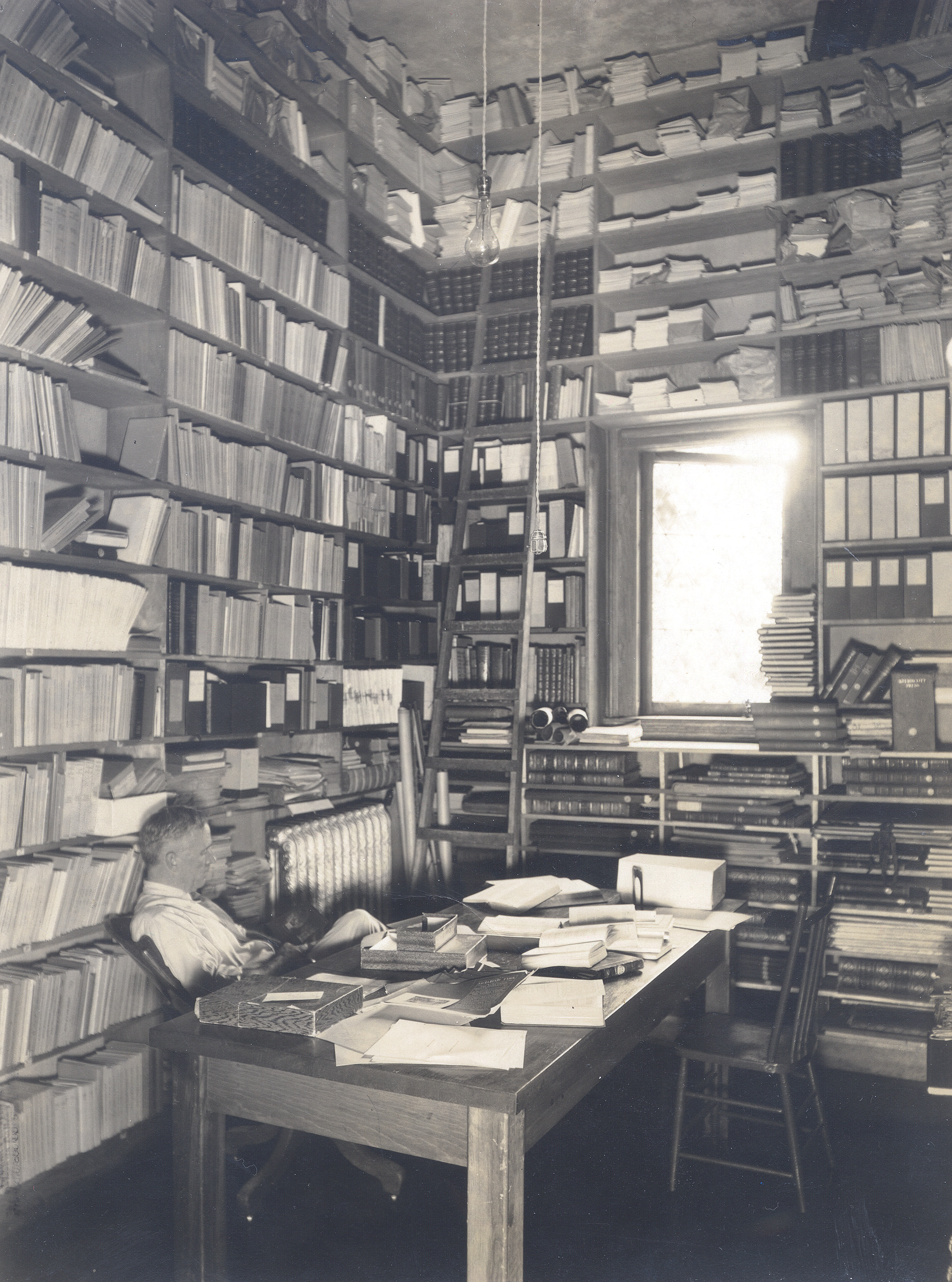
Coburn Library Colorado Room ca 1920
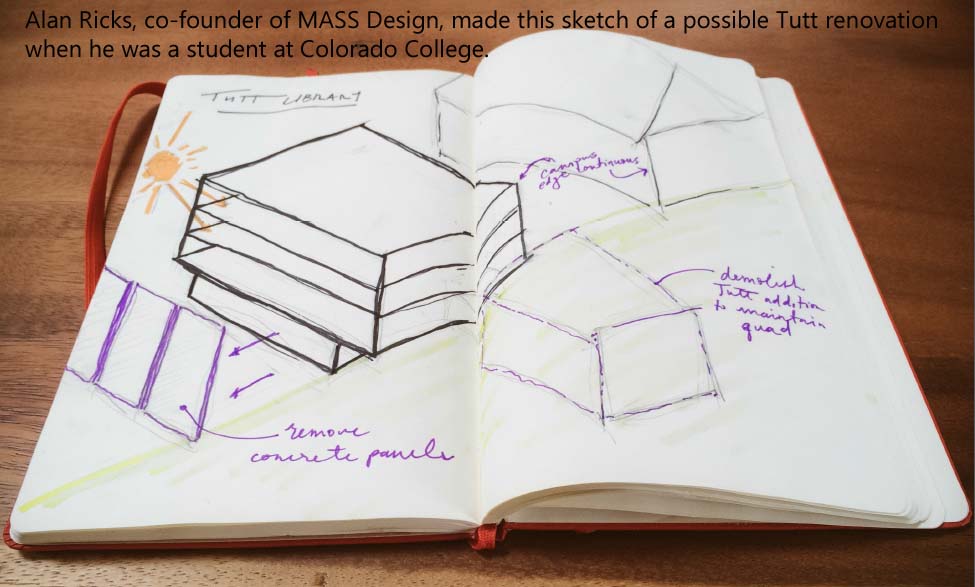
With plans afoot to renovate Tutt Library in the near future, we thought it might be fun to document the spaces Special Collections has inhabited over the years.

In Coburn Library, we had the Colorado Room, home to Professor Archer Butler Hulbert’s books and often the professor himself. Hulbert taught history at CC from 1920 until his death in 1933. He published many books on the American West and Southwest, including The Forty-Niners and the Overland to the Pacific series.

Coburn was built in 1892, renovated in 1940, and razed in 1964, so that was the end of the Colorado Room.

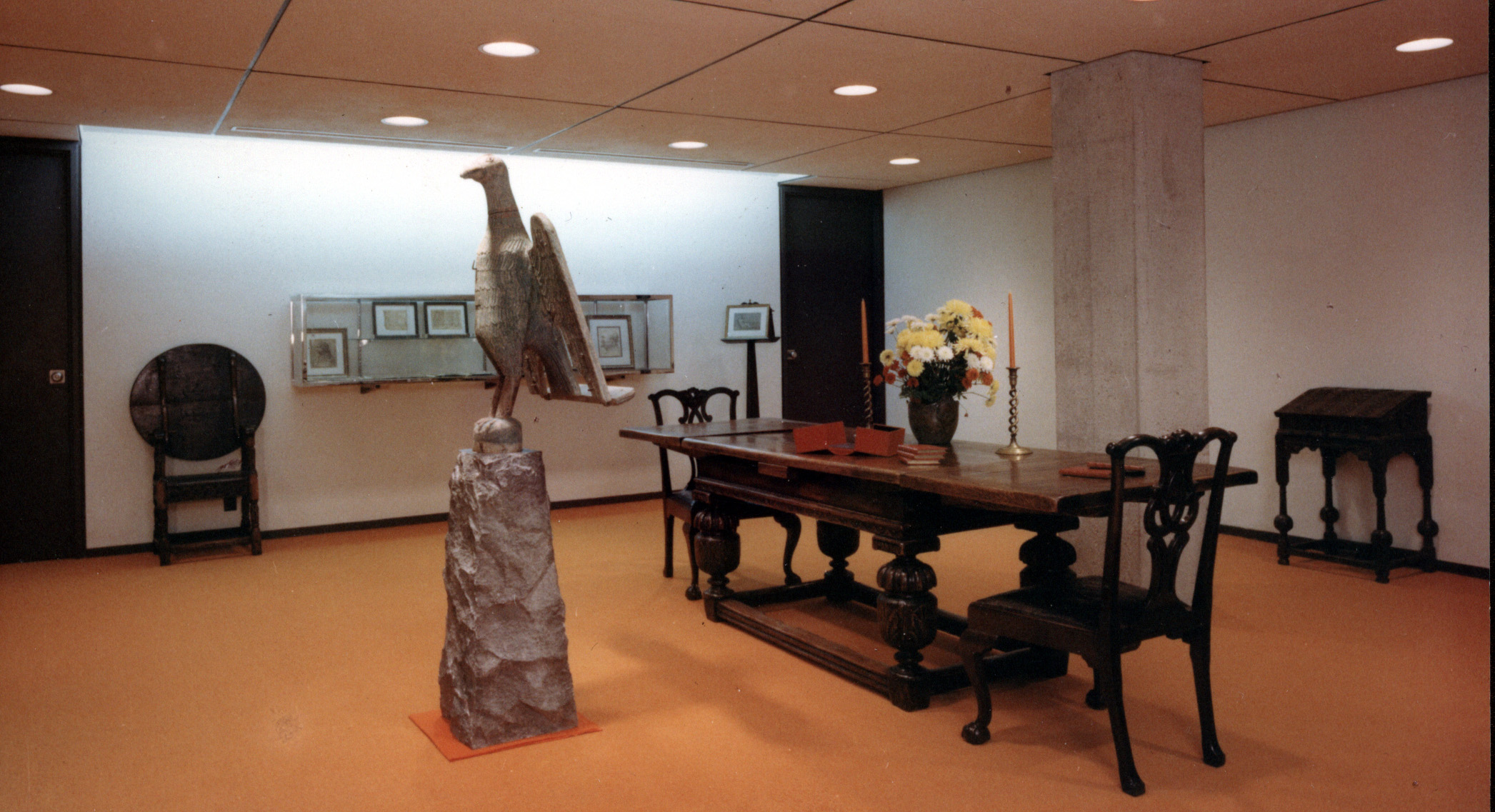
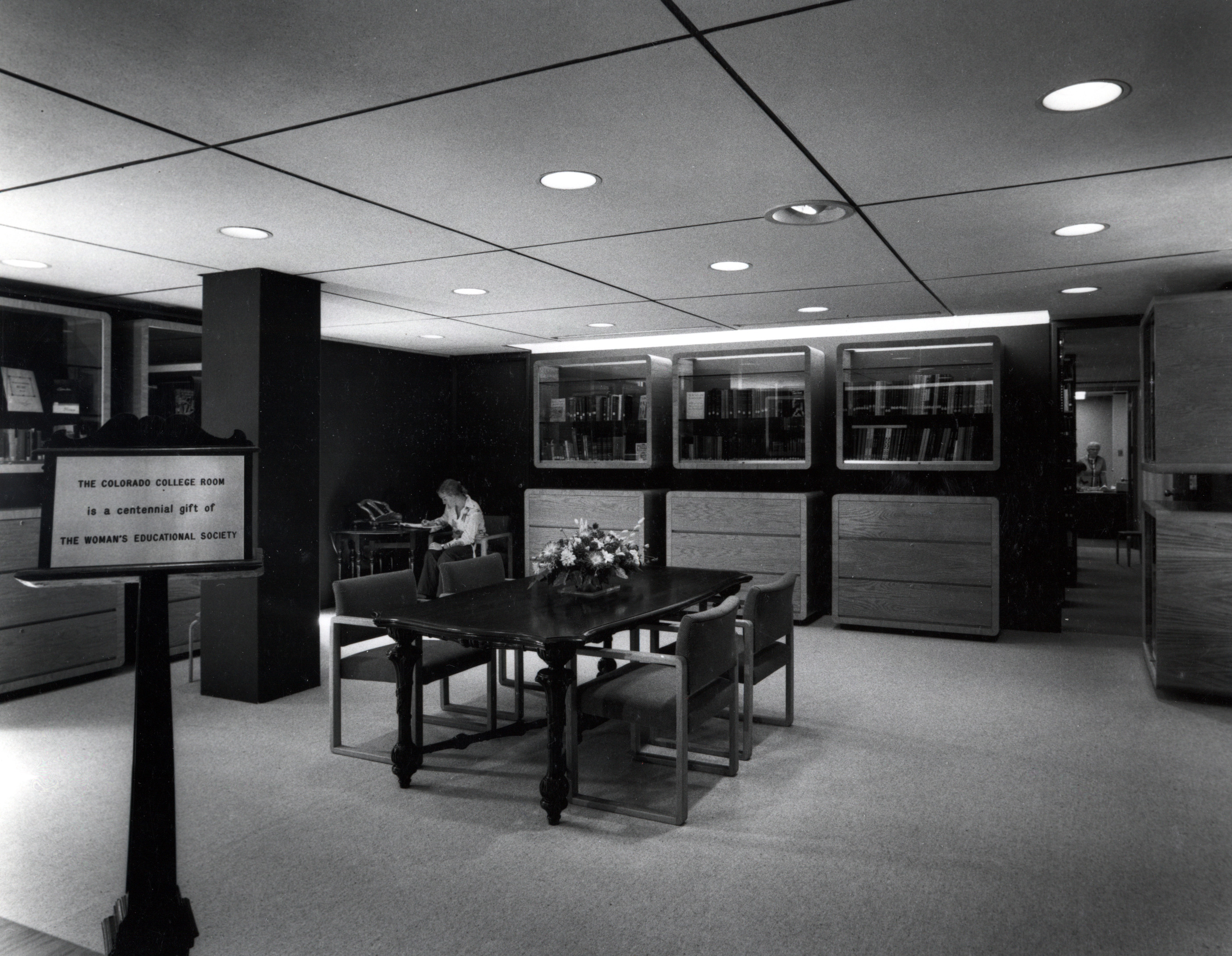
The architects’ plans for Tutt Library, built in 1962, contained a small Special Collections area adjacent to a Smoking Lounge [!]. The main room was used primarily for display. In 1977, the Woman’s Educational Society funded custom-built wooden shelves for the area, which was renamed the Colorado College Room.

TuttSpecialCollectionsca1970TuttSpecialCollectionsca1979

In 1980, when the collections and services of the library outgrew the original Tutt building, the college built “Tuttlet,” an annex to the south. It contains a new Special Collections with the same W.E.S. shelves.

In recent decades, we’ve had some quiet days…

TuttSpecialCollectionsca1990

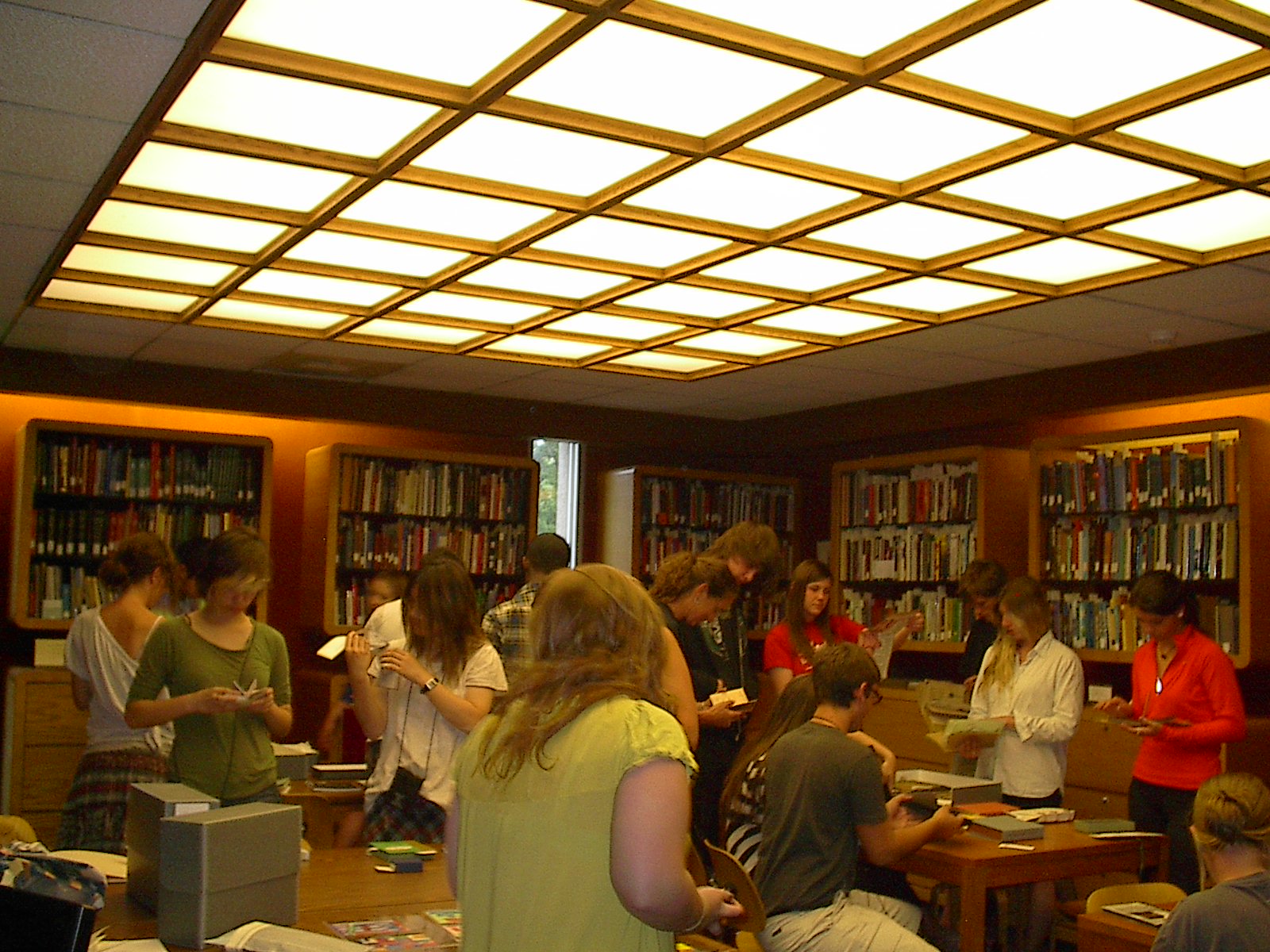
and some very busy days (additional shelves built by Dan Crossey).

TuttSpecialCollections2012

We’re looking forward to seeing what happens next for Special Collections at Colorado College.

MASSsketch


May acquisitions

hanmer

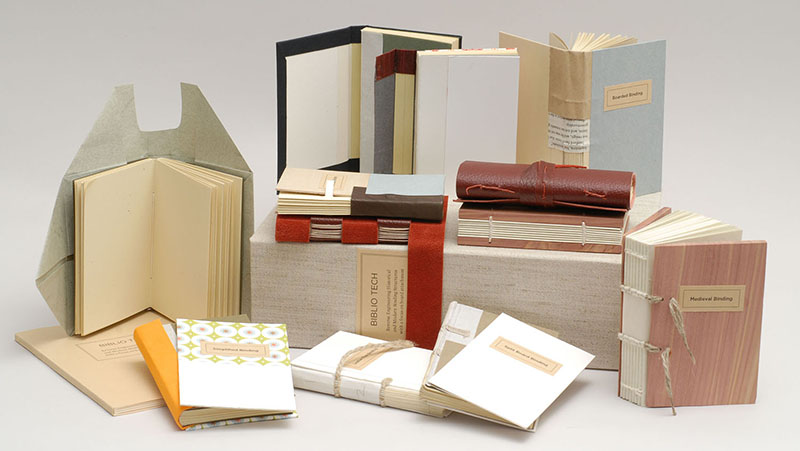
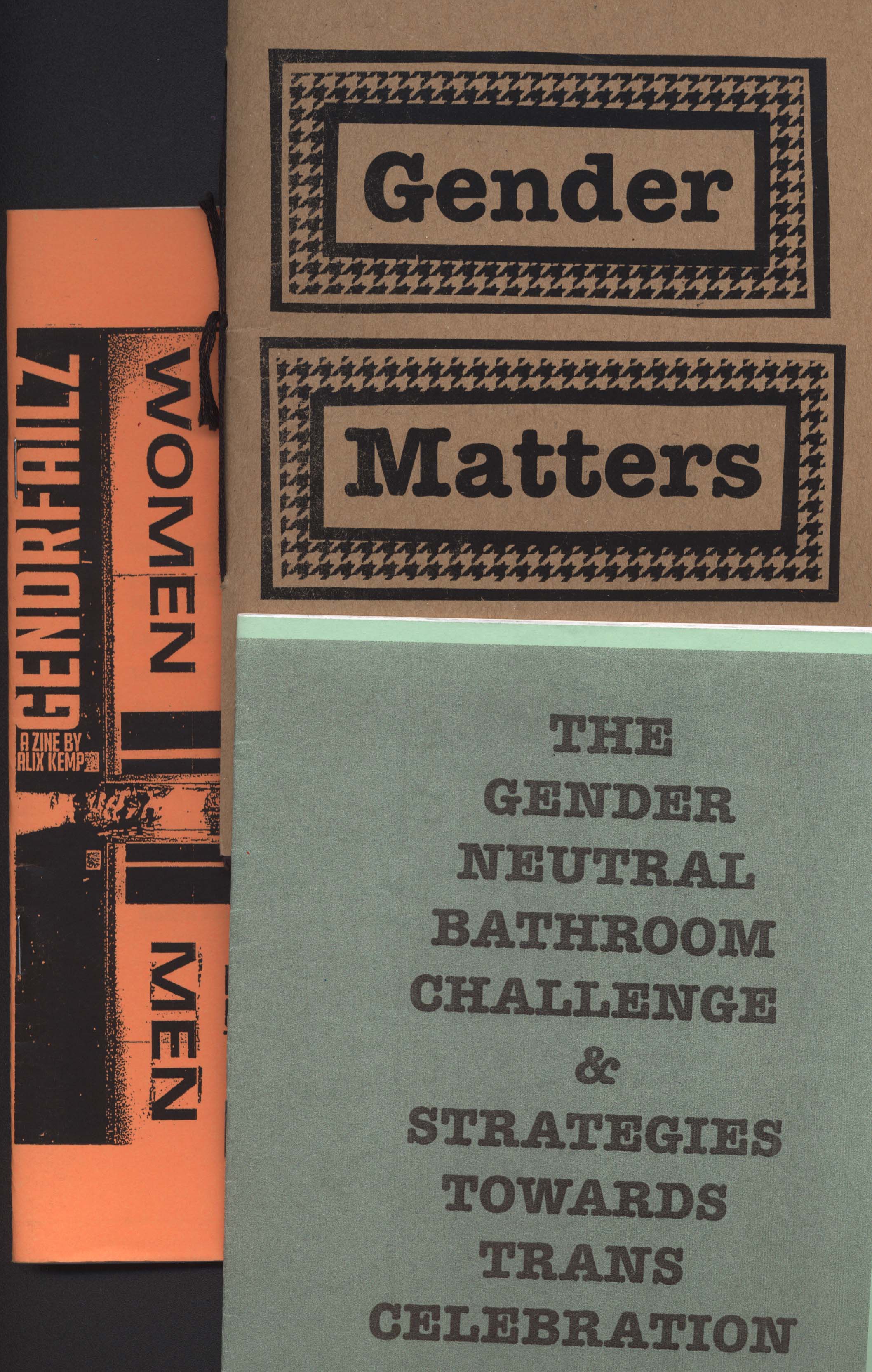
In May of 2014 we acquired lots of new goodies. We purchased Karen Hanmer’s boxed set of binding models, Biblio Tech: Reverse Engineering Historical and Modern Binding Structures.genderzines

Adison Petti of Colorado College’s Collaborative for Community Engagement donated about thirty zines to the CC Zine Collection, most of them concerning social activism and/or transgender experiences.

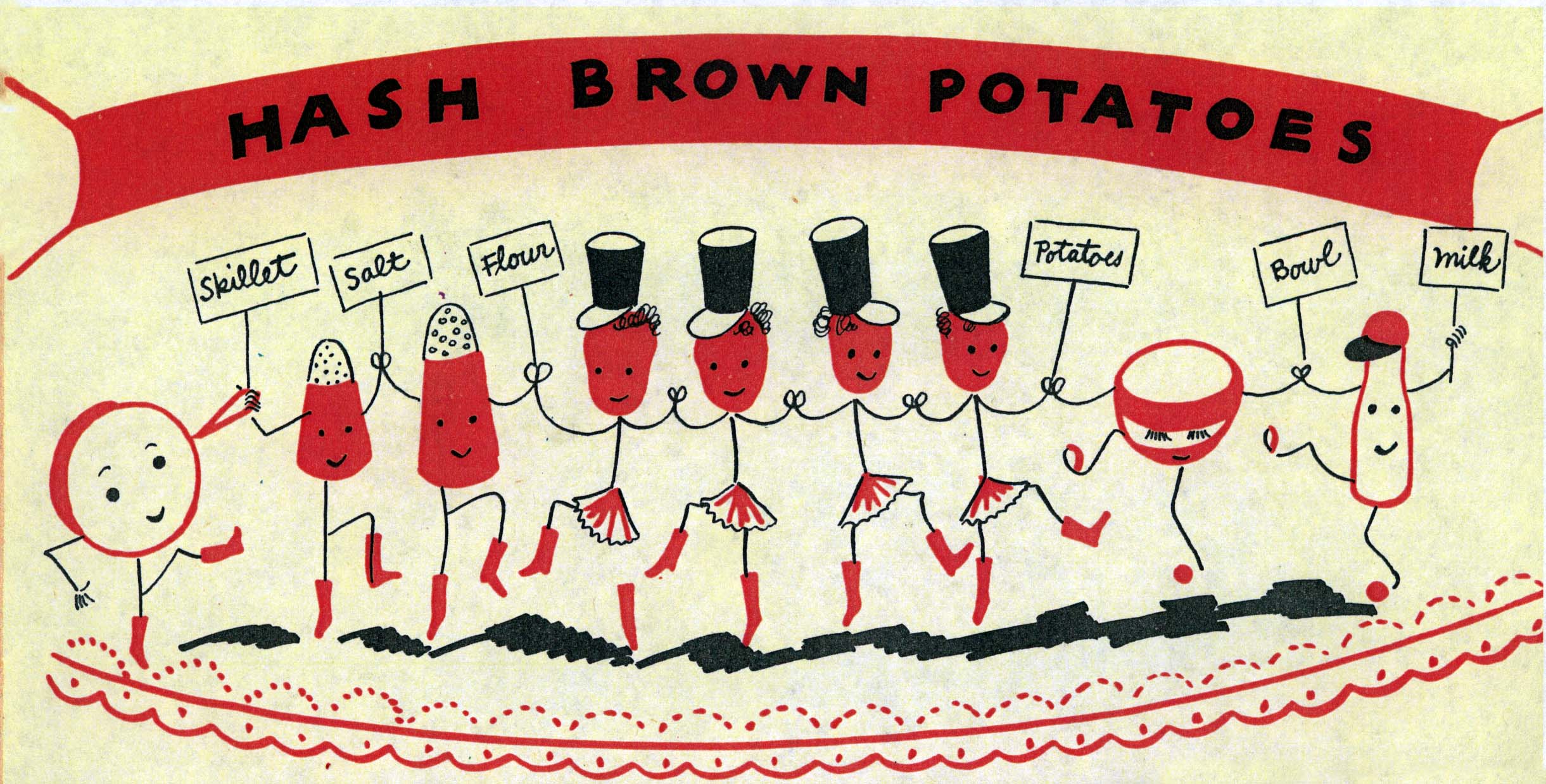
And our own Amy Brooks, Cataloging Coordinator at Special Collections, donated a 1951 cookbook published by Westinghouse, Sugar an’ Spice and All Things Nice, which is full of excellent recipes and even more excellent illustrations.

hash

stenciled music, a sea monster, and a Harry Potter knockoff

Three exciting new acquisitions in Special Collections:

stencil

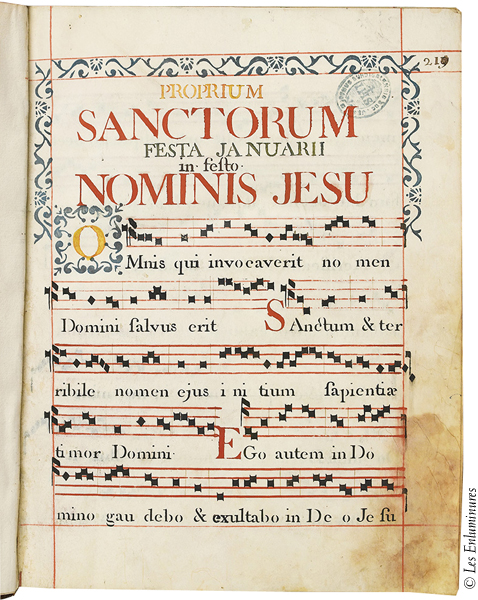
For our history of the book collection, an example of an unusual printing method for music (or anything): stenciling. Description from Les Enluminures: Antiphonal for the Day Offices, Diurnale Carmelitarum in quo continentur omnia quae cantantur in choro per annum [Carmelite Diurnal Containing Everything Sung in Choir throughout the Year]. In Latin, stenciled manuscript on parchment with musical notation. France, Paris, eighteenth century, ca. 1700-40 (?) (after 1689).

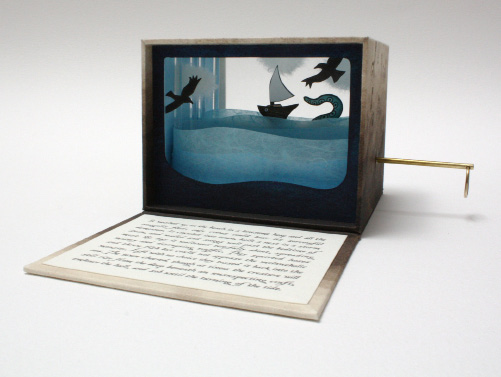
Jumping ahead about three hundred years, we have a diorama-style artists’ book, Bryan Kring’s Sea Monster. From the Abecedarian Gallery description: “When the brass ring is pulled, the waves move, the sailboat rocks, and the arm of the monster rises threateningly.” Yes, it does, and it’s wonderful.

Bryan Kring Sea Monst_opt1

Last and perhaps least, Harry Potter and Leopard Walk Up to Dragon, an unauthorized Harry Potter book in Chinese, with illustrations stolen from Disney and other sources. This will be a useful book for Harry Potter fans and anyone interested in copyright and intellectual property. See this article for more information.

leopard-small