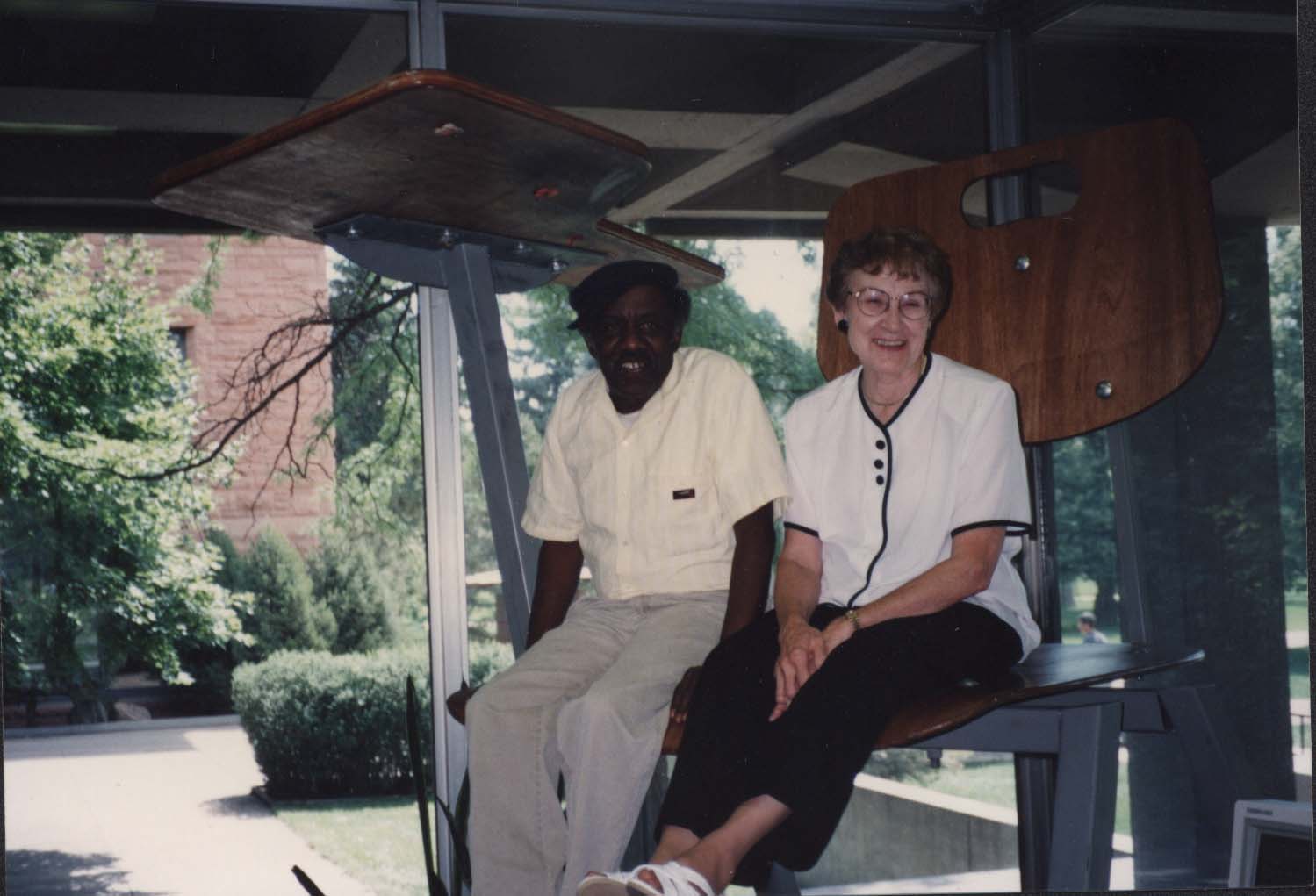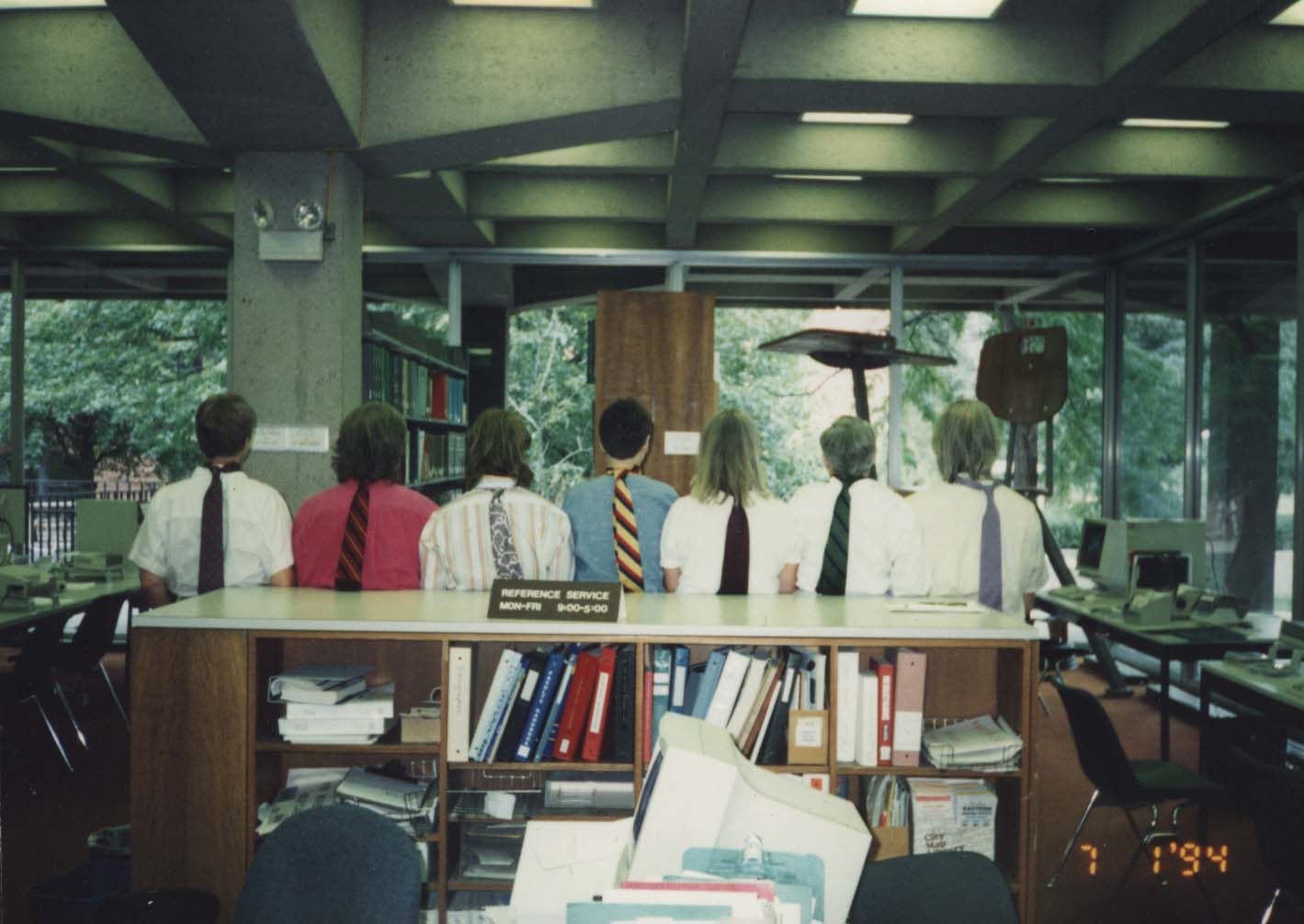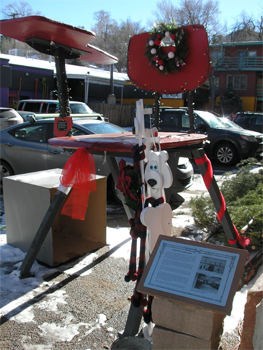
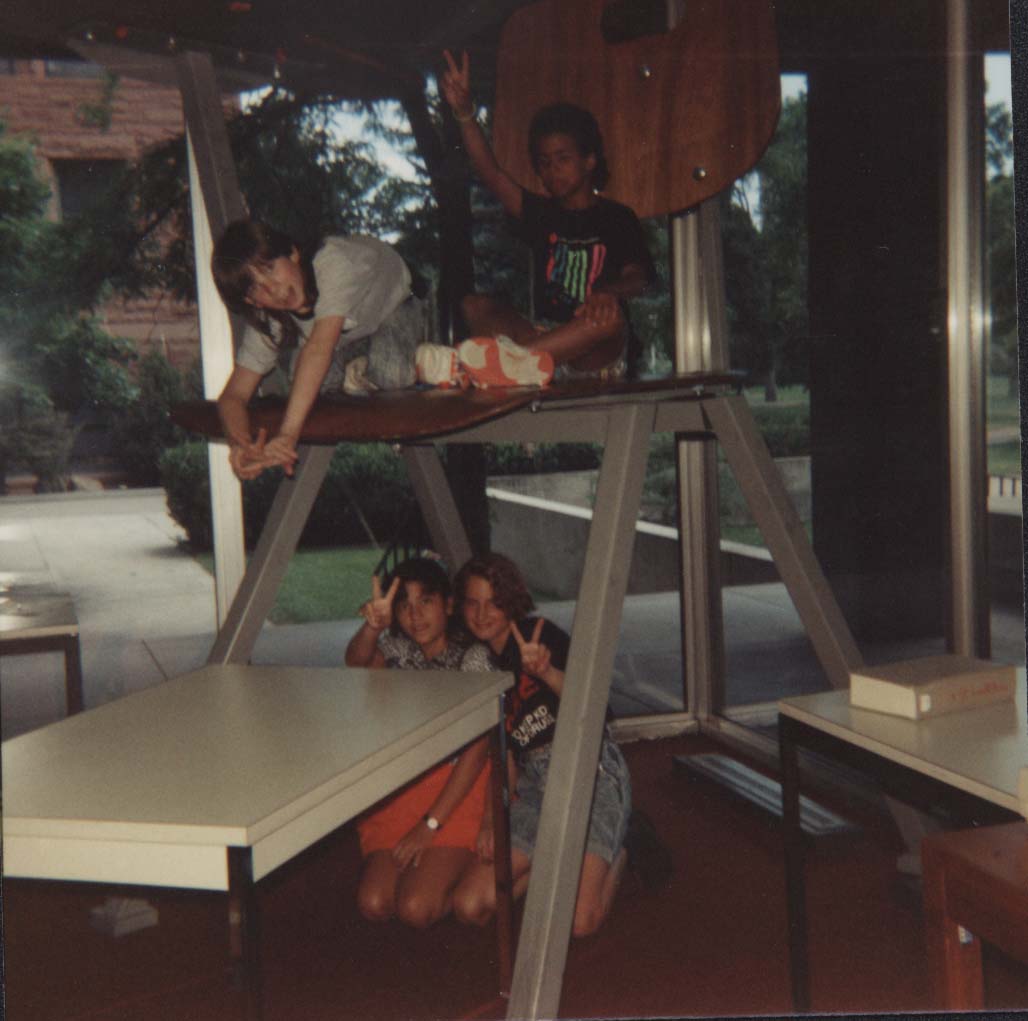
When he was a student at Colorado College in the early 1990s, artist Giles Thompson built this large schooldesk sculpture. It stood in the CC library until 1999, when the college donated it to the Business of Art Center in Manitou Springs. At some point after that, it was painted red, perhaps to protect it from outdoor conditions.
short film made in and around Tutt Library
This is quite lovely! Congratulations to director Chauncey Crail and the rest of his Colorado College team (Corrina Leatherwood, Caitlin Taber, James Dinneen, Dylan Pearl, Holly Pretsky, and Alec Sarche, plus many more).
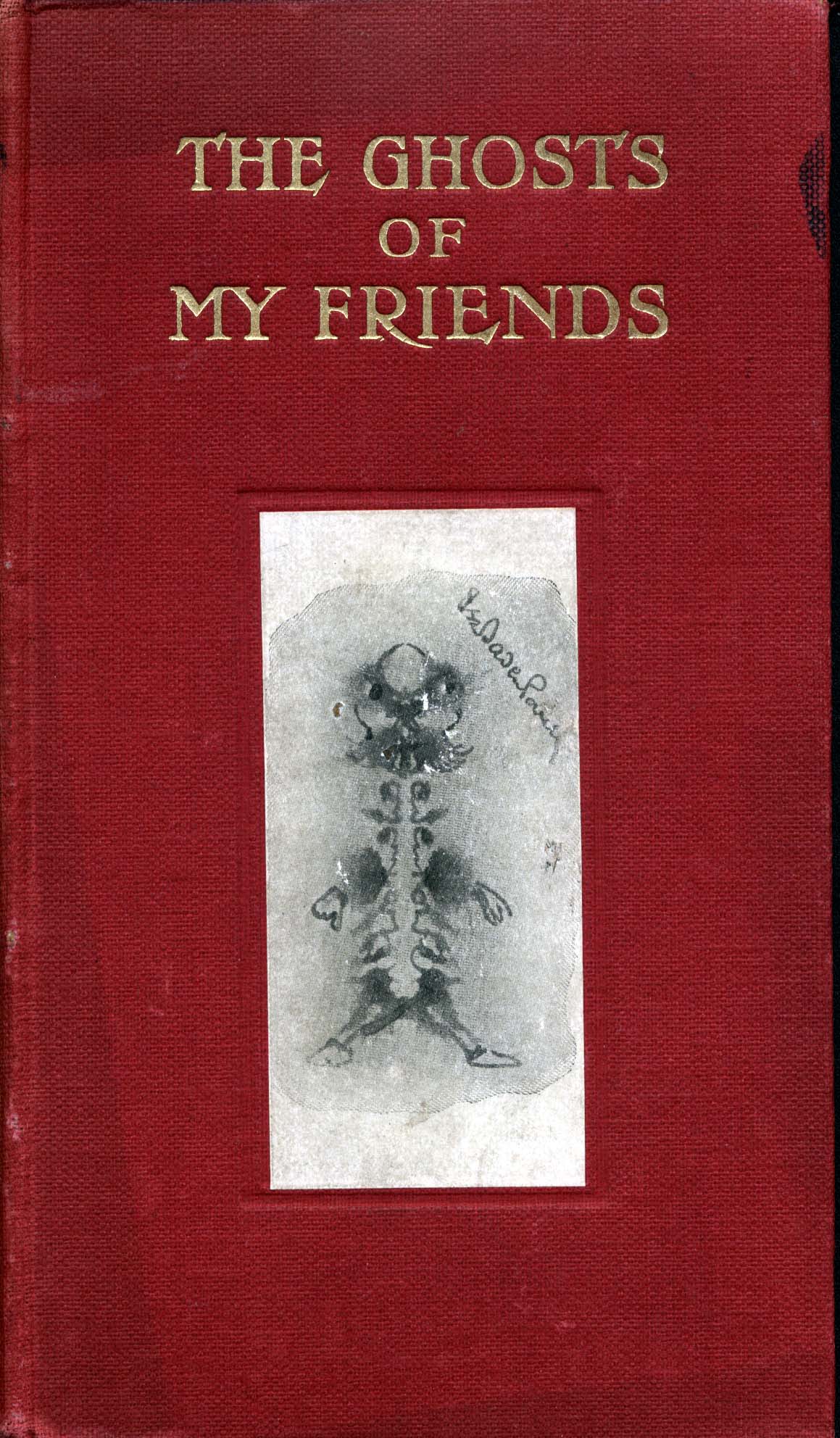
The Ghosts of My Friends
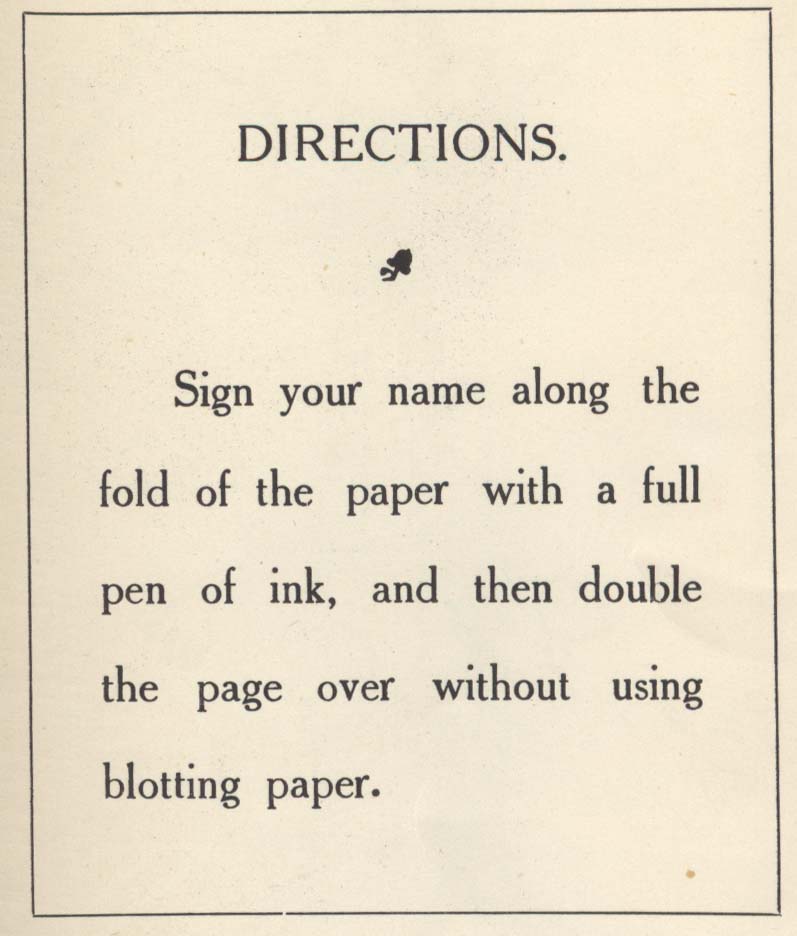
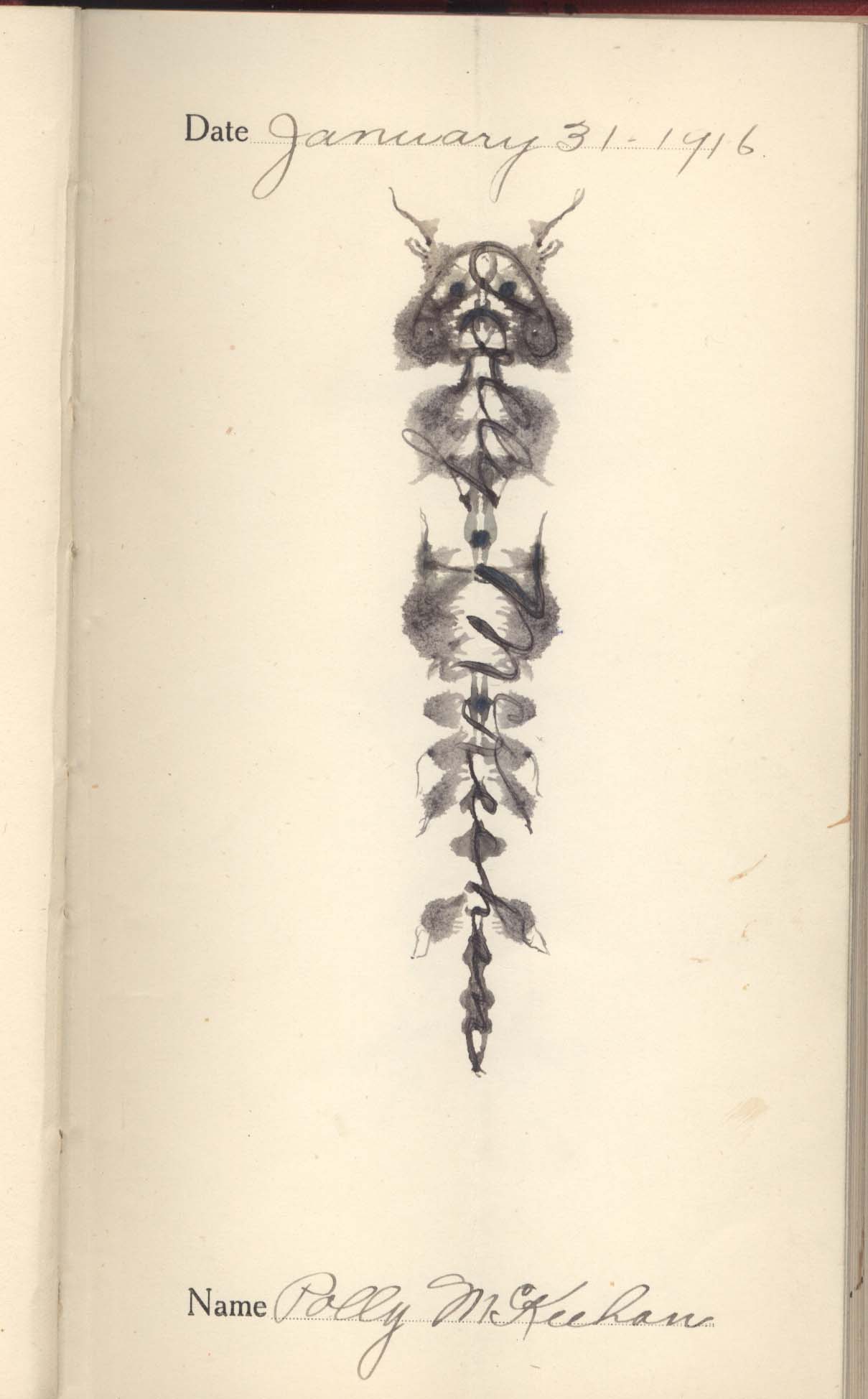
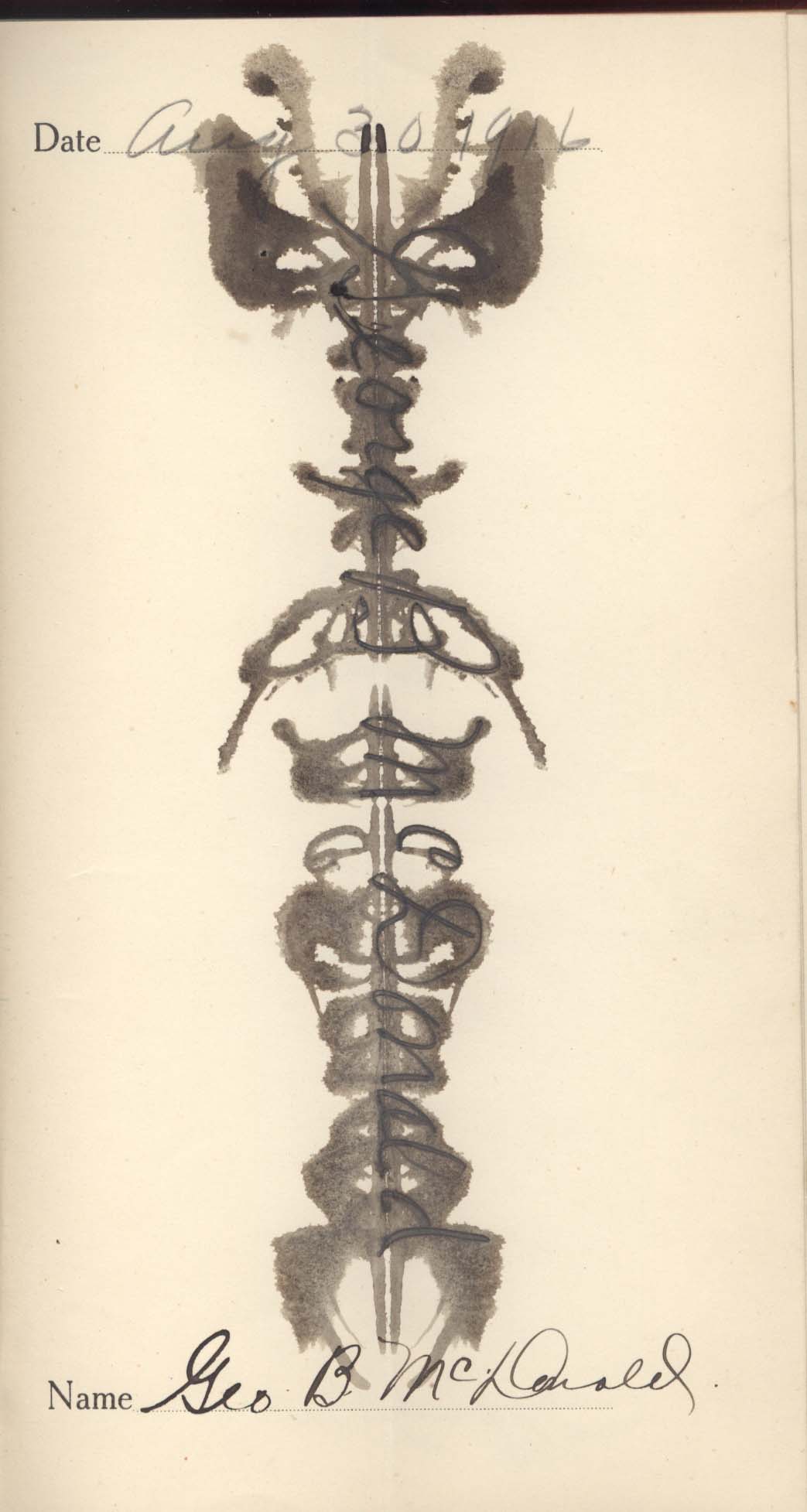
The Ghosts of My Friends is an autograph book with a twist. Published in the early 20th century, it’s a near-blank book meant to be used for sideways signatures to be turned into “ghosts,” that is, humanoid (or ghostoid) shapes representing the signers.
The “ghosts” pictured here were made in 1916 from the signatures of Polly McKeehan and Geo. B. McDonald.

There are about 40 copies of The Ghosts of My Friends in U.S. libraries. Each one, of course, would contain different ghosts. We brought our copy out recently during a class discussion about identifying people from their handwriting. This book takes that idea a step further, suggesting that a person’s handwriting is that person in a profound way.
Montana libraries get looms!
Three libraries in the ImagineIF library system in Montana are now offering patrons the opportunity to try weaving on a loom. As Helen Carter Bergner put it on Facebook, “libraries are getting 3D printers … why not looms?” I agree! If we’re going to offer maker spaces and technologies, let’s offer all kinds!
Sham Journal Accepts Totally Absurd But Completely Appropriate Paper
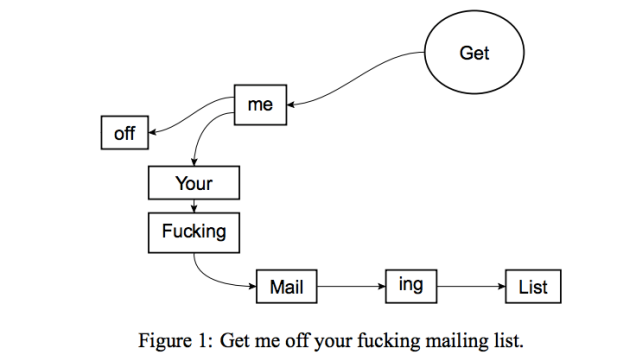
I love that this happened. It’s not exactly a library shenanigan, but it’s library-related. Well done, David Mazières and Eddie Kohler! They submitted a sham paper (full of swears!) to a sham journal in 2005 to make a point (and make a lot of people laugh).
Recently, another scholar, Peter Vamplew, sent the same sham paper to a different sham journal and received an acceptance (contingent on receipt of $150). The journal even sent a sham “reviewer report,” re-posted in full at Scholarly Open Access. Apparently, the sham paper is “excellent”!
Thanks, Steve Lawson and io9 (from whom I stole the headline).
An “indestructible” Mother Goose
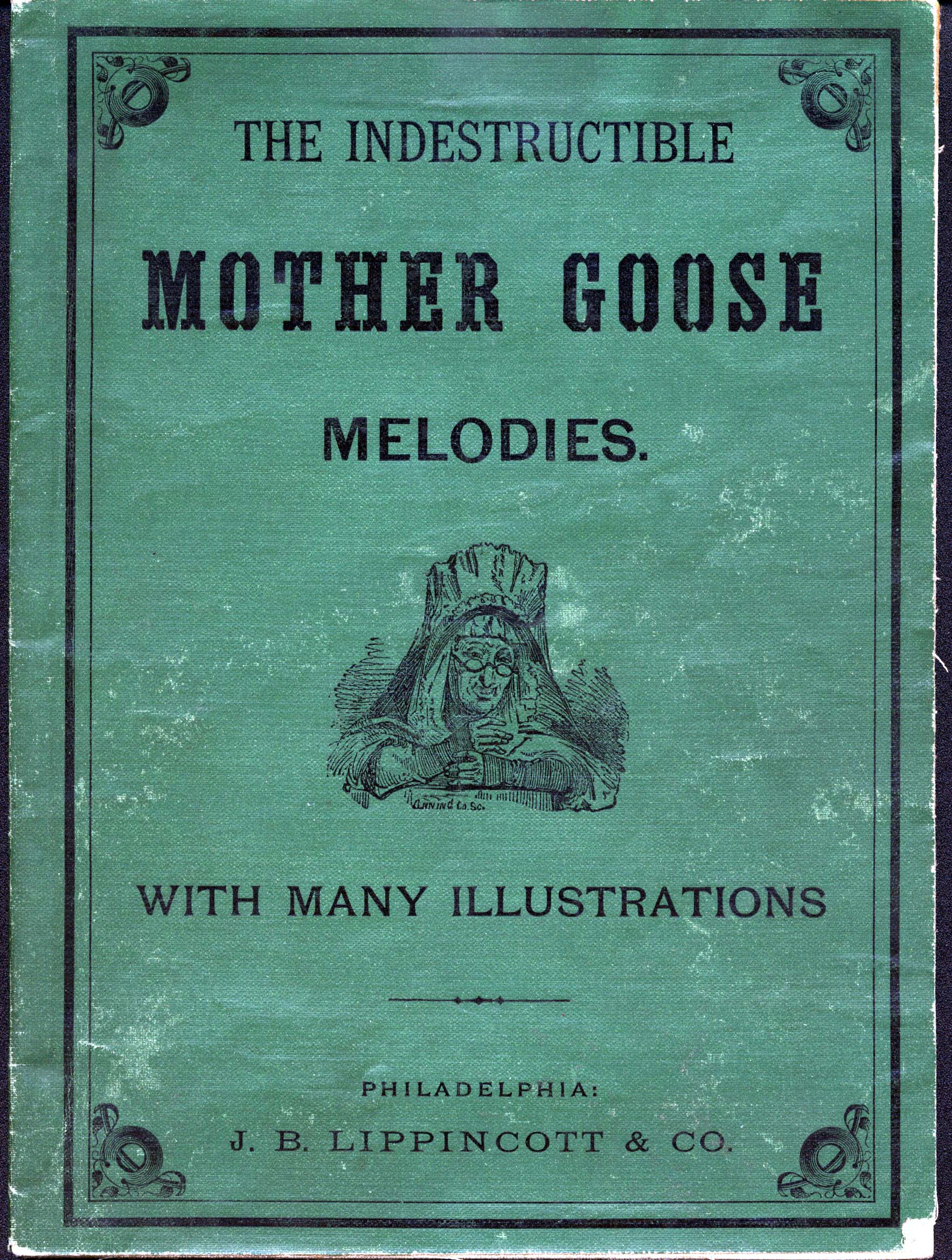
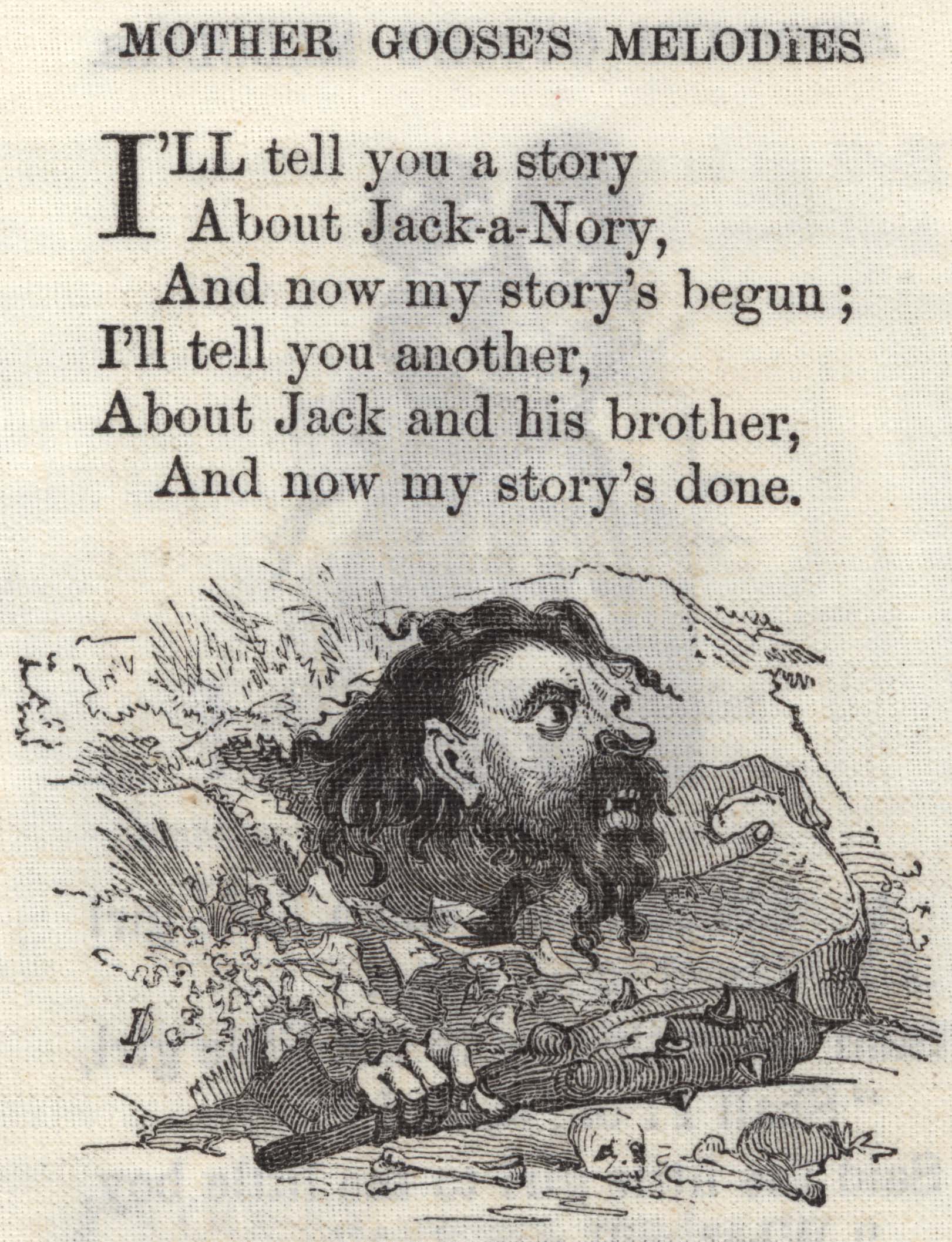
Special Collections recently purchased an “indestructible” 19th century edition of Mother Goose, Mother Goose’s Melodies: containing all that have ever come to light of her memorable writings. Philadelphia: Lippincott, 1879. What makes it indestructible, you ask? It’s printed on coated linen, so the book is chewable, droolable-on, and unrippable. (If you click the image on the right, you’ll see that the page is made of cloth.)
This isn’t the first “indestructible” edition ever published. The London firm Addey & Co. advertised its “Indestructible Books for Children” printed on “cloth expressly prepared” as early as 1856 (see the ads in the back of George Measom’s Light from the East). American firms also published “indestructible” books around this same period.
While some might argue that all books should be indestructible, it seems particularly useful in a book for young children. Most students at Colorado College are familiar with cloth or plastic books from their own childhoods, so we’re guessing it won’t take them long to figure out why a publisher might print Mother Goose this way. If they can’t figure it out, I guess the curator could give them a hint by nibbling on the front cover.
funny library play for kids
“Bobby Lucelee: A Very Silly Play for Kids” is available in PDF format here from author, playwright, and cartoonist Jonathan Caws-Elwitt. It calls for six actors and is, indeed, quite silly.
Sample dialog:
BARRY: Who’s Bobby Lucelee?
LIBRARIAN A-M: Well, duh, that’s what we’re all trying to find out!
LIBRARIAN N-Z: Psst . . . librarians aren’t supposed to say “duh”.
(Librarian A-M shushes Librarian N-Z.)
LIBRARIAN N-Z (To the audience): Who can think of some ways to find out who Bobby Lucelee is?
(Ad lib as audience members make suggestions.)
BARRY (To Librarians): Where are the books on stamp collecting? I need to get started on my homework.
CHRIS: Stamp collecting? I thought the assignment was on Italian cooking.
LIBRARIAN A-M: I thought it was on Bobby Lucelee.
TERRY, CHRIS, BARRY: Shh!
Thanks, Jonathan Caws-Elwitt, and I hope anyone who performs the play will send a video to Library Shenanigans!
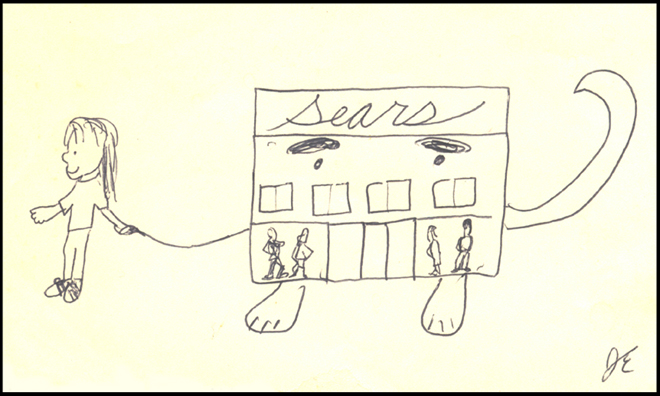
(p.s., I know the cartoon illustration has nothing to do with libraries or the play, but I loved it so much I couldn’t resist using it.)
All About the Books (No Trouble)
Staff of the Nashville Public Library recorded a library-centered version of the Meghan Trainor earworm. Thanks, Steve Lawson!
spooooooooky x-rays from 1896
In honor of Halloween, I present spooooooooooky x-ray images made by Colorado College professor Florian Cajori ca. 1896. These are probably the first x-ray images west of the Mississippi.
What you’re seeing are a spooooooooky hand, a spoooooooky rat, a spooooooky bird wing, a spooooky foot in shoe, and a spoooooky pair of scissors. The hand and the foot belonged to CC professor Frank Loud. Colorado Springs photographer Horace S. Poley developed and printed the photographs and labeled them. He did not use any form of the word “spooky.”
For more information, see: J. Juan Reid, “Florian Cajori: First X-ray Photographs in the West,” Colorado College Bulletin, February 1982, pp.12-13.
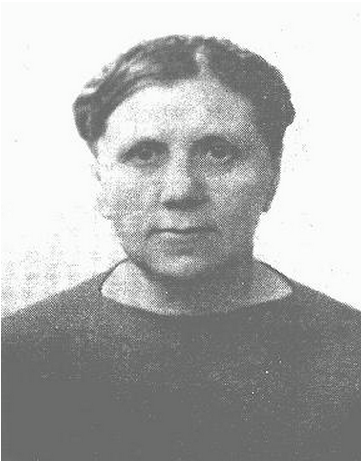
Ona Simaite, brave librarian
According to the United States Holocaust Memorial Museum, this librarian performed truly courageous library shenanigans during WWII:
ONA SIMAITE (1899-1970), Lithuania
Ona Simaite, a librarian at Vilna University, used her position to aid and rescue Jews in the Vilna ghetto. Entering the ghetto under the pretext of recovering library books from Jewish university students, she smuggled in food and other provisions and smuggled out literary and historical documents. In 1944, the Nazis arrested and tortured Simaite. She was then deported to Dachau and later transferred to a concentration camp in southern France. She remained in France following her liberation.
Photo credit: Yad Vashem photo archives.
Thanks, Dina Wood and the USHMM Facebook page!