 As Ryan Broderick of Buzzfeed puts it: “Oh My God, There’s A Cat In Russia That Wears A Bow Tie And Works As A Librarian. The world is a beautiful place.”
Thanks, Kathleen Kirk (and others, but Kathleen was first).
As Ryan Broderick of Buzzfeed puts it: “Oh My God, There’s A Cat In Russia That Wears A Bow Tie And Works As A Librarian. The world is a beautiful place.”
Thanks, Kathleen Kirk (and others, but Kathleen was first).
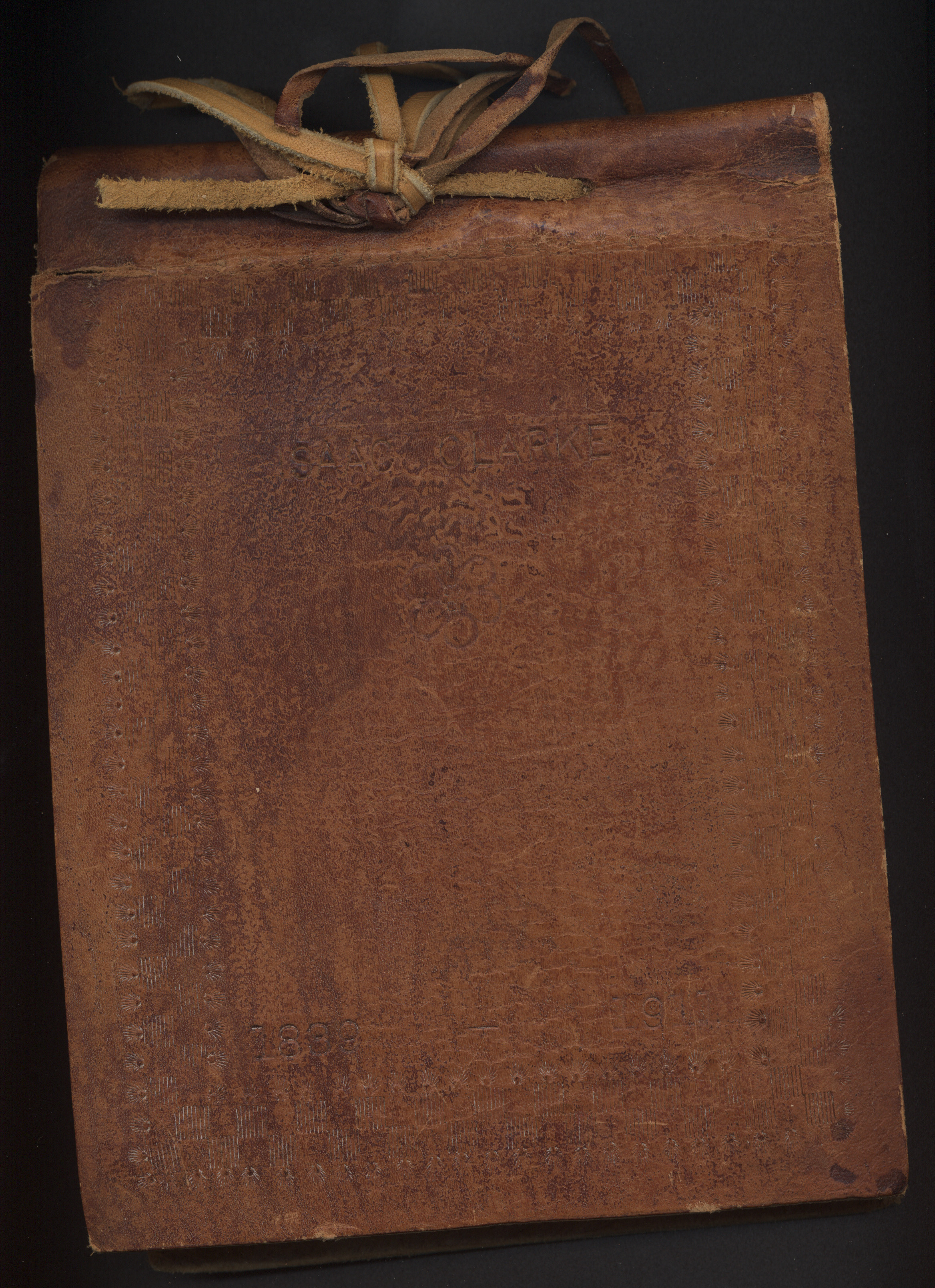
Isaac Clarke memoir
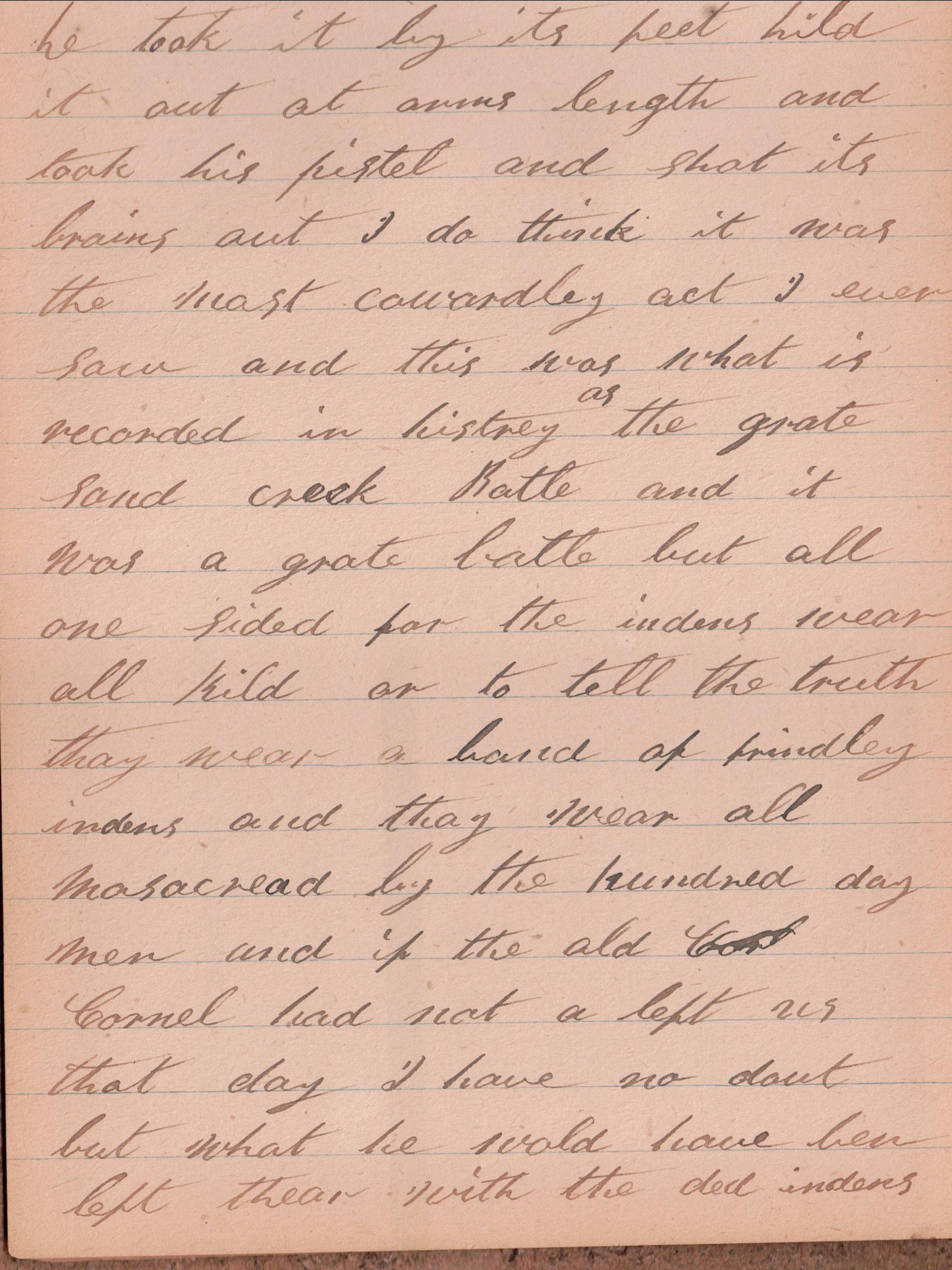
page 191
In September of 2013, we received an amazing gift from Tom Courtney: a 200-page leather-bound handwritten memoir, dated 1892, by Isaac Clarke, a Union soldier who witnessed the Sand Creek Massacre in 1864.
Along with the manuscript, we received a 60-page typed “reconstruction” of the memoir, available in full here. See pages 40-43 of the reconstruction (179-195 of the original) for Clarke’s memories of Sand Creek.
Please note: the reconstruction corrects spelling and syntax and frequently paraphrases Clarke’s words, sometimes changing the meaning or emphasis. For example, on page 191 of the original (pictured above), Clarke writes:
“…I do think it was the most cowardly act I ever saw and this was what is recorded in history as the grate sand creek Battle and it was a grate battle but all one sided for the indens were all kild an to tell the truth they wear a band of friendley indens and they were all masacread by the hundred day men.”
The reconstruction for this passage reads:
“…It was the most dastardly, cowardly act I ever saw, and this was what is recorded in history as the Great Sand Creek Battle. The truth of the matter was that it was a band of friendly Indians massacred by a regiment of white savages, the hundred day men.”
If possible, therefore, researchers should visit CC Special Collections and consult the original rather than depend solely upon the reconstruction.
 In honor of National Library Card Sign-Up Month (also known as September), Ann Leonard of the Pinal County Library District in Arizona has created this handy Pinterest board of Penguin/Pelican style book covers advertising library services. More information here. Thanks, BoingBoing!
“Caramel Kitten” twerks at a bookdrop and inside a library. (She twerks at a lot of other everyday places, too.). A little bit NSFW, depending where you W. Her “shh” at 0:21 made me laugh. Thanks, BoingBoing!
Addendum, October 10, 2013: More library twerking, this time at the Brooklyn Public Library. Thanks, Brooklyn Blowback!
 The Huntington Library in San Marino, CA has decided to attempt to preserve two pieces of wedding cake found in the papers of Edwin Carpenter. The pieces date from 1876 and 1915 and have “little research value.” Nevertheless, the staff have found themselves reluctant to discard cake. (I’m with ya, Huntington Library.) Thanks, Steve Fisher!
This charming student project was filmed at Oberlin’s Mudd Library. I am appalled, however, that a librarian’s dream would involve book throwing! Thanks, Ed Vermue.
A library version of the Beastie Boys video “Sabotage,” shot at the Francis W. Parker School in Chicago. Here’s the original video, for comparison. Thanks, BoingBoing and NYPL.

 CC Special Collections recently purchased a 1487 edition of Alphonso de Spina’s Fortalitium Fidei (Fortress of Faith), written in 1458 and published anonymously multiple times in the late 15th century. The Fortalitium is a pro-Catholic work containing arguments against Muslims, Jews, and other detractors; its final section is on demons and how to fight them. It may be the first printed book to discuss witchcraft, and most certainly played a part in the Spanish Inquisition. The Fortalitium is generally understood to be an anti-Semitic work; some believe that de Spina, a Franciscan priest, converted from Judaism.
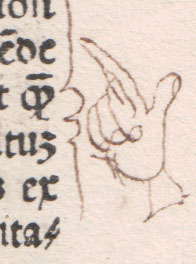
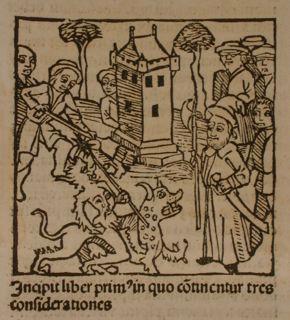 Our edition (Lyon: Guillaume Balsarin) is in a later binding (probably 19th century) and contains a single woodblock illustration depicting a demon with horns on its head and a face in its chest, perhaps a cousin to the Blemmyes (Latin Blemmyae), who have faces in their chests and no heads at all. Our copy, formerly in the library of the Convent of St. Francis of Siguenza in Guadalajara, Spain, has unusual marginalia from a former owner or owners, including decorative marks and, on the final page, a sort of doodle of a fuzzy-haired, winged demon.
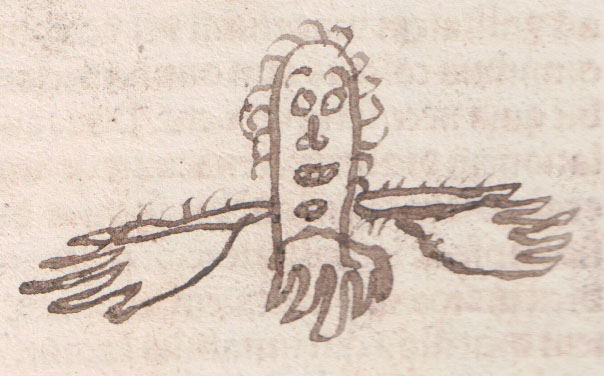

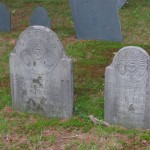
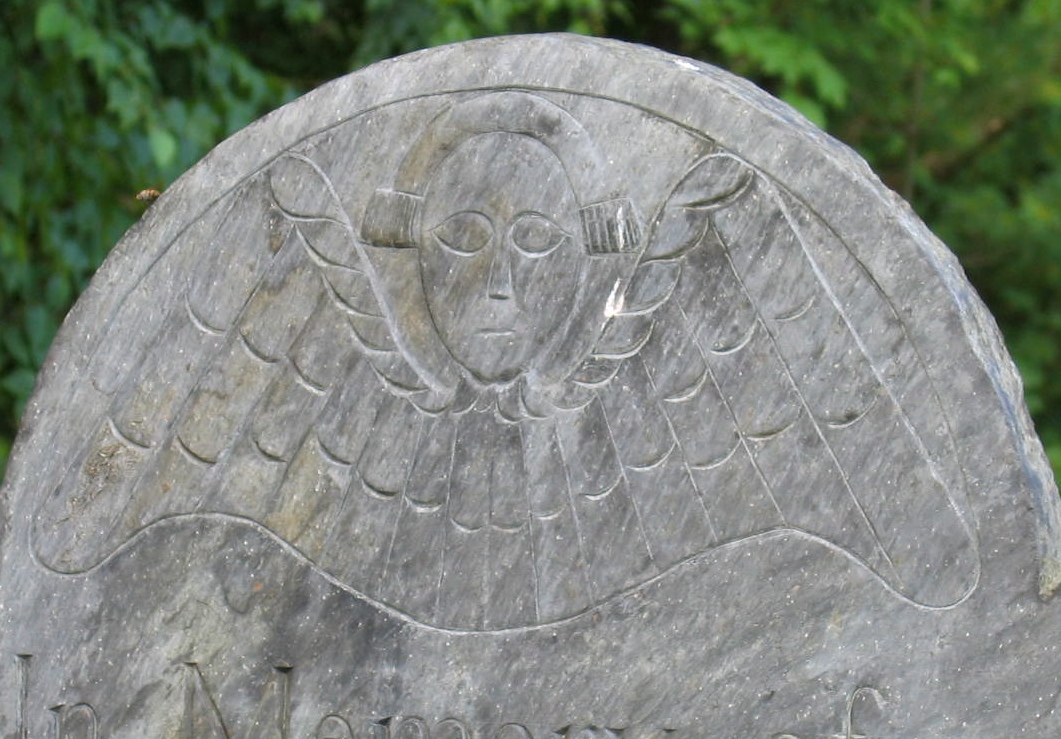
ADDENDUM: in September of 2013, Penn’s Peter Stallybrass visited Special Collections and viewed our copy of the Fortalitum. He believes the doodle may depict an 18th-century gravestone similar to those in the photographs below. We concur!

 I’m guessing this happened accidentally, but somebody took a picture of it on purpose, and that’s a shenanigan. (I had trouble seeing it at first. Hint: look at the stickers. ) Thanks, Suzie DeGrasse!
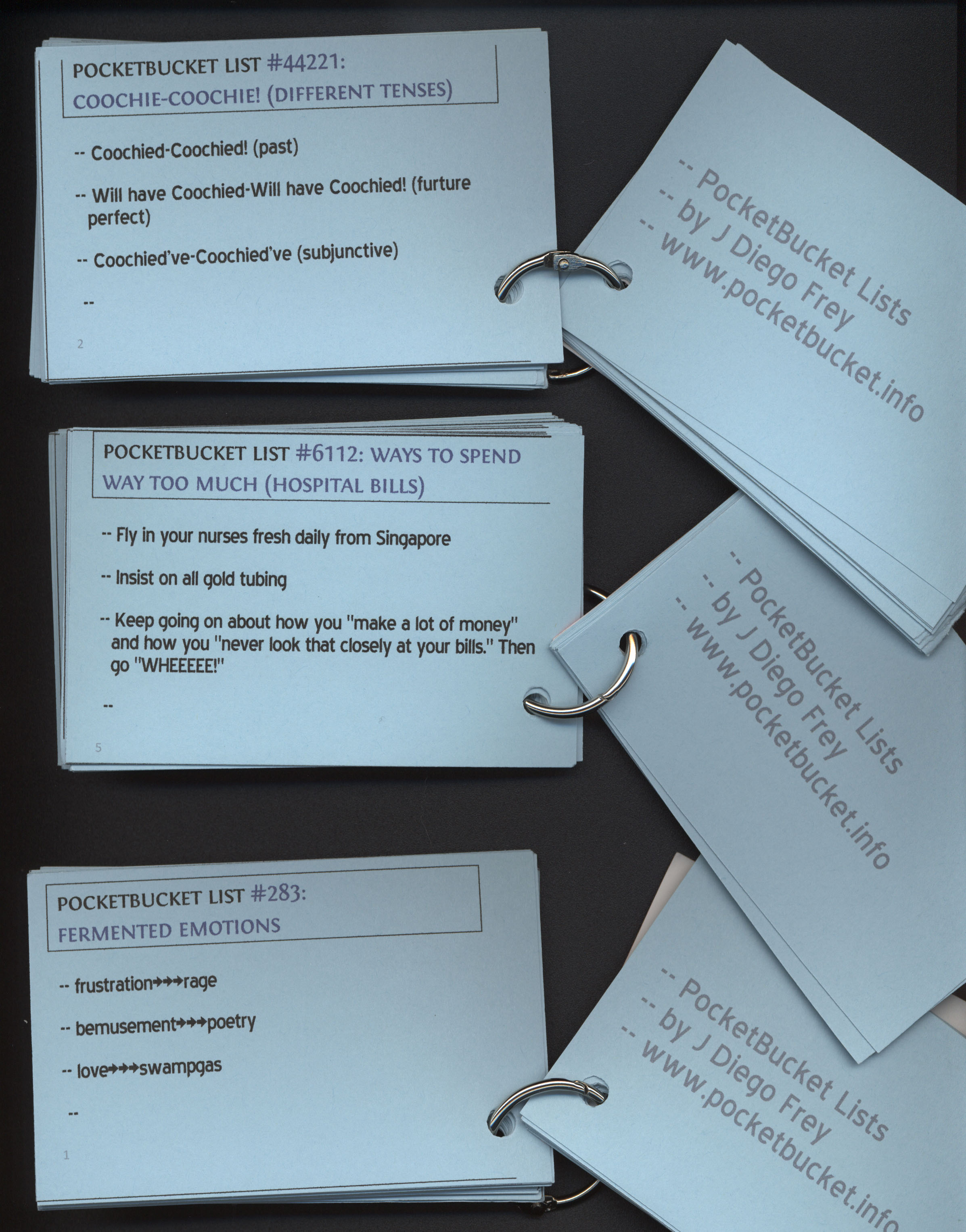 Special Collections is home to the Colorado College Zine Collection, an eclectic mix of low-price, semi-home-made, small-circulation publications. We recently acquired a complete set of J Diego Frey’s PocketBucket Lists, which are pocket-sized bundles of funny, poem-like lists of such things as “committees to avoid,” “the pillars of civilization,” and, as seen in the image, verb tenses for Coochie-Coochie. Frey also shares these lists online.