Category Archives: CC Special Collections

Is your dance card full?

Dc constant Dc crandall

We have dozens of 19th and 20th century dance cards in the Colorado College archives. (The examples above, both from 1912, belonged to CC alumnae Dorliska Crandall and Katherine Constant.) Students find the cards intriguing, and ask lots of questions about them: how did this dance card thing work, exactly? Did you fill out your dance card in advance of the dance, or at the dance, or afterward as a souvenir? Almost all our dance cards are from women’s scrapbooks. How did men keep track of their dance partners? Did they just keep the list in their heads?

V. Persis Dewey’s 1918 pamphlet “Tips to Dancers: Good Manners for Ballroom and Dance Hall” holds the answers. Dewey tells us, in no uncertain terms, the proper use of dance cards:

The programs are distributed at the door, in the cloak room, or during a grand march. It is the duty of the man to make out the programs for the lady whom he has escorted to the dance and for himself. It is best to make out the programs all at once and as early in the evening as possible.

In filling out a program, the man should write his name on the first line of his lady’s program, and her name on his. To indicate their dances, a double cross xx should be used.

At a program dance where the men and women come separately, each one keeps his or her own program. When the man invites a lady to dance he writes his name on her program after the number they decide to dance together.

These conventions, breakable as they must have been, suggest that our dearth of men’s dance cards comes less from men not using them and more from men not saving them in scrapbooks. And indeed, with a bit of sleuthing, I did find several dance cards belonging to Eugene Gordon Minter, CC class of 1930. Some of these cards have erasures and corrections, suggesting that Minter’s original dancing plans might not always have come to fruition.

Dcfront Dcinterior Dcwitherasures Dcgeorge

Both women’s and men’s dance cards include both women’s and men’s names. Mr. Dewey does not speak of same-sex partners in his pamphlet on dance etiquette, but it seems that same-sex partners were a normal and natural part of formal dances in the dance card era.

I think I would have really dug this whole dance card thing in high school and college, but maybe not so much in middle school, when it seems likely my dance card would have been filled with names like “I.P. Freely,” “Seymour Butts,” and “Mr. Bates.”

Sources: Dorliska Crandall scrapbook, CC Archives box 947; Katherine Constant collection, box 545; Eugene Gordon Minter scrapbook, box 923.
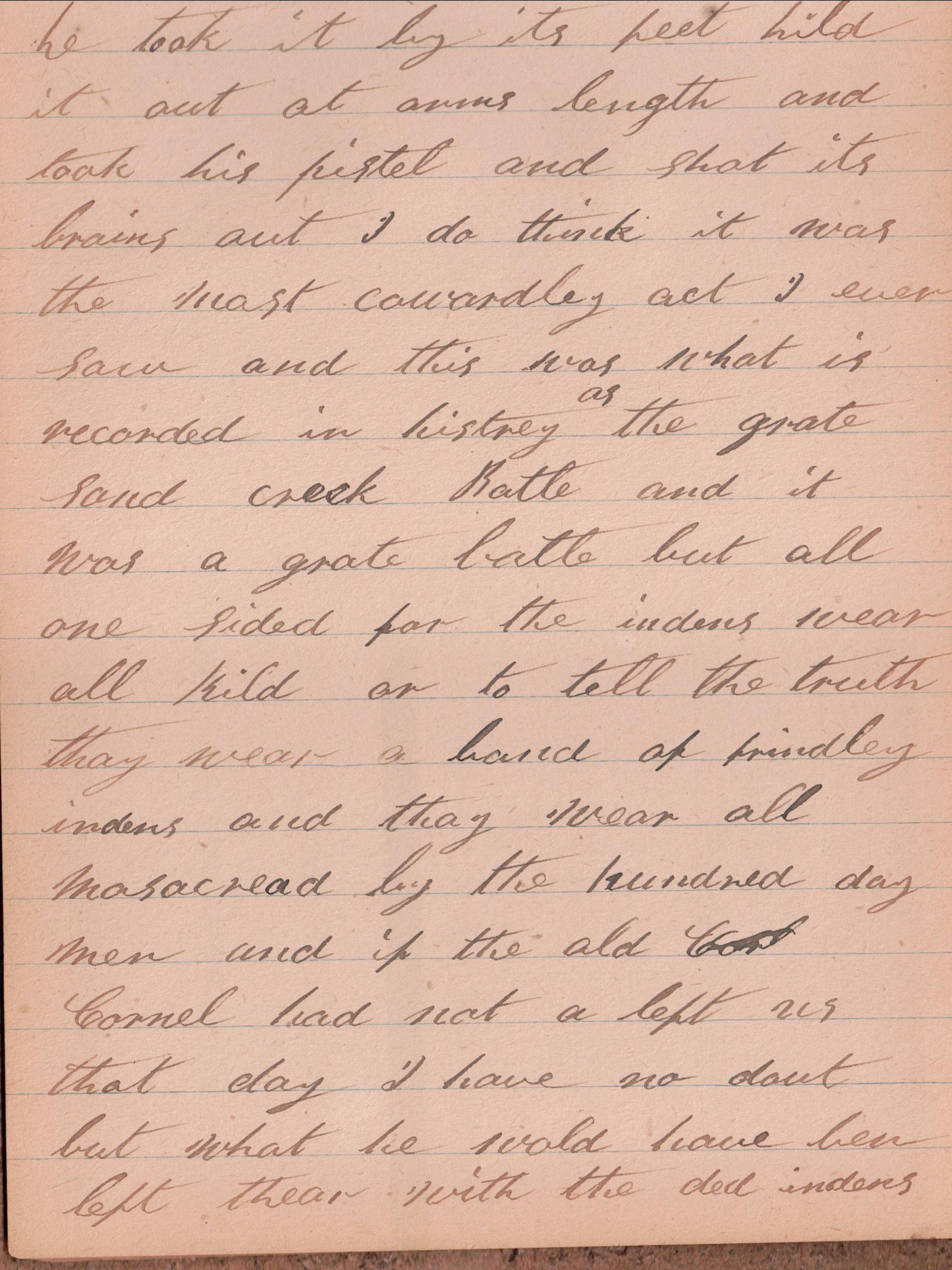
Sand Creek Massacre memoir: “all one sided”

Isaac Clarke memoir

Isaac Clarke memoir

page 191

page 191

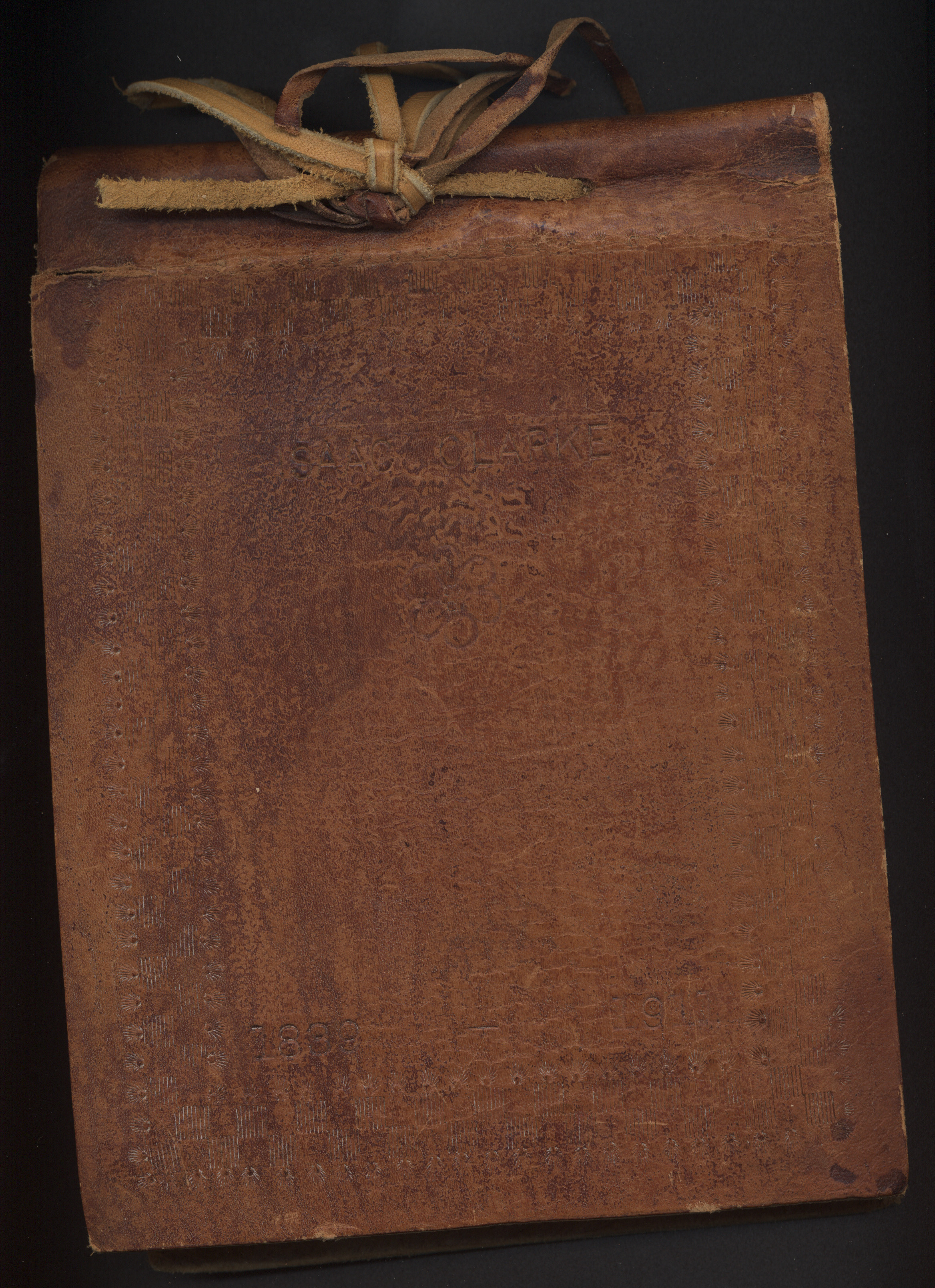
In September of 2013, we received an amazing gift from Tom Courtney: a 200-page leather-bound handwritten memoir, dated 1892, by Isaac Clarke, a Union soldier who witnessed the Sand Creek Massacre in 1864.

Along with the manuscript, we received a 60-page typed “reconstruction” of the memoir, available in full here. See pages 40-43 of the reconstruction (179-195 of the original) for Clarke’s memories of Sand Creek.

Please note: the reconstruction corrects spelling and syntax and frequently paraphrases Clarke’s words, sometimes changing the meaning or emphasis. For example, on page 191 of the original (pictured above), Clarke writes:

…I do think it was the most cowardly act I ever saw and this was what is recorded in history as the grate sand creek Battle and it was a grate battle but all one sided for the indens were all kild an to tell the truth they wear a band of friendley indens and they were all masacread by the hundred day men.”

The reconstruction for this passage reads:

“…It was the most dastardly, cowardly act I ever saw, and this was what is recorded in history as the Great Sand Creek Battle. The truth of the matter was that it was a band of friendly Indians massacred by a regiment of white savages, the hundred day men.”

If possible, therefore, researchers should visit CC Special Collections and consult the original rather than depend solely upon the reconstruction.

1487 demonology book

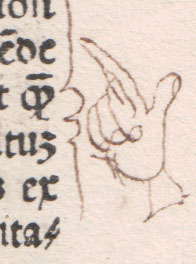
fortalitium marginaliapointyphingerCC Special Collections recently purchased a 1487 edition of Alphonso de Spina’s Fortalitium Fidei (Fortress of Faith), written in 1458 and published anonymously multiple times in the late 15th century. The Fortalitium is a pro-Catholic work containing arguments against Muslims, Jews, and other detractors; its final section is on demons and how to fight them. It may be the first printed book to discuss witchcraft, and most certainly played a part in the Spanish Inquisition. The Fortalitium is generally understood to be an anti-Semitic work; some believe that de Spina, a Franciscan priest, converted from Judaism.

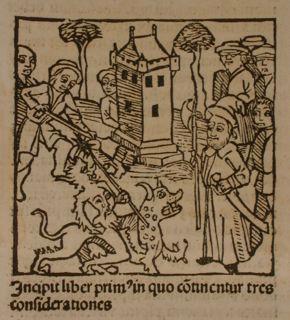
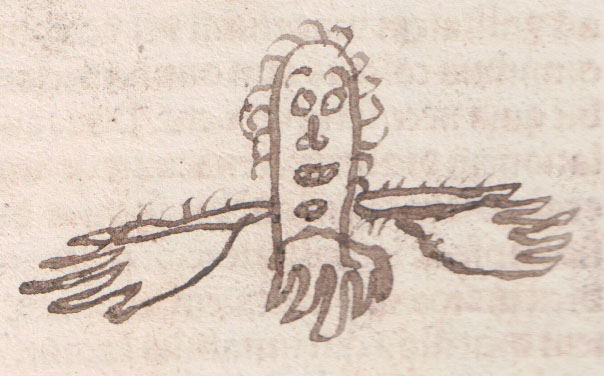
chestfaceOur edition (Lyon: Guillaume Balsarin) is in a later binding (probably 19th century) and contains a single woodblock illustration  depicting a demon with horns on its head and a face in its chest, perhaps a cousin to the Blemmyes (Latin Blemmyae), who have faces in their chests and no heads at all. Our copy, formerly in the library of the Convent of St. Francis of Siguenza in Guadalajara, Spain, has unusual marginalia from a former owner or owners, including decorative marks and, on the final page, a sort of doodle of a fuzzy-haired, winged demon.

doodle

stallybrass


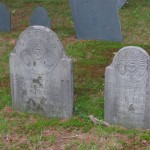
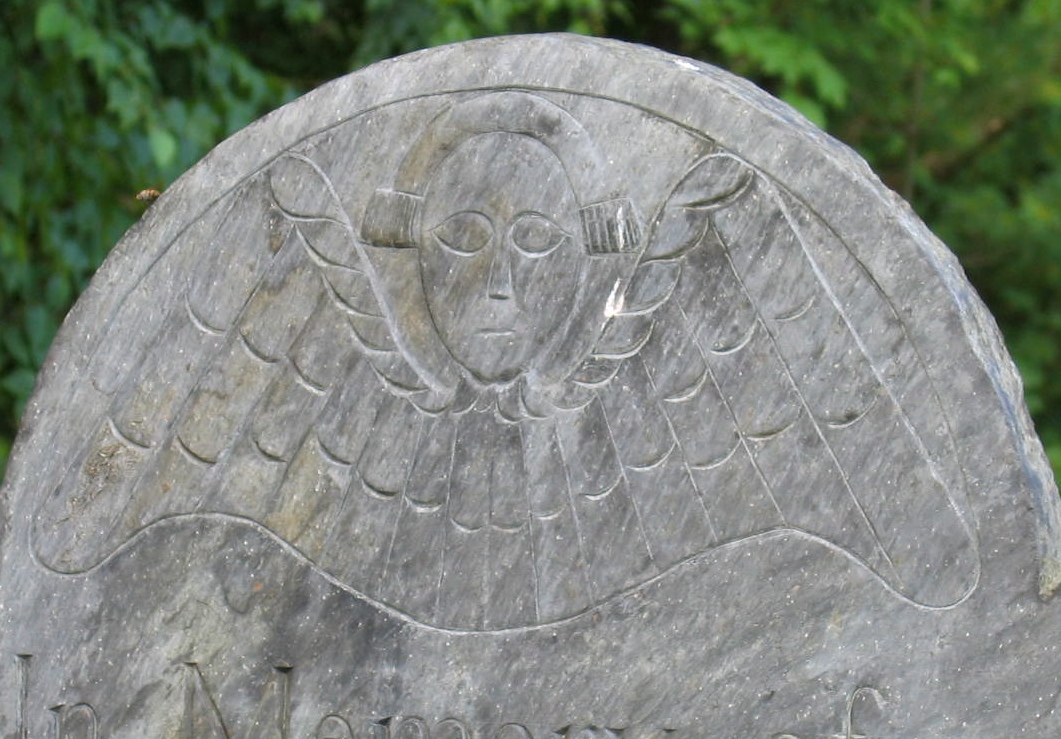
ADDENDUM: in September of 2013, Penn’s Peter Stallybrass  visited Special Collections and viewed our copy of the Fortalitum. He believes the doodle may depict an 18th-century gravestone similar to those in the photographs below. We concur!


medusa 1797 Sweetsers-medusa  1776 Lydia Bordwell


Dorny and Padgett pyramid book

padgett 1padgett 2padgett 3


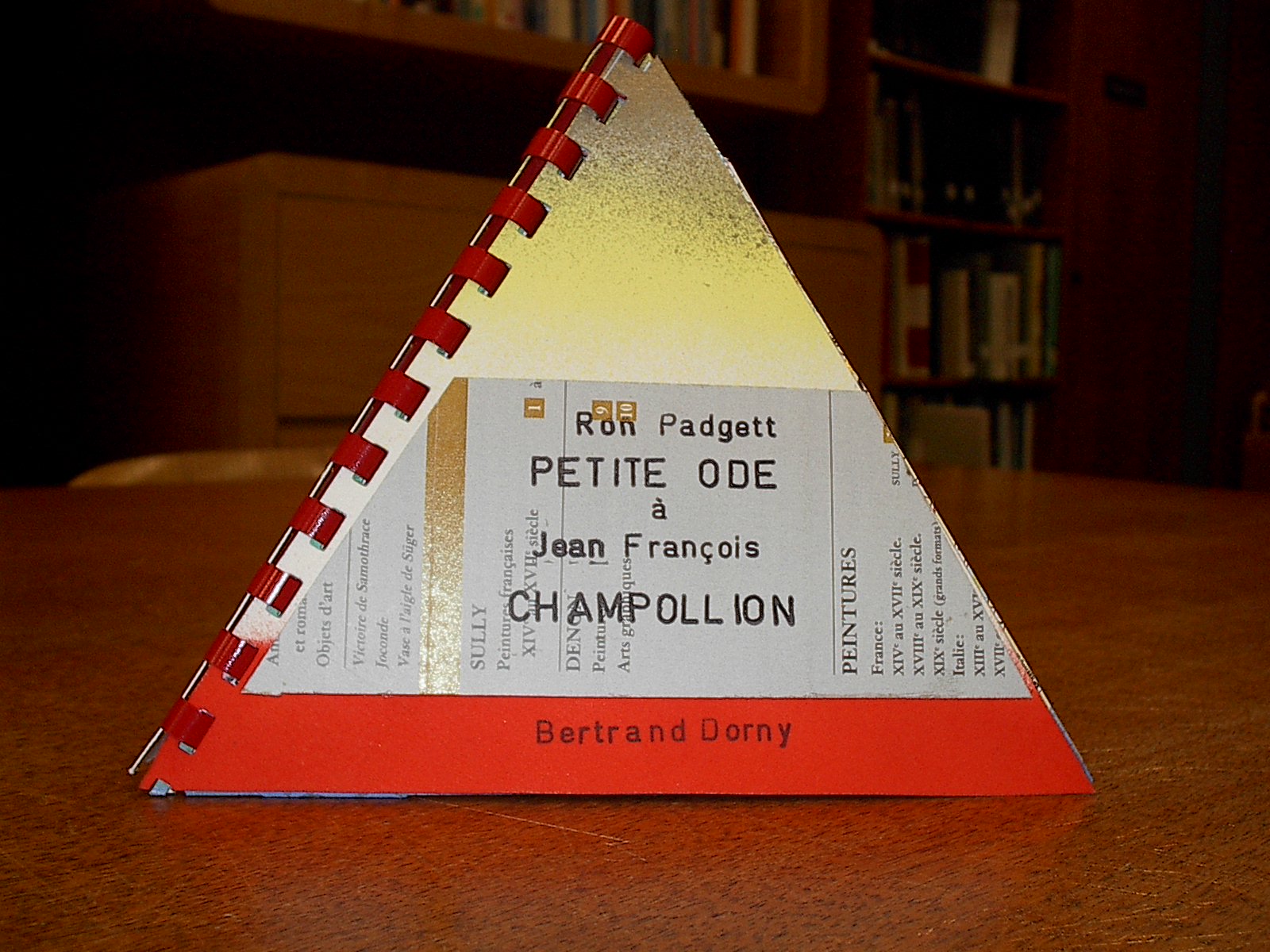
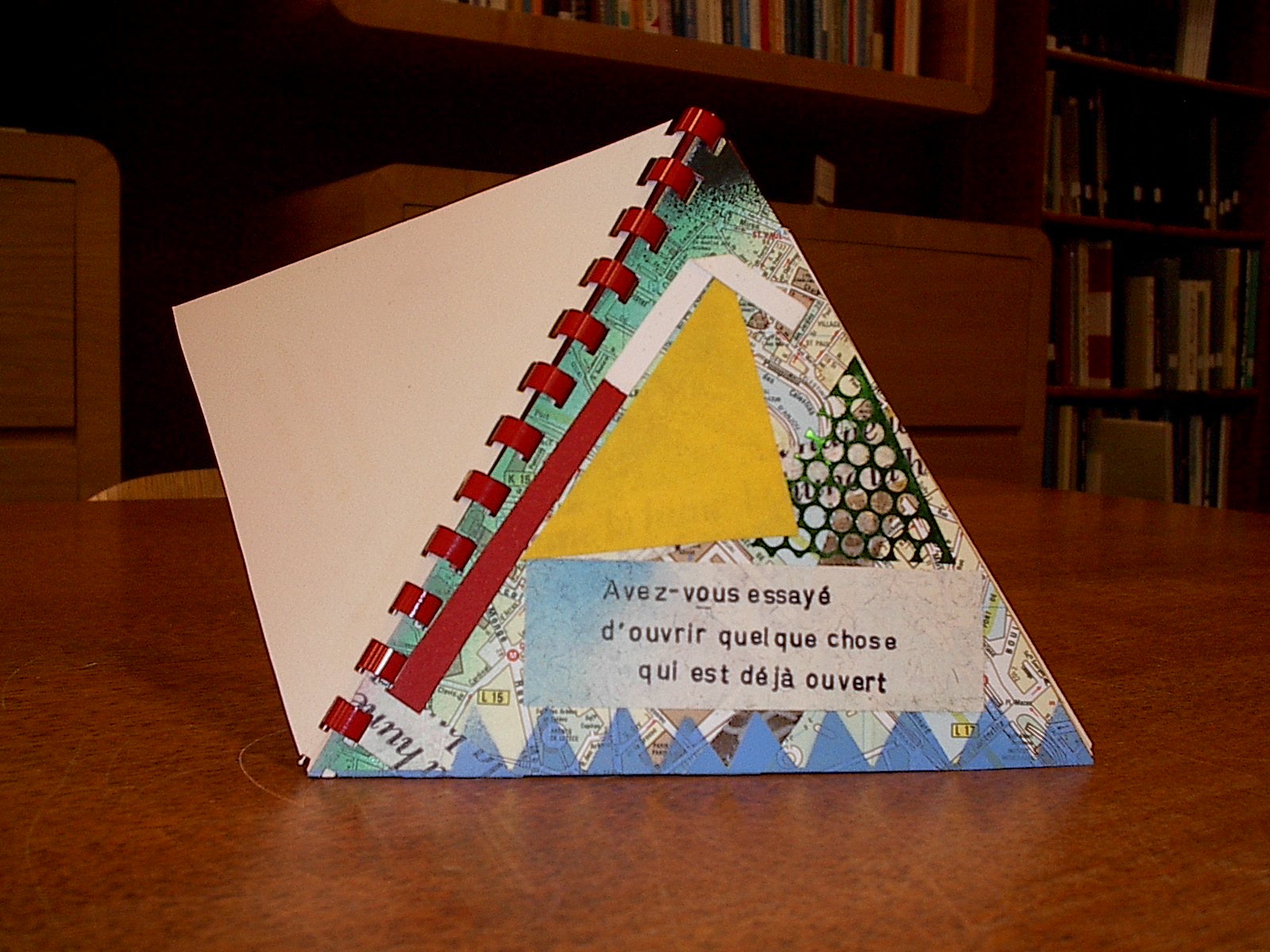
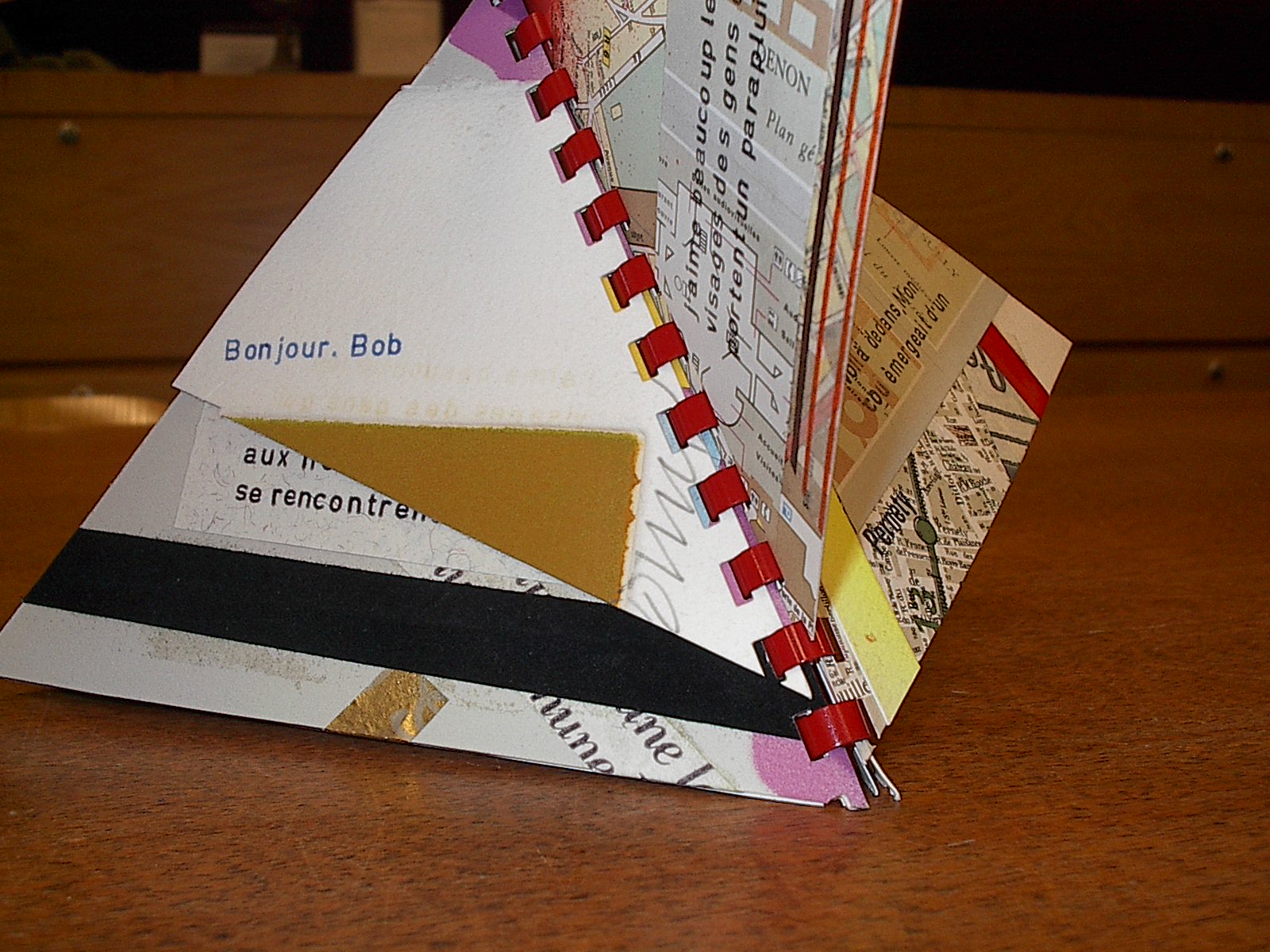
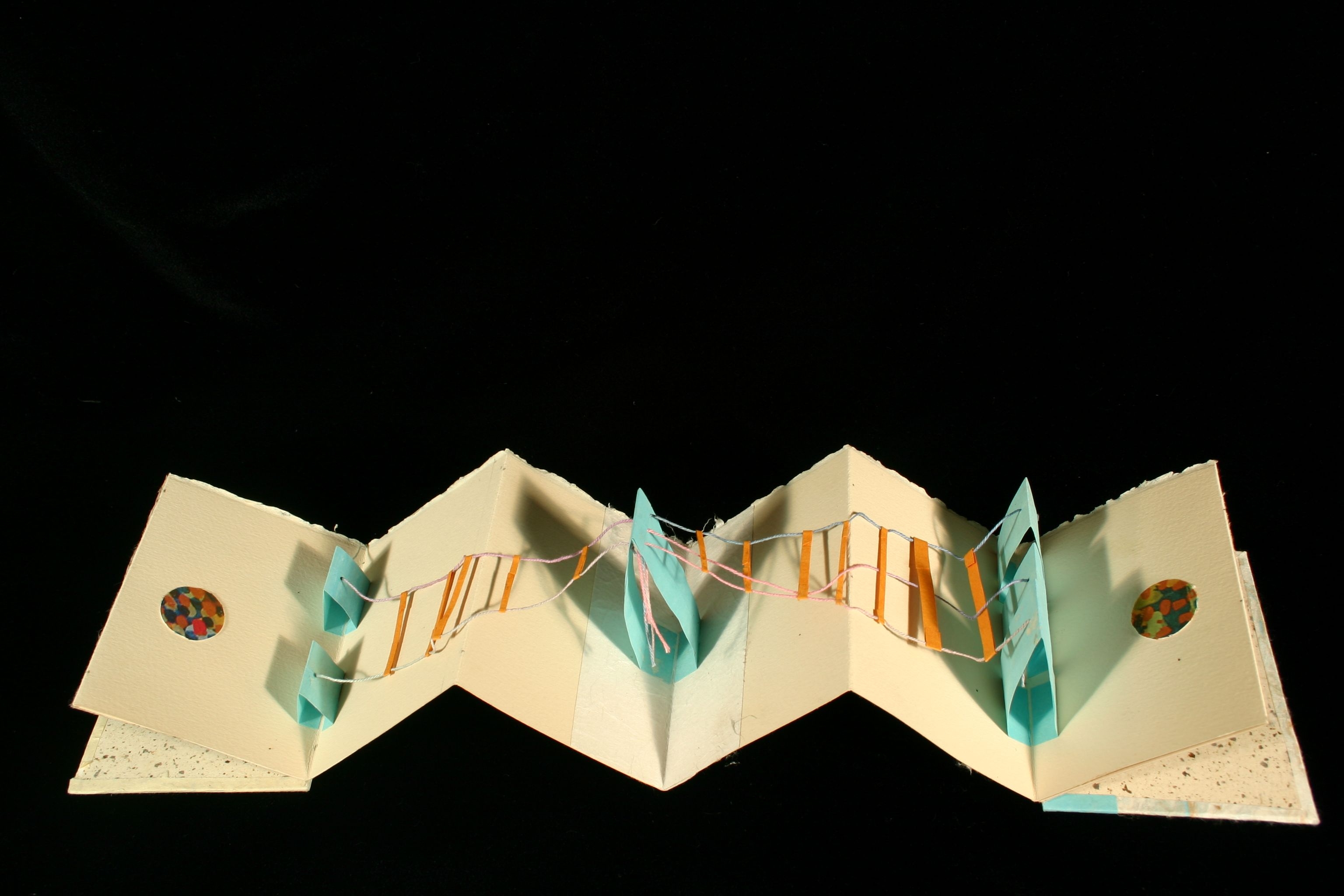
In May of 2013 we purchased a copy of Petite Ode à Jean François Champollion by Ron Padgett and Bertrand Dorny. We have number 8 of 24 copies signed by the author and the artist. Each copy is somewhat different, with hand-glued collages throughout. Both the original text and the collage materials (maps, etc.) are in French. The book can be stored flat or displayed in a pyramid shape. Our particular copy comes with typed instructions from Padgett himself on how to configure the pyramid. (It isn’t difficult to configure, but those of us who find spatial relations challenging — this Curator included — will be glad to have the instructions.)

We are the second U.S. library (with Yale) and the third world-wide (with the Bibliothèque Nationale) to own a copy of this book. We look forward to sharing it with students and scholars.

Dream interpretation made easy

madame  fruitdreams

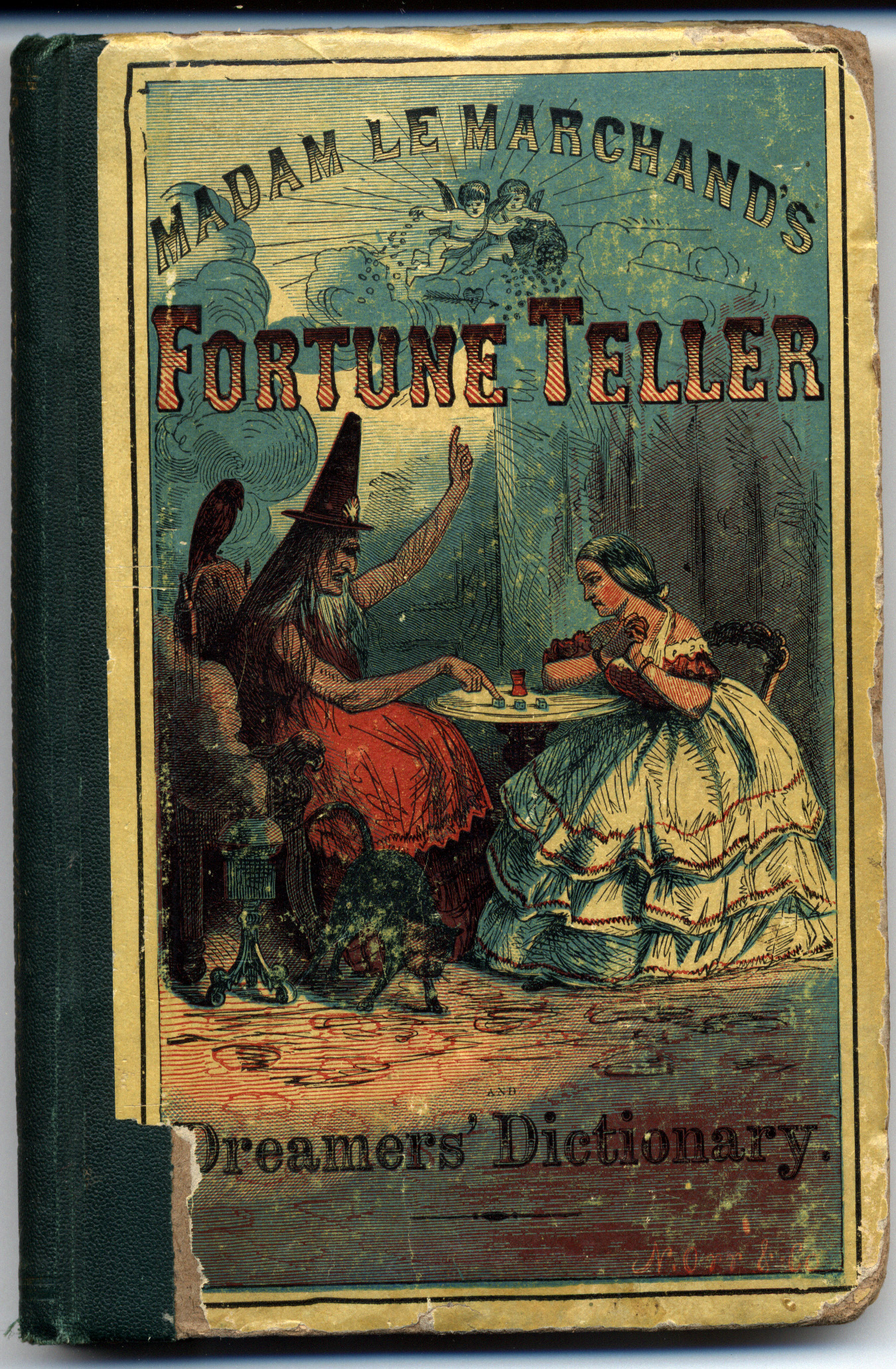
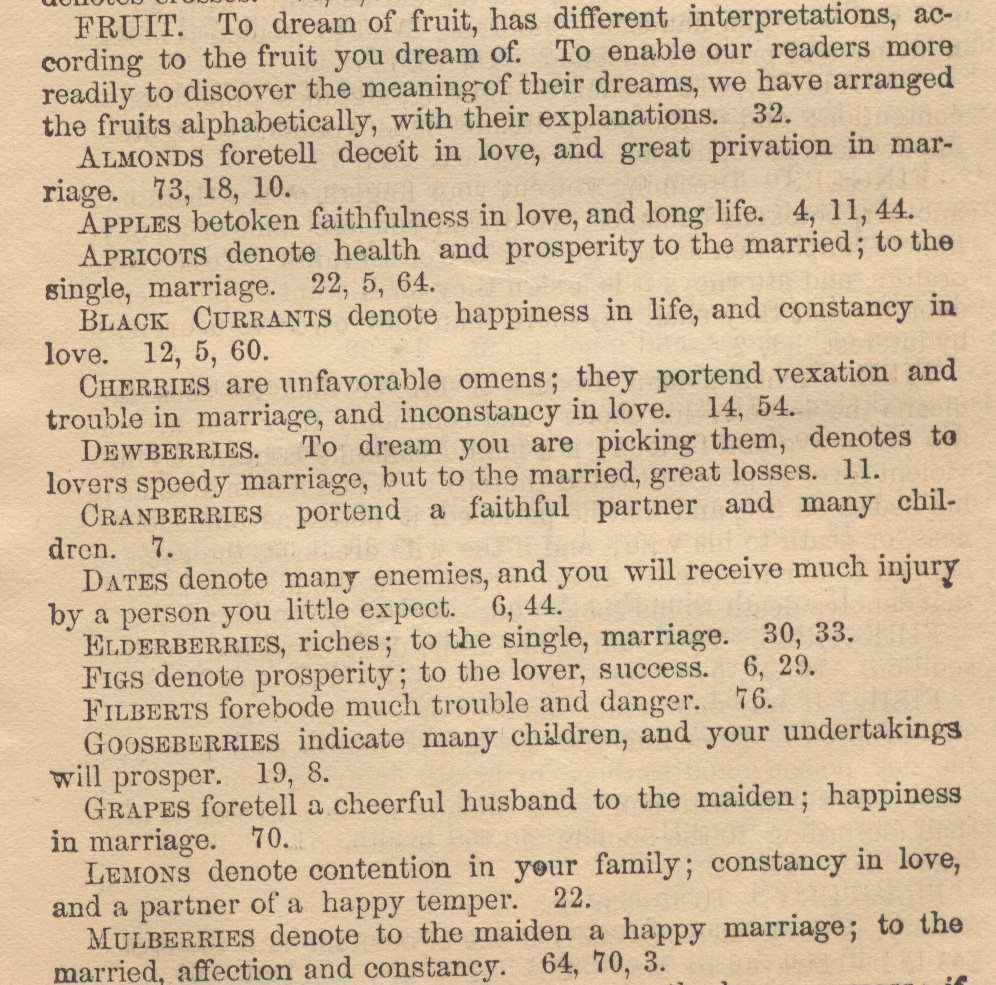
Madame Le Marchand’s Fortune Teller and Dreamer’s Dictionary (1863) will tell you the meaning of everything in your dreams. Each fruit, for example, has a particular meaning: cherries “portend vexation and trouble in marriage”; gooseberries “indicate many children,” and filberts “forebode much trouble and danger.” (Has J.K. Rowling’s Sybill Trelawney been reading this book?)

The numbers after each entry are the lucky numbers your dreams have provided. Visit Special Collections and request the book to begin interpreting your own dreams the official 1863 way.

Postcard collages by Mary Chenoweth and the Pikes Peak Pen Women

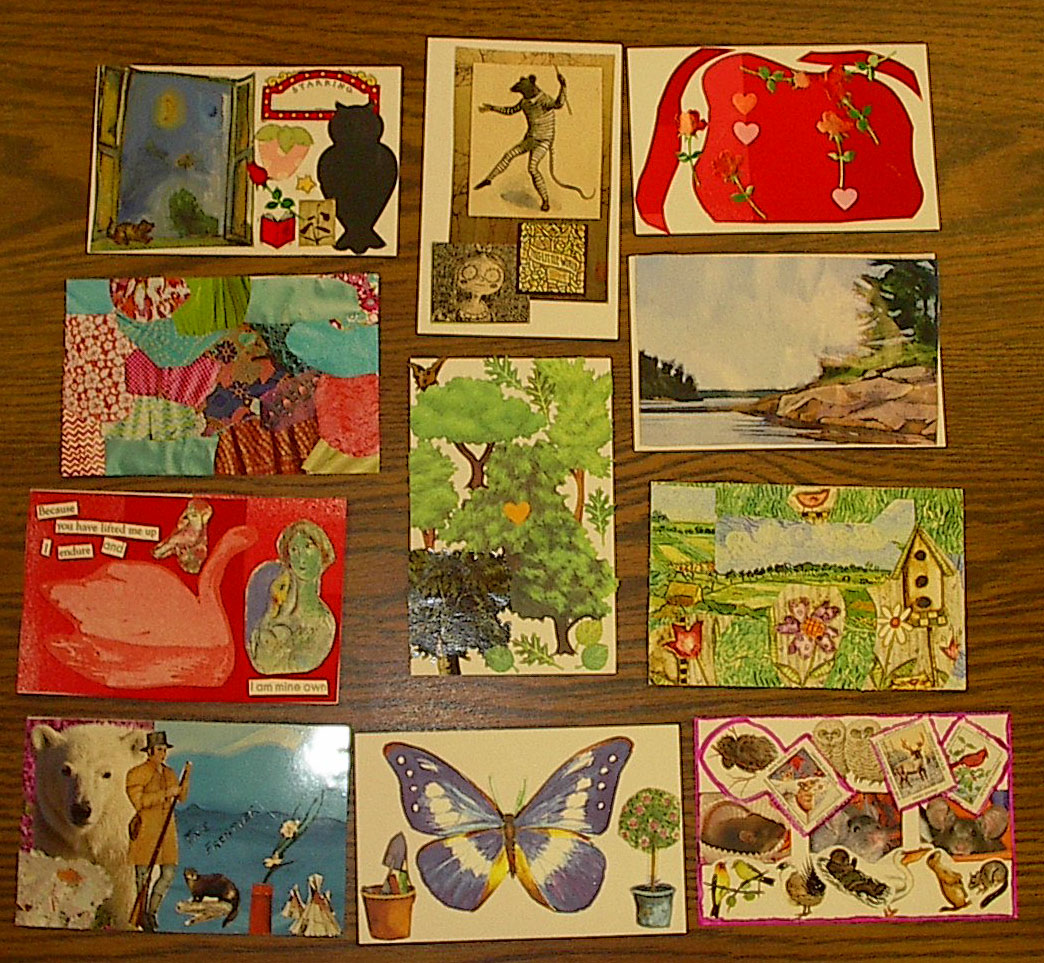
Chenoweth postcardsOn Saturday, January 19, the Pikes Peak Pen Women visited Special Collections to learn about historical writers and artists in Colorado. They viewed the original handwritten manuscript of Helen Hunt Jackson’s novel Ramona, books by Ann Zwinger, artists’ books by Alicia Bailey and others, and postcard collages by Mary Chenoweth.

Special Collections is home to the papers of Chenoweth, an artist who taught at Colorado College from 1953 until 1983. She made sculptures, woodcarvings, woodcuts, watercolor and oil paintings, etchings, and more. Making art was an everyday activity for her, and she frequently created one-of-a-kind postcard collages and mailed them to friends and family.

Pen Women postcardsThe Pen Women usually do some kind of writing exercise at their meetings. This time, instead, they made their own postcard collages, using recycled materials such as scraps from magazines and catalogs. I hope the club members will do as Chenoweth did and mail their postcards to friends and loved ones. Perhaps we can start a home-made-postcard-making trend!

Our anonymous donor strikes again!

With a money gift from a very kind anonymous donor, Special Collections has just acquired our fifth incunable! (Incunabula are European printed materials from pre-1501. A list of our incunabula and early printed books is here.)

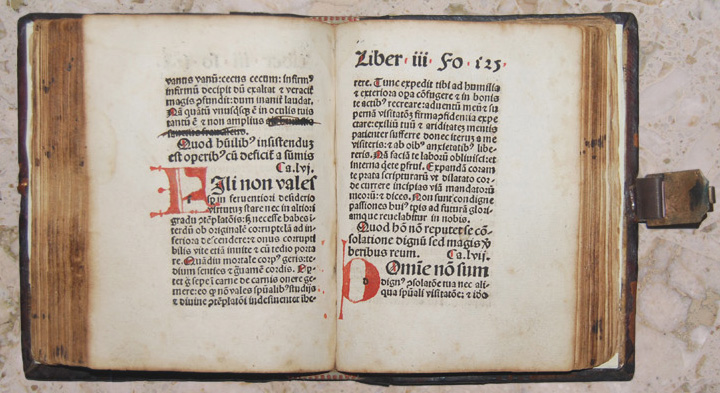
This new one is a 1492 edition of Thomas à Kempis’s Imitation of Christ, printed by Anton Koberger in Nuremberg. It’s smallish, less than six inches tall and comfortable in the hands.

Owners and censors have been “refreshing” it in various ways over its five century life. Marginalia has been excised, leaves have been replaced, words have been struck out, owners have placed their signatures and stamps and bookplates in it. We know from its scent that at least one previous owner was a smoker. We know from the dealer that the clasp has been replaced. We look forward to scholars working with it and finding out much, much more.

So, on this day-before-Thanksgiving, we say: thank you, anonymous donor!  Thank you, Medieval Books, for the generous discount you provided in support of Colorado College’s minor in book studies! And thank you, book people everywhere, for loving books and caring for them so that they last and last.

Carleton College artists’ books

Hagstrom: Forces and Fossils

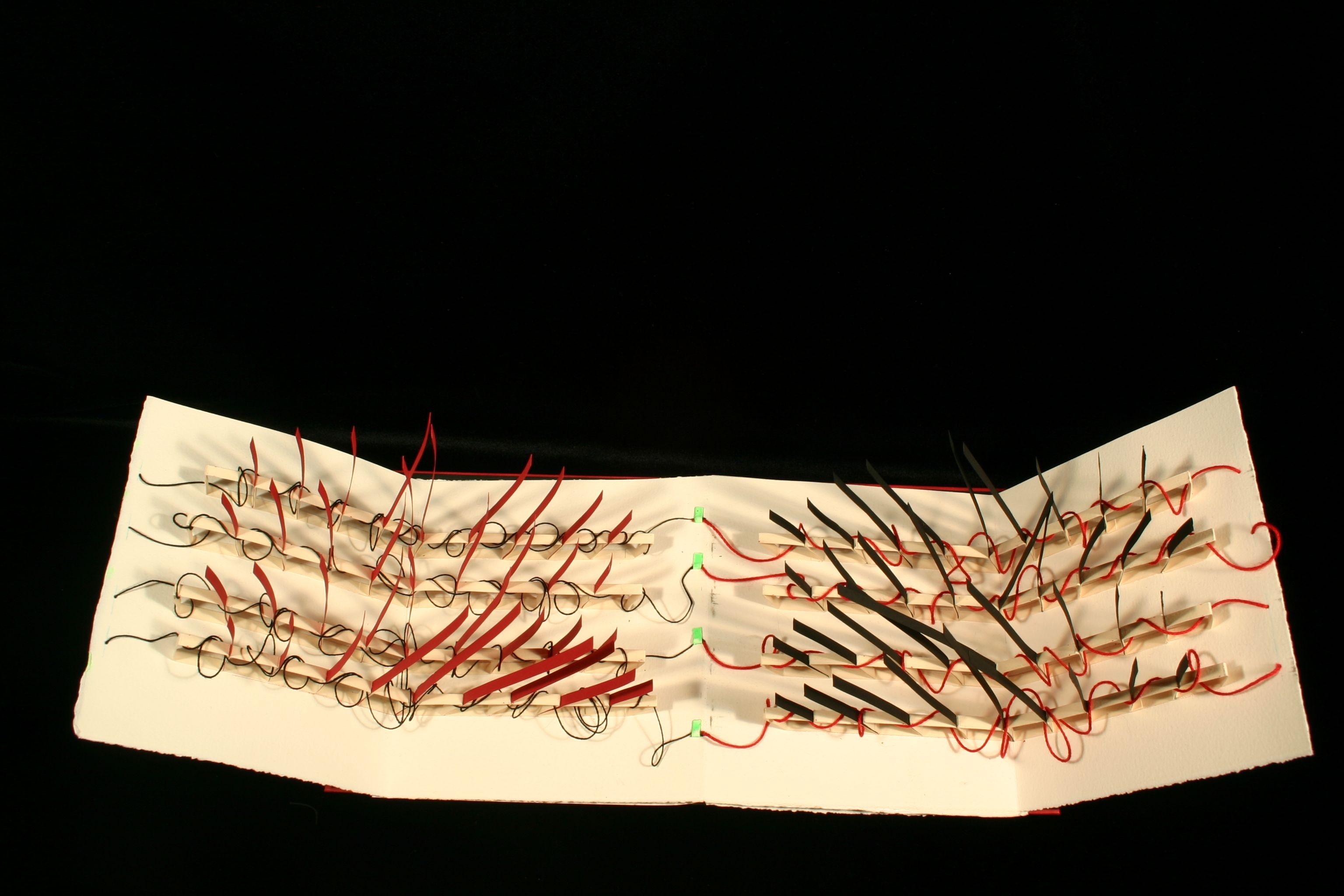
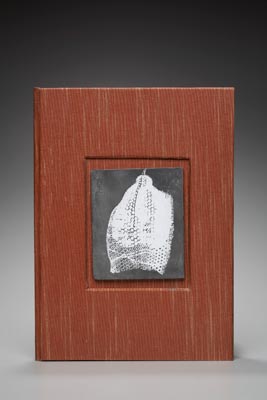
In September of 2012, Carleton College professor and book artist Fred Hagstrom was the Press at Colorado College’s Visiting Lecturer. Special Collections owns three of Hagstrom’s books: Deeply Honored, concerning a Japanese-American internment camp, and two newly acquired books: Standing Place, gift of the artist, a book about the marriage of a Maori man and a Greek woman, and Forces and Fossils, which was made using blown-up illustrations from Ernst Haeckel’s 1862 book on microscopic protozoa, Die Radiolarien.

Fay: Salton Sea

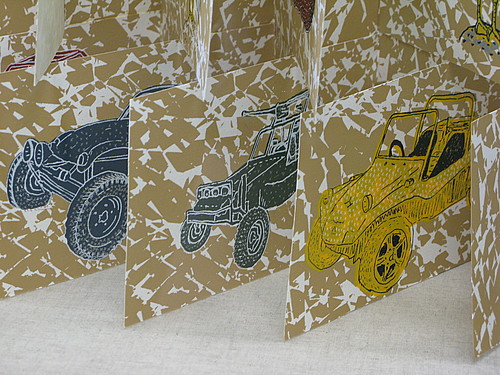
While he was here, Hagstrom showed us samples of books his students at Carleton had made.  We thought students here might benefit from seeing books made by students elsewhere, and have therefore purchased four artists’ books made by Carleton students and alumni: Holly Phares’s Important to My Sanity and Future, Myla Fay’s The Salton Sea Guide to Birds and Dune Buggies, Liz Giraud’s Love Hertz, and Heather O’Hara’s The Handbook of Practical Geographies.

Embroidered composition book by Candace Hicks


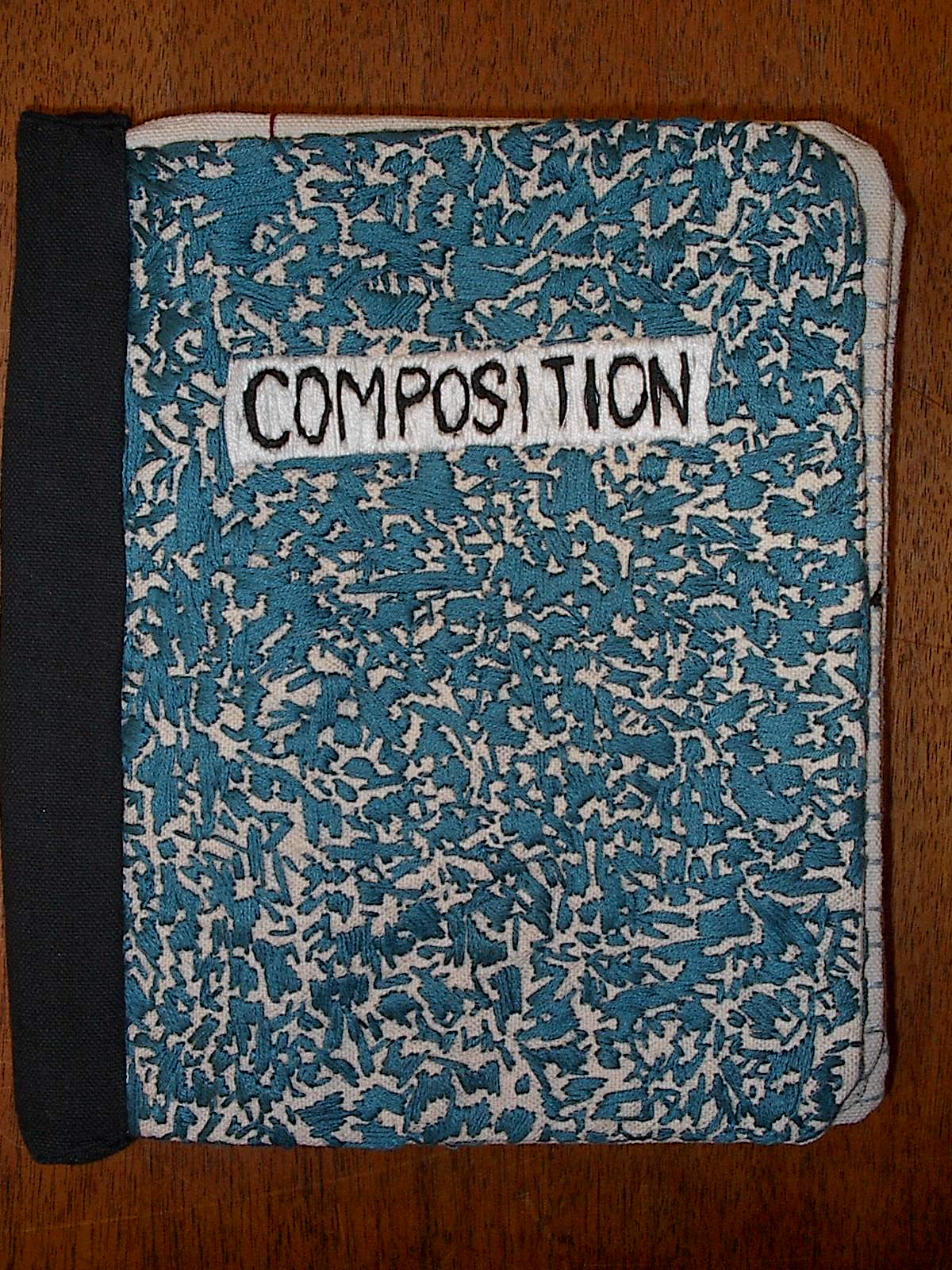
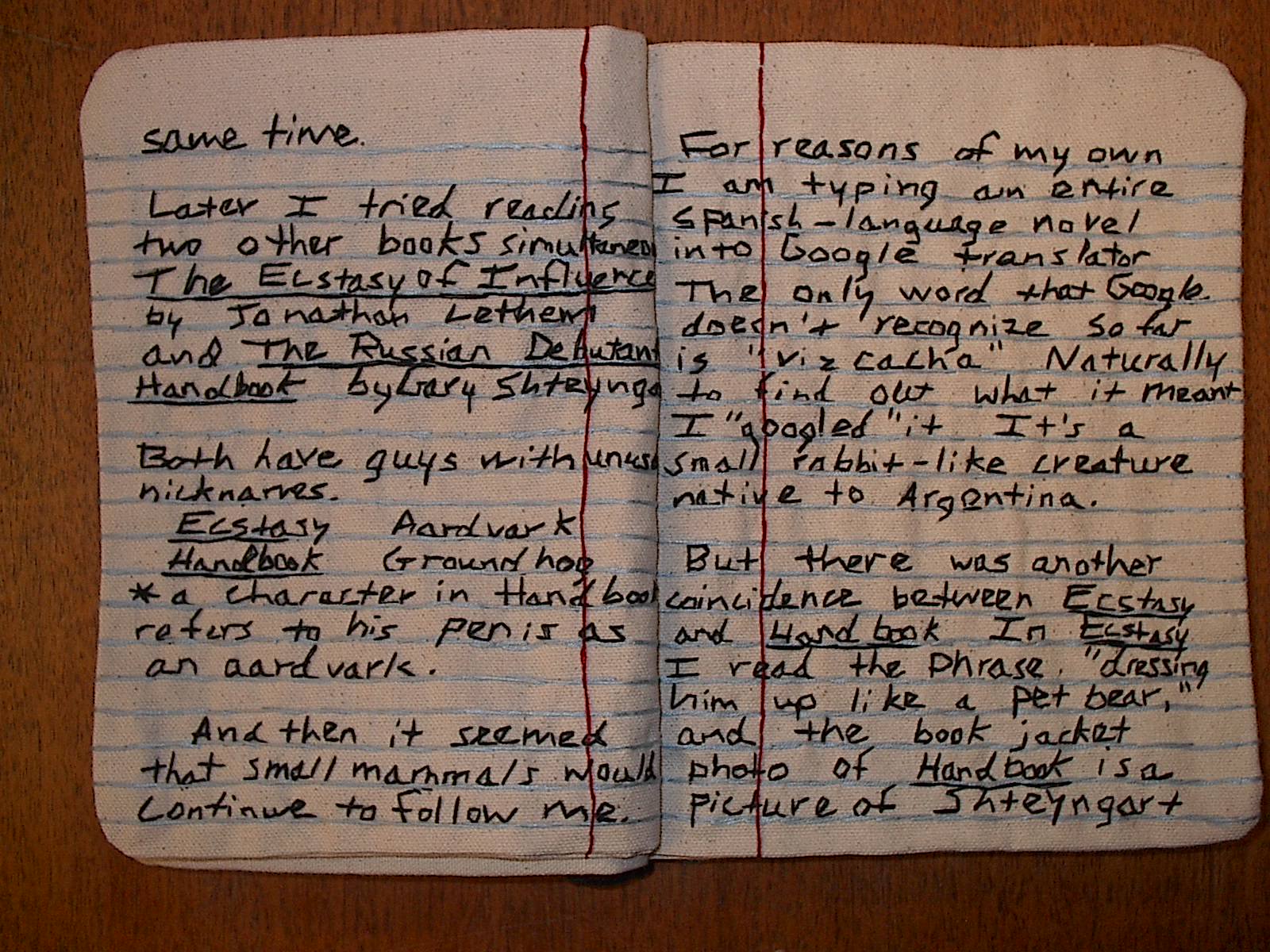
In the summer of 2012 we acquired one of Candace Hicks‘s unique embroidered composition books. Ours is “Volume XXXIII,” with a green cover. Like others in the series, it is a sort of personal reading journal, with all the text embroidered by hand. Authors mentioned in our volume include J.K. Rowling, Janet Evanovich, Jonathan Lethem, and Gary Shteyngart. The book is soft and floppy and a pleasure to handle, and several students have already admired it in our reading room.