 Erica Carlson Nicol posted this sign to the ALA Think Tank on Facebook. It’s from the Neill Public Library in Pullman, Washington. Thanks, Marianne Aldrich!
Here’s My (Call) Number
Leave a reply
Erica Carlson Nicol posted this sign to the ALA Think Tank on Facebook. It’s from the Neill Public Library in Pullman, Washington. Thanks, Marianne Aldrich!
 Lego recently introduced a librarian minifigure holding a copy of Oranges and Peaches, which is a bit of an inside joke for librarians (though really, in the age of Google, are there any truly inside jokes any more?).
Oranges and Peaches (a misunderstood Origin of Species) is an imaginary book made real; full story here. (The tale almost certainly originated in the 1995 movie Party Girl; a reference to it appeared in a scholarly article the following year.)
 The description of the Lego librarian leaves something to be desired: it contains references to overdue books and shushing, not most librarians’ idea of the important part of our work. But of course, the librarian minifig has already been repurposed: Kristin Bell has made a Lego Viking librarian (something we all need in our minifig collection). I might also like to see mash-ups with the Warrior Woman or Medusa, but maybe not the Street Harassment Construction Worker.
Thanks, Joan Petit!
 ” ‘Now I must go and search for food and moisture,’ continued Luddom, moments before being devoured by a swarm of ravenous bats.”
Thanks, Amy Augusen!
Anybody know where this takes place? Or who made it? Or anything?
Thanks, Carol Dickerson!
Addendum May 3: Carol tells me it’s the Trinity University Library in San Antonio, Texas.

The American Library Association celebrated National Library Week this year with a book spine poetry contest. They’ve created a Flickr set of all the entries. Congratulations to the winner, elizabeth-3! Thanks, Emily Lloyd; I wouldn’t have known about this if not for you.
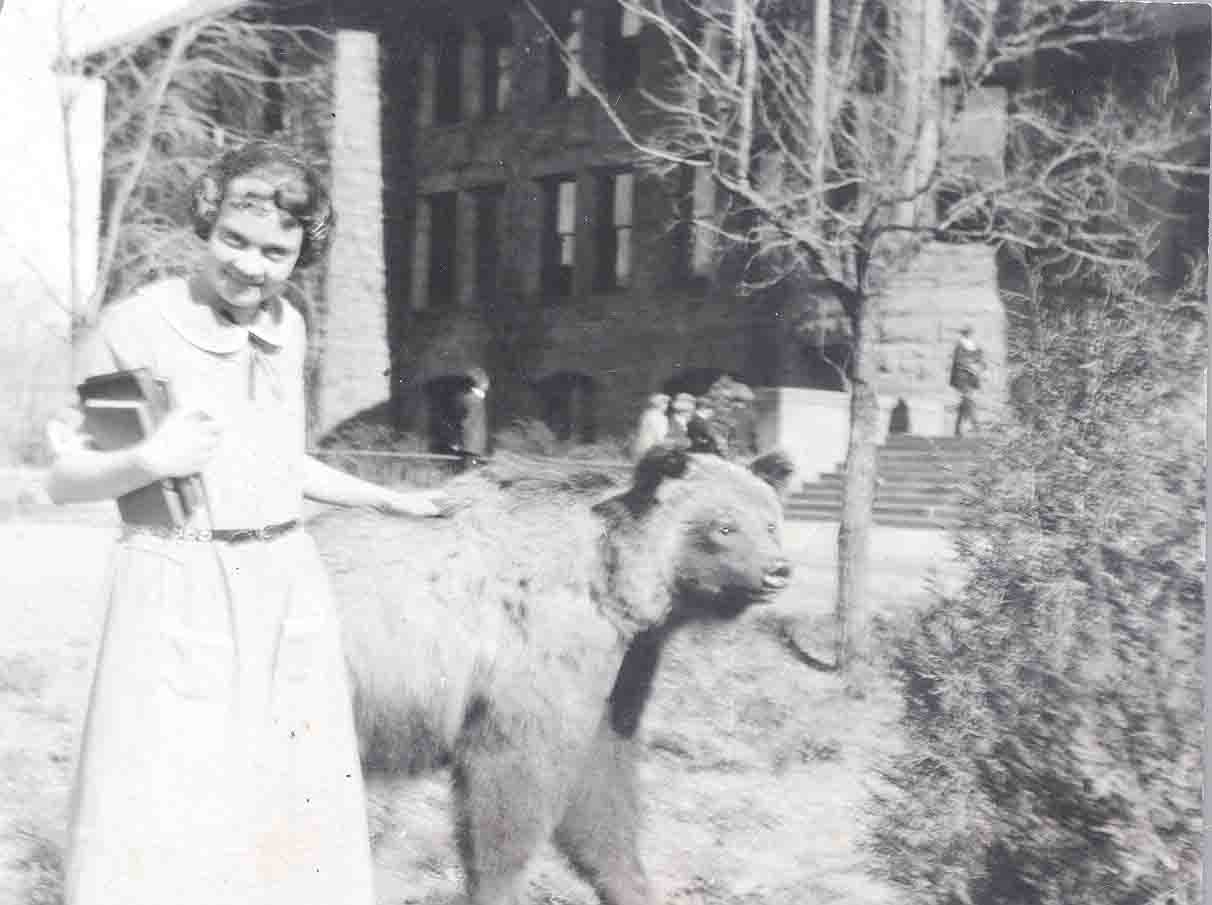
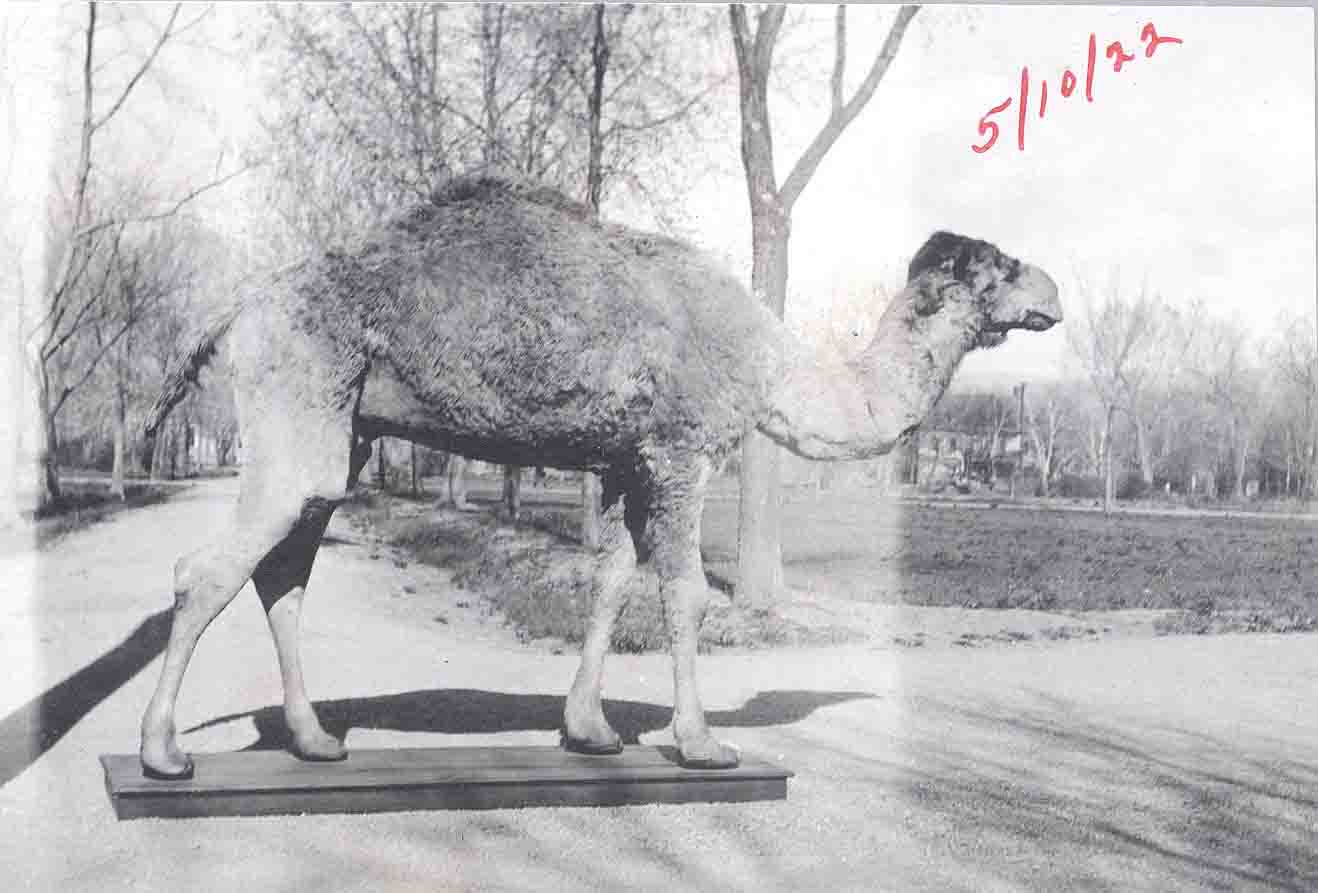
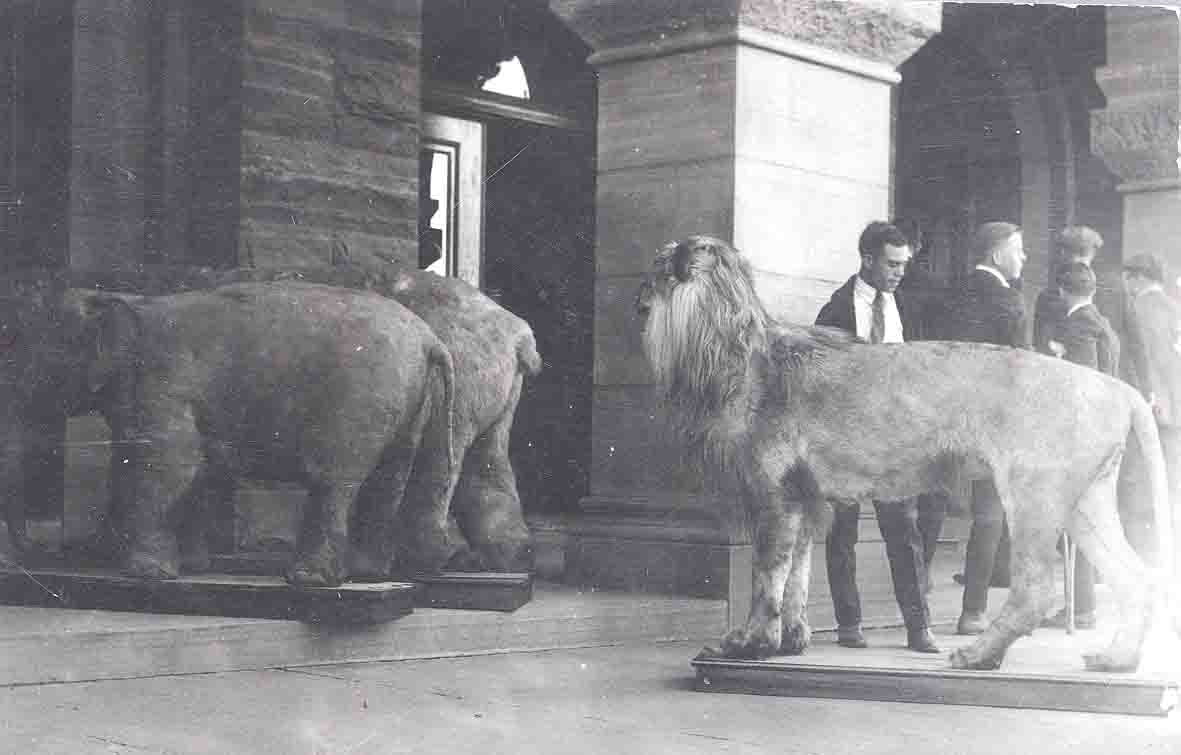
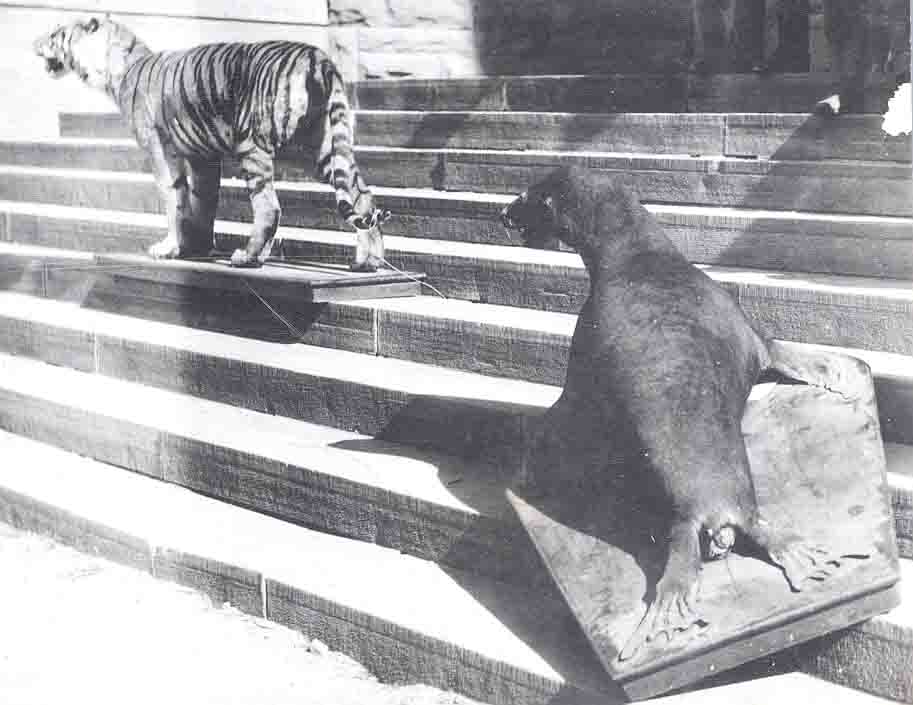
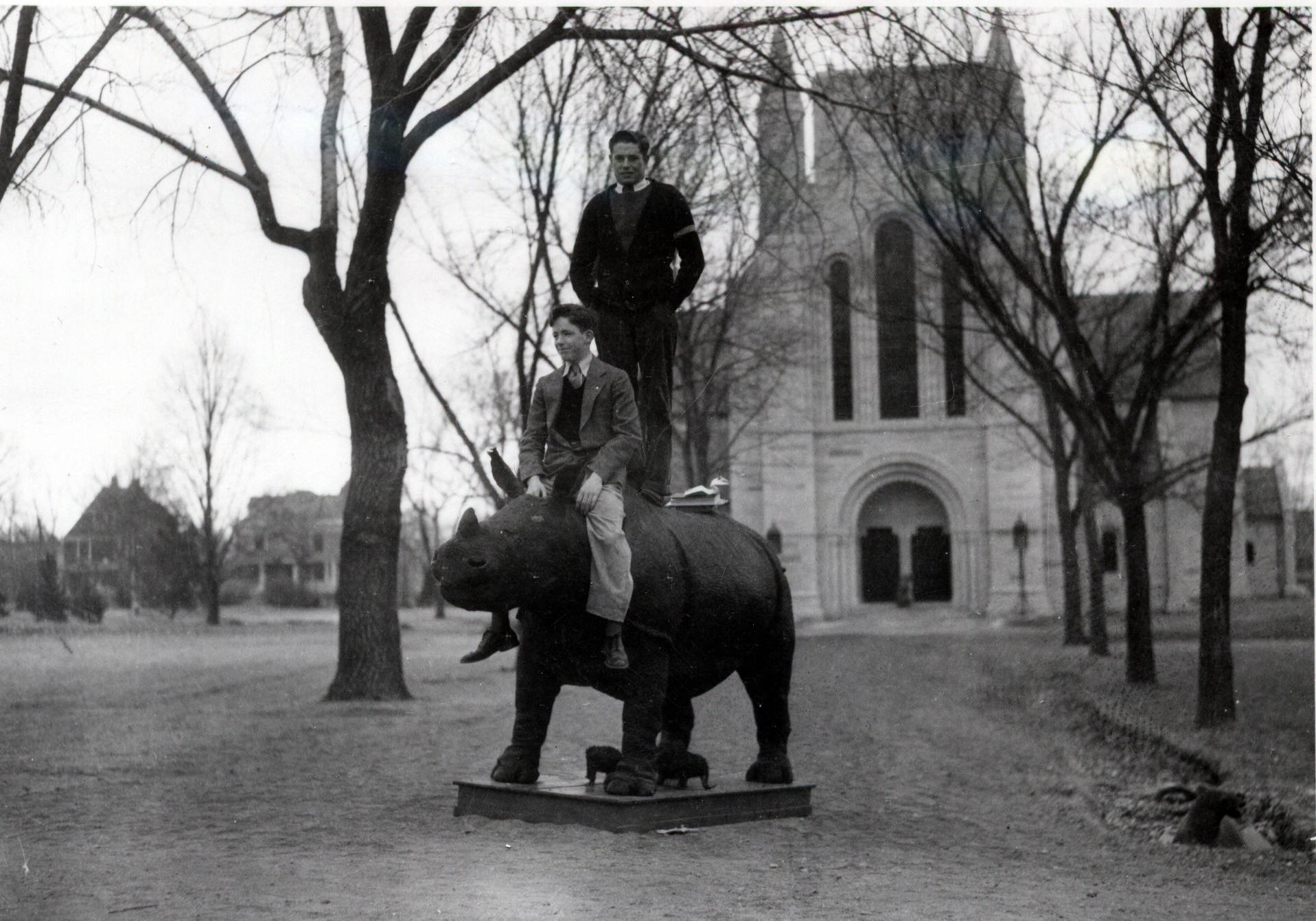
Okay, so this isn’t precisely a library shenanigan, but it’s close enough, I think.
On May 10, 1922, Colorado College students removed taxidermied animals from the college museum in Palmer Hall and placed them all over campus. This shenanigan was apparently in protest of then-president of the college, Clyde Duniway, whose policies were unpopular with students: he limited the times when men could visit women’s dormitories; strictly enforced chapel attendance; and fired a football coach for using profanity on the field. 350 students (about half the total enrollment) signed a petition complaining about Duniway, to no avail. The animals prank was one of several that spring: students also released hydrogen sulfide in one classroom building and somehow got a live cow up to the second floor of another.
In January of 1929, CC students again placed the museum animals around campus, this time to protest the firing of the editor of the student newspaper.
Source: J. Juan Reid, Colorado College: The First Century (1979), chapter V, “Controversy and Student Unrest.” See CC Museum Records, Ms 398, for more information.
 Emily Lloyd, librarian and poet (and all around nice person), made this rockin’ gif. It won’t start rockin’ until you click it. Thanks, Emily!
 The Library Card Project at the American Craft Council has yielded some lovely things, but I had to take down the image I linked to them because they don’t allow re-posting of images. They do allow me to link, so I’ve linked from their name.
This isn’t the first time artists have used library materials, of course — Giselle Restrepo has worked with library check-out cards (see image at left), and Alice Walsh uses library cards in her book work, to name just a couple of other practitioners. Thanks, Kathleen Kirk!
 Scary AND hilarious video and event at Lane Library, Ripon College, Ripon, Wisconsin. I wonder if we should do this at Tutt Library. Thanks, David Graham!
In the spring of 2013, Special Collections purchased two 16th century German books: Johann Schradin’s Expostulation (Augsburg, 1546) and David Chytraeus’s Historia der Augspurgischen Confession (Rostock, 1576).
 According to Blackwell Books in London (the dealer who sold us these books), the Expostulation is a poem about Ariovistus, Arminius, Barbarossa, and Georg von Frundsberg visiting the author in a dream. Perhaps of interest to book studies folks, two of its pages didn’t print properly and someone added the missing text in manuscript. This image shows the manuscript text on the verso of leaf 9.

 The Chytraeus has a contemporary pigskin binding with working clasps. A history of the Augsburg Confession, the text was translated into many languages and frequently reprinted after it first appeared in 1576. Our copy has marginalia from at least one previous owner and a rebacked spine.