The CC Authors Reception is today! We’re celebrating 70 faculty and staff authors with publications since May of 2014. It’s quite gratifying to me, as a librarian and a writer, to see the impressive scholarly output of the faculty and staff at Colorado College, a small liberal arts college with a focus on teaching. You’d think we were a big university from the amount of publications on display!
This year we’re concurrently celebrating a few amazing new acquisitions in Special Collections, since, why not, we’re just upstairs from the authors reception. We’ve mentioned many of these acquisitions in earlier blog posts, but not these two:
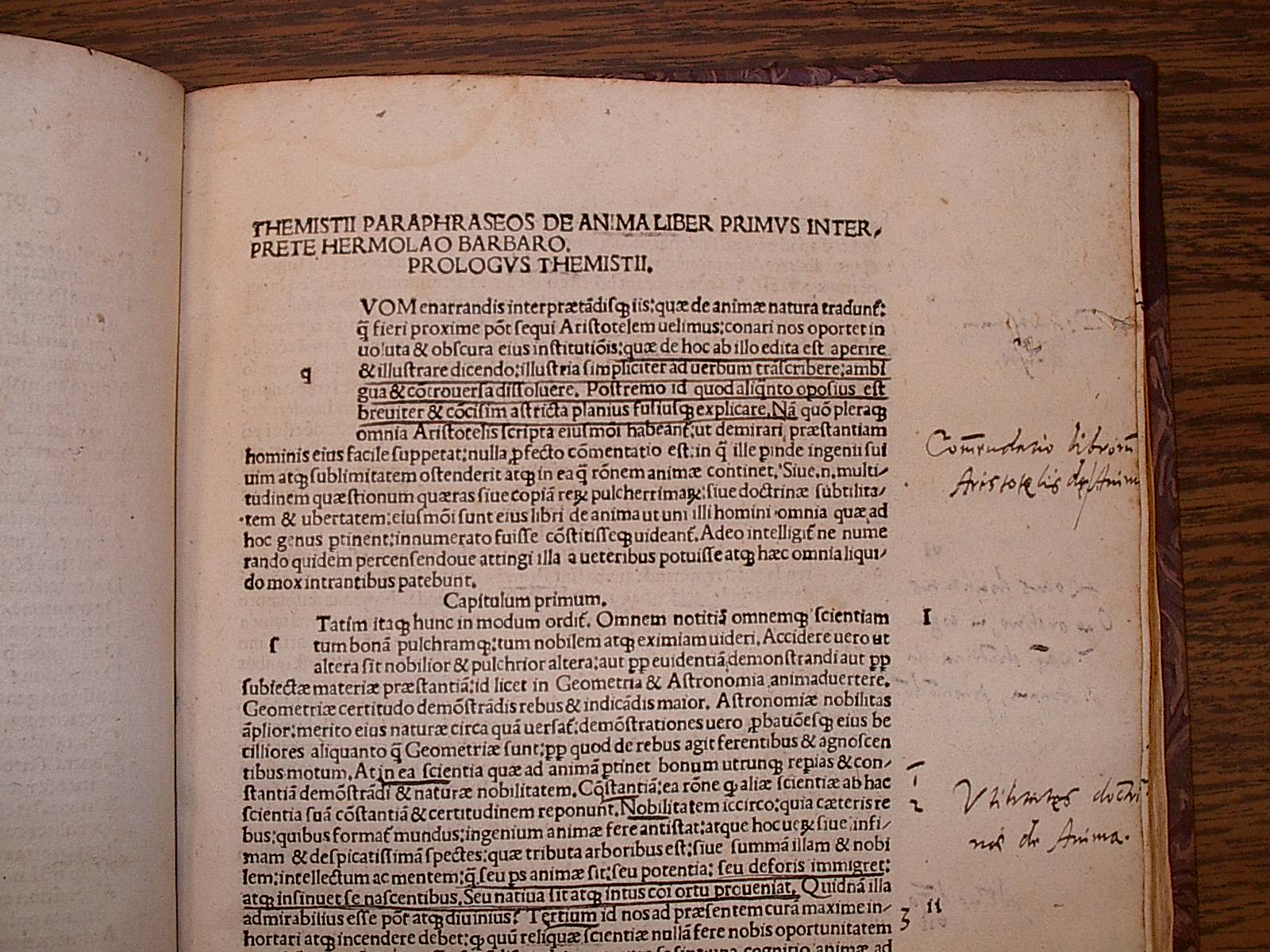
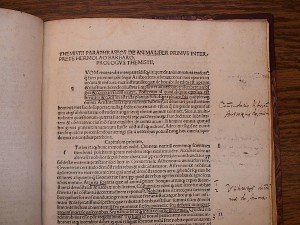 Themistius. Paraphrasis in Aristotelem. [Treviso, Italy]: Bartholomaeus Confalonerius and Morellus Gerardinus, 1481. Purchase. Now the earliest printed book in the library, beating out a 1484 Jacobus de Voragine for the honor. With bookworm damage (not affecting text) and a previous owner’s marginalia throughout.
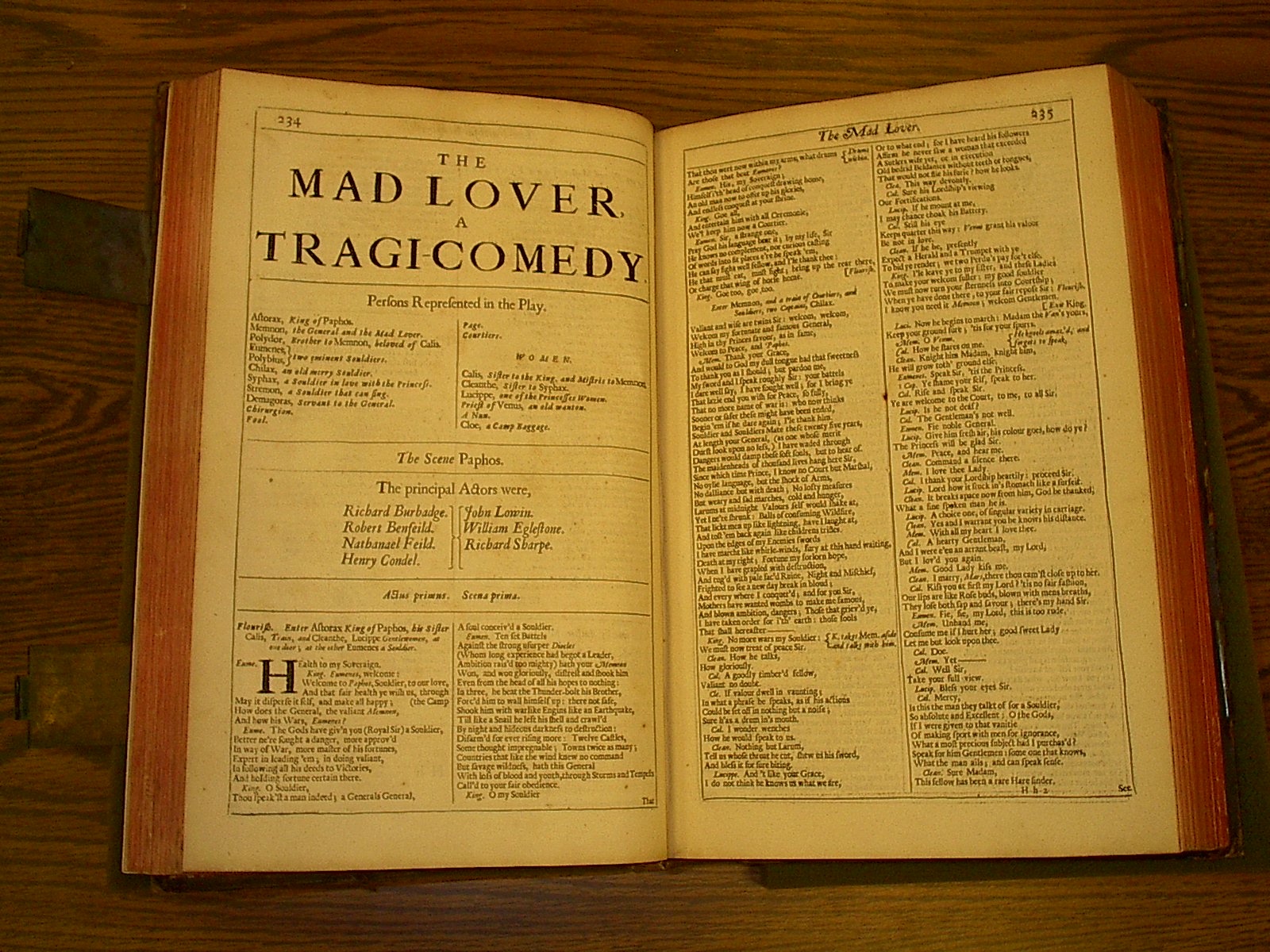
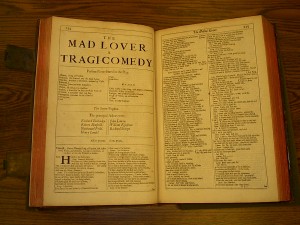 Beaumont, Francis, and John Fletcher. Fifty Comedies and Tragedies. Second folio. London: Printed by J. Macock, for John Martyn, Henry Herringman, Richard Marriot, 1679. Gift of the National Endowment for the Humanities Professorship at Colorado College, 2015, courtesy Steven Hayward. This is the only copy of the second folio in Colorado. It contains several plays not included in the first folio, published 1647. Our copy is bound in leather over boards and has two brass clasps keeping it shut. We expect to bring it out regularly for researchers and classes studying Shakespeare and his contemporaries.
The event is co-sponsored by Tutt Library and the Crown Faculty Center.
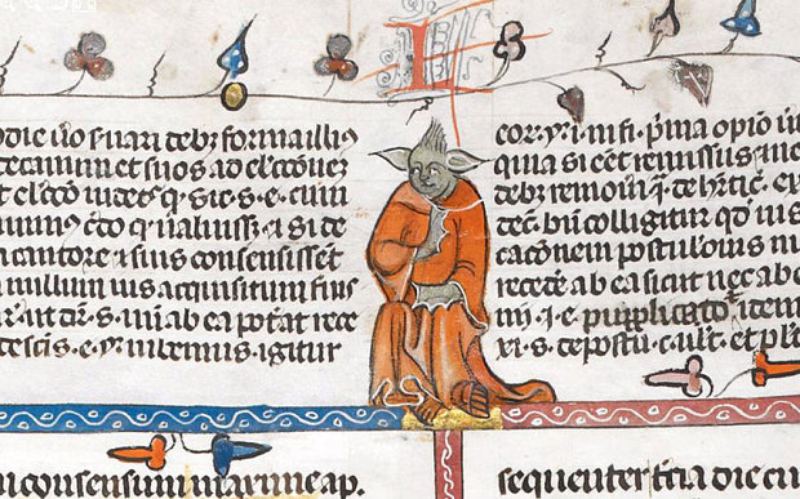 British Library curator Julian Harrison found an illustration of a creature who is clearly Yoda in a medieval French manuscript. According to the Onion’s A.V. Club, Harrison “says it’s obviously not Yoda, just a thing that looks like Yoda, but we think he’s just covering up for the fact that Yoda’s existence in medieval France throws everything we know about history into disarray.” Thanks, Steve Lawson!



 Please note: the International Society of Librarians is not to be confused with