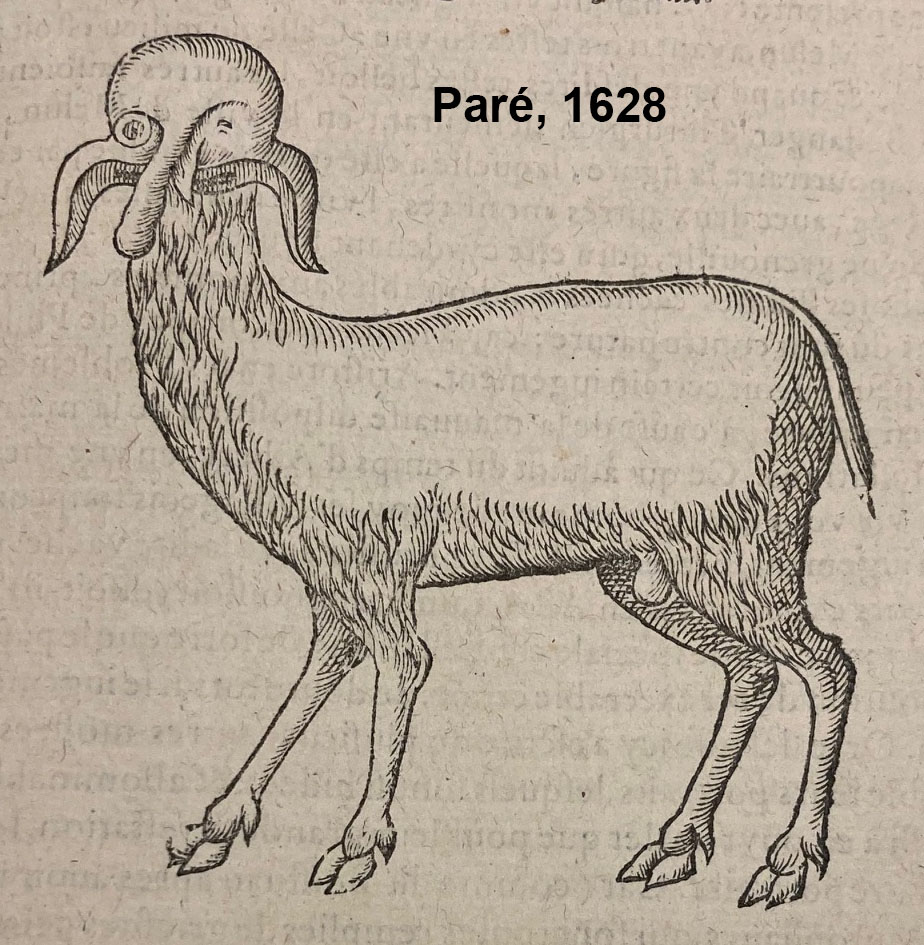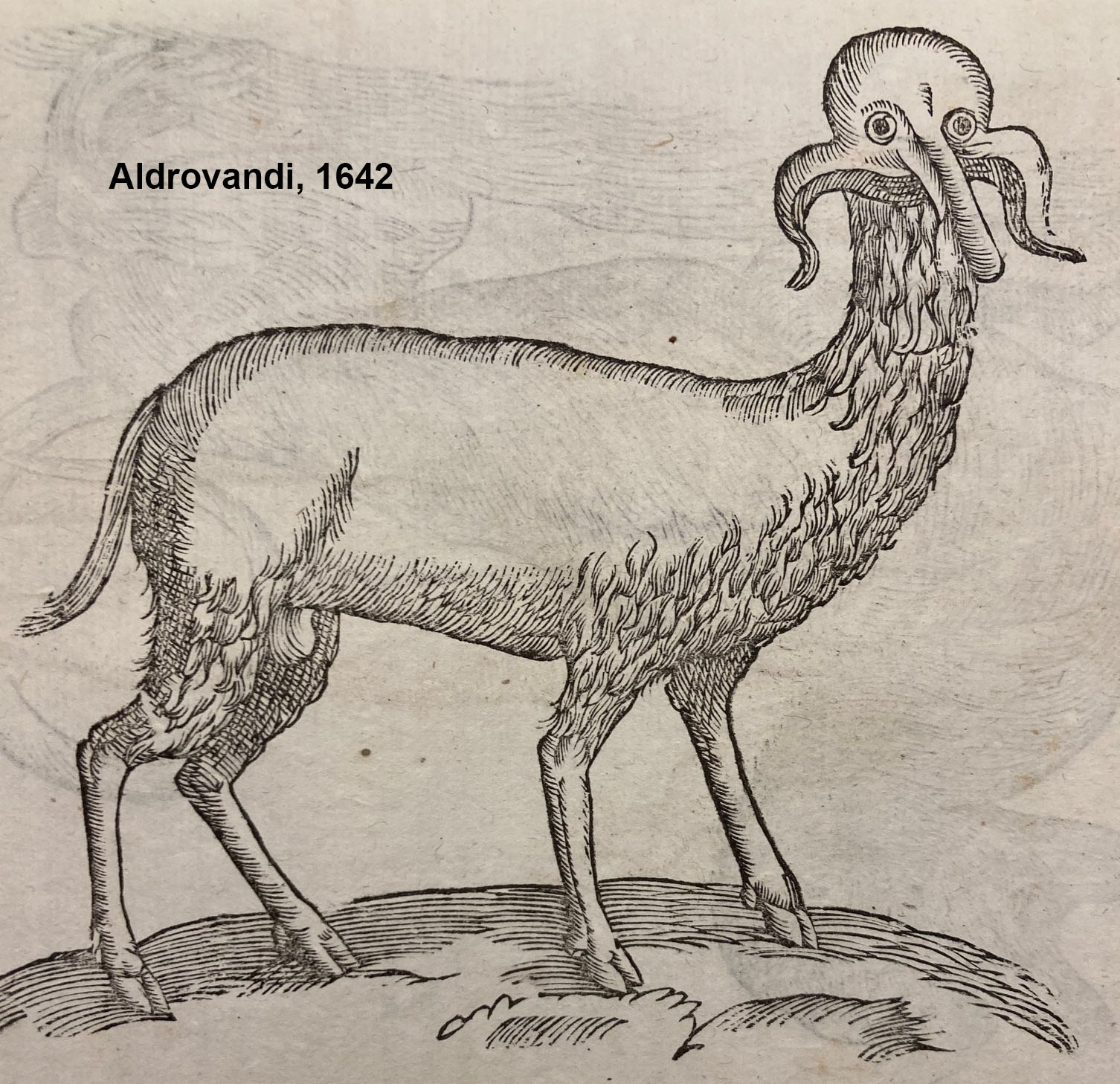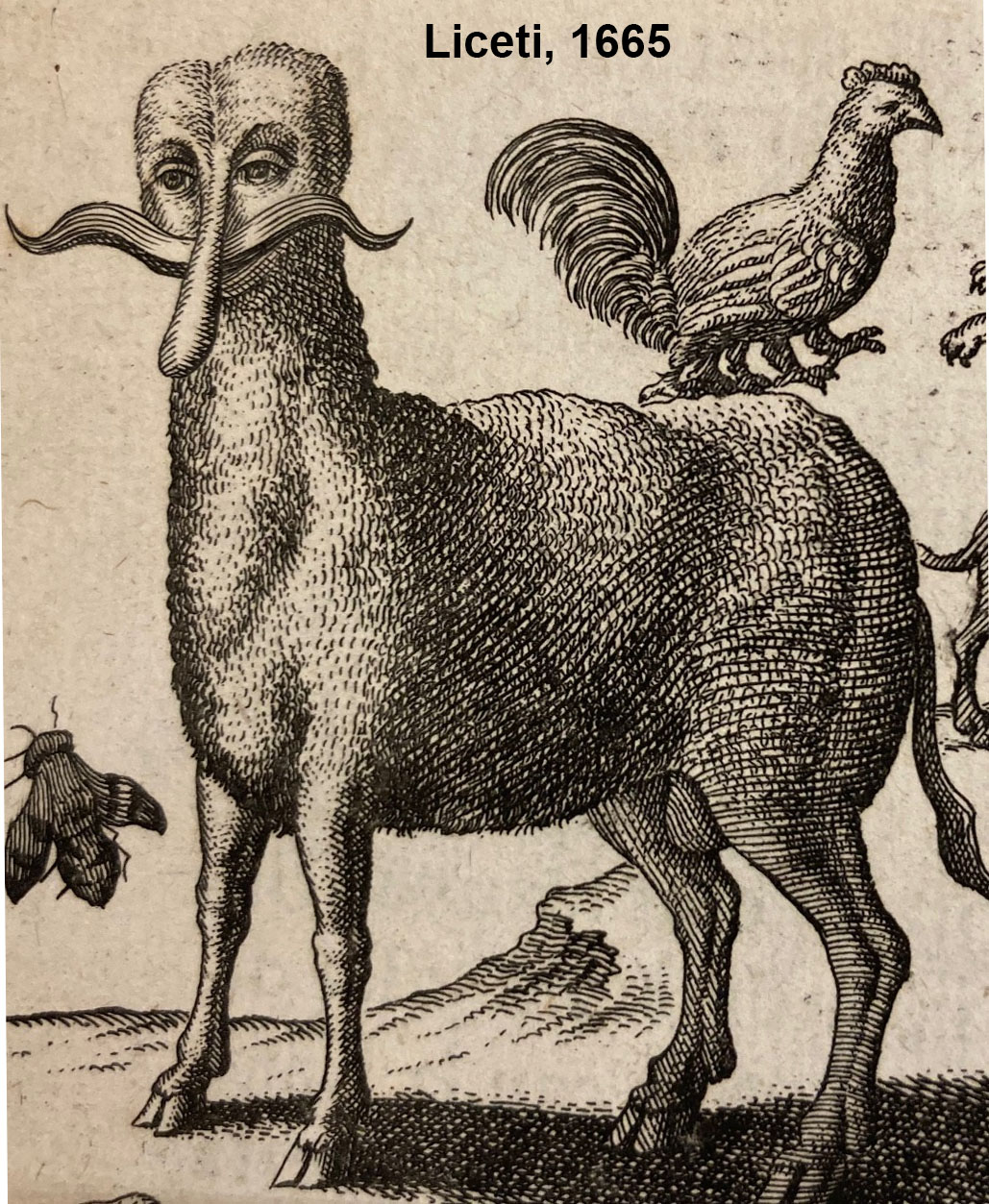
CC Special Collections has three illustrated books about monsters published in the 17th century. The authors are Ambroise Paré (French, 1510-1590), Ulisse Aldrovandi (Italian, 1522-1605), and Fortunio Liceti (Italian, 1577-1657). We have a 1628 edition of Paré’s Oeuvres (first published in 1573), a 1642 edition of Aldrovandi’s Monstrorum Historia (the first edition, published posthumously) and a 1665 edition of Liceti’s De Monstris (first published in 1616 without illustrations).
The “monsters” in these books include people with genetic anomalies (such as conjoined twins), mythical creatures (such as centaurs), and … well … these:
and these:
and many other similar trios. I have searched in vain for an explanation of how these three books ended up with such similar illustrations.
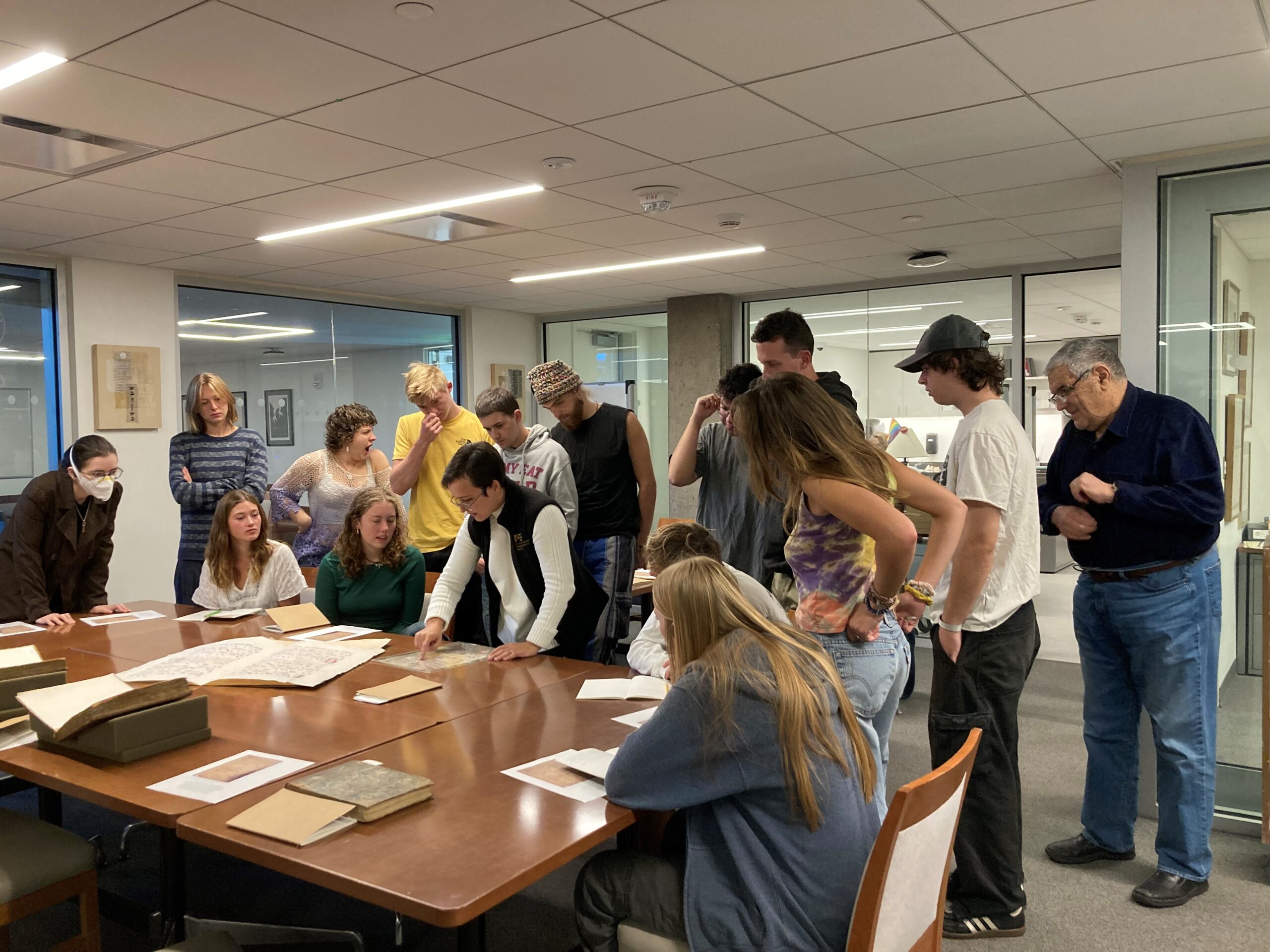
In block 2 of 2025, Lidia Chang’s “Music and Gender in Jane Austen’s England” class (with special guest Ofer Ben-Amots) visited Special Collections to look at the way music was copied and distributed in Europe from the medieval period through the 19th century.
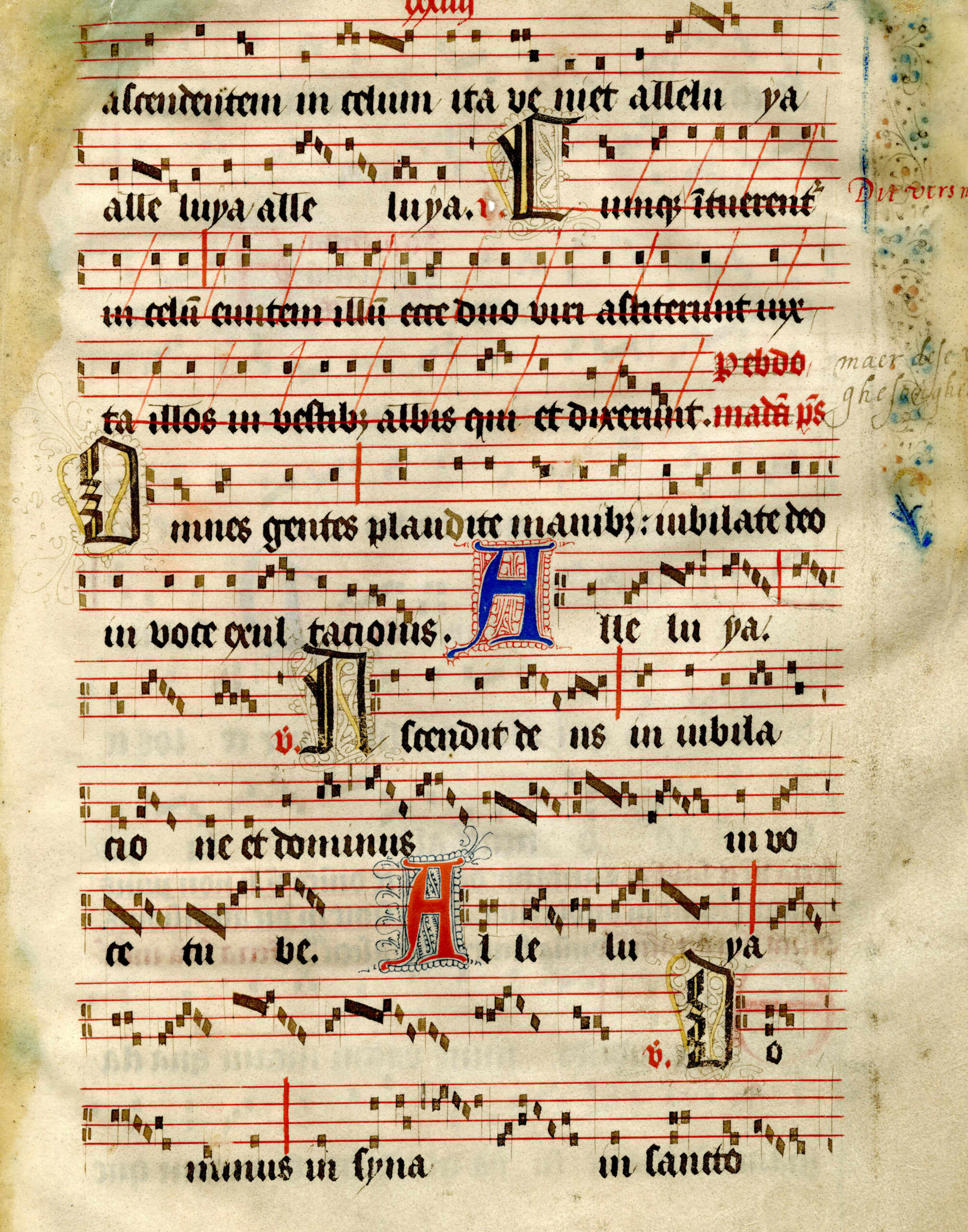
They took a close look at this manuscript leaf showing part of a choral arrangement of Psalm 46, copied probably in the 14th century:
And then … THEY SANG IT! The words are “Omnes gentes plaudite manibus” (the fifth line from the top). Note that the staff has only four lines, rather than the now-standard five.
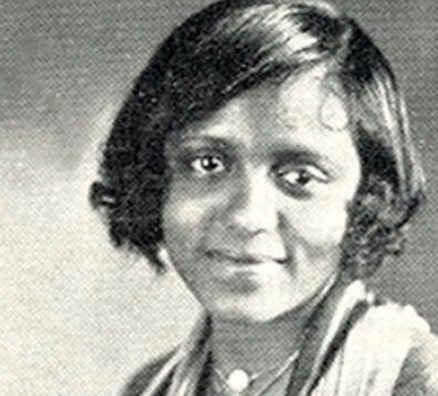
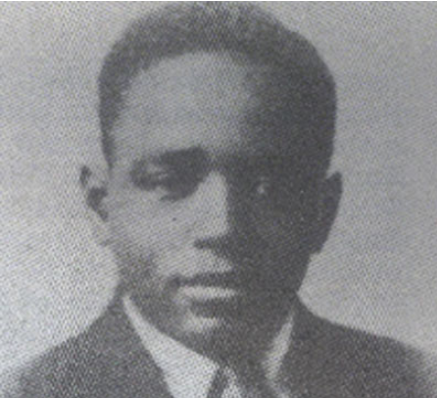
We are very proud to announce that Juanita Stroud Martin has donated a collection of Stroud Family Papers to Special Collections. The finding aid is here, and some material is transcribed here (scroll down to “manuscript materials”).
Effie Stroud’s sophomore yearbook photo (1929); Dolphus Stroud’s senior yearbook photo (1931). All CC yearbooks are in digitalCC.
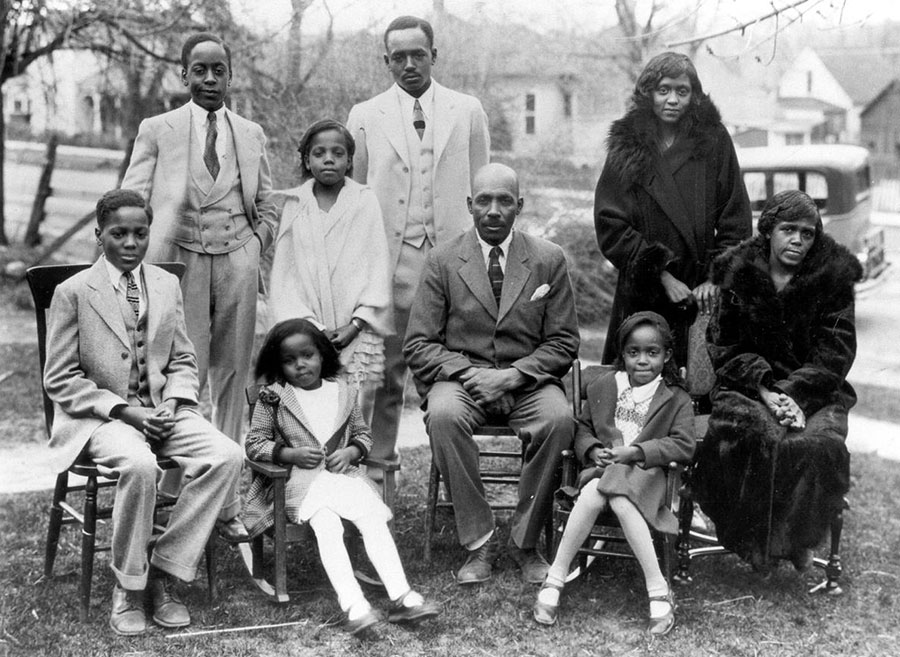
Stroud family, 1929, courtesy Colorado Springs Pioneers Museum. Seated from left: James, Bobby, Rev. K.D., Rosa May, mother Lulu. Standing from left: Jack, Nina, Dolphus, and Effie.
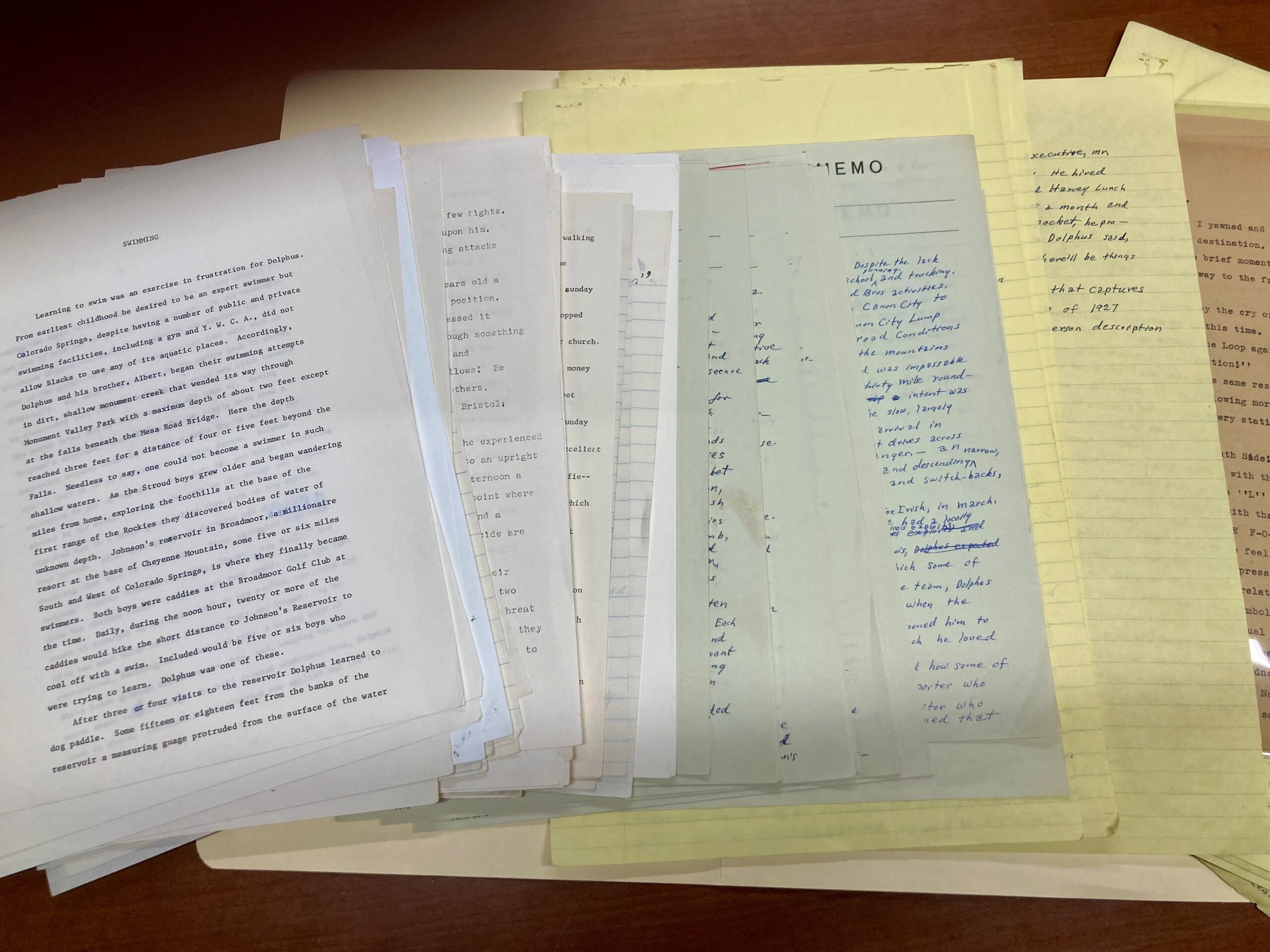
Stroud Papers, Ms 0429, Box 1, Folder 1.
We are especially extra super wildly excited about Dolphus Stroud’s unpublished memoir in the Papers. It’s riveting, witty, and devastating. It covers his childhood in Colorado Springs, a stint as a busboy at the Fred Harvey Lunch Room in Chicago’s Union Station, a run (so to speak) at the Olympics, and a Colorado College education. You can read a transcription of it here.
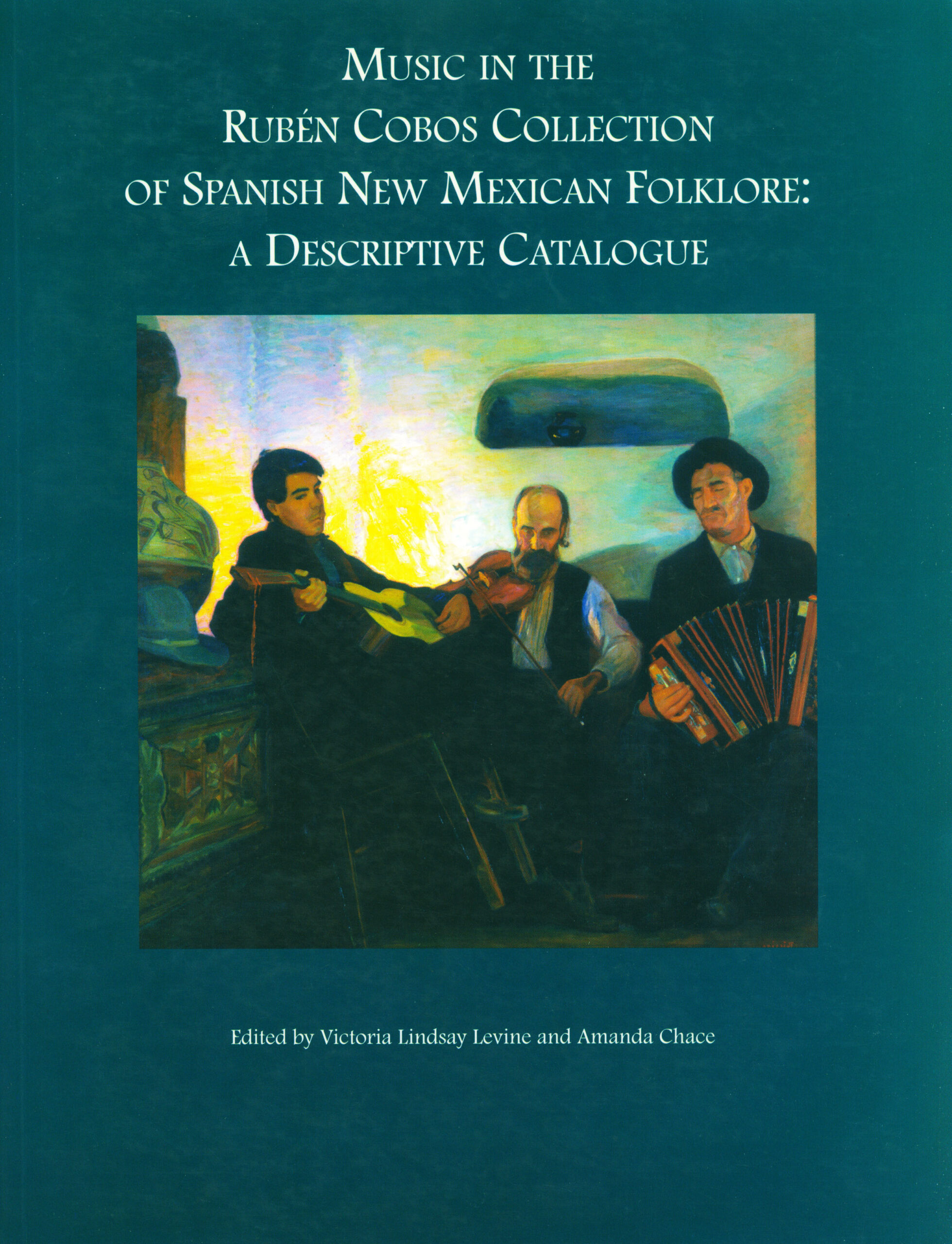
In 1974, Rubén Cobos donated an amazing sound archive to Colorado College, and as of this week, after many years of effort from many people and institutions, the music is all online in digitalCC! So, if you’d like to hear “El tecolote,” a song about an owl who cannot attend a dance because she has no rouge, and cannot attend mass because she has no shirt, listen to the 12th recording here. Or perhaps you’re interested in “Don Gato,” in which Mr. Cat falls off a roof? Well, the Cobos Collection has six different versions you can compare.
More information, including a list of all performers, here.
Lin-Manuel Miranda as Hamilton with Anthony Ramos as Laurens in the Broadway musical
Please note: we are updating this post as we learn more. Most recent update: March 11, 2025.
Assistant Curator Amy Brooks and Curator Jessy Randall write:
A mystery is unfolding in Special Collections. We recently discovered we have a letter, signed “Alex Hamilton,” dated December 23, 1778. Is it an original? A draft? A copy? If it’s a copy, is it contemporary with Hamilton, or later? Could it be a forgery?
Here’s the story:
On Monday, February 17, Anna Malczyk of the University of Oxford sent a research request, and we pulled out the Josiah Holmes Papers, a modest archival box of materials, gifted to Special Collections in 1963. Malczyk had discovered (through the library catalog) that the papers included two letters written by Alexander Hamilton’s close friend John Laurens. When we looked in the folder, we found the Laurens letters and — much to our surprise — an uncataloged 3-page manuscript letter signed “Alex Hamilton” and “Evan Edwards.”
Here’s a PDF of all three letters in Ms 17, Box 1, Folder 1:
The first thing we did was read the Hamilton/Evans letter. It’s a narrative describing a duel fought on December 23, 1778, between John Laurens and Major General Charles Lee. Yes, THAT Laurens and Lee, from the musical!
The second thing we did was look up whether Alexander Hamilton ever signed himself just “Alex.” Yes, he did, and we learned that the Library of Congress (LOC) has a very similar letter to ours, dated one day later, December 24, 1778, also signed “Alex Hamilton.”
Colorado College, Holmes Papers, Ms 17, Box 1, Folder 1Library of Congress, Hamilton Papers, Mss 24612, Box 23, Reel 20
A transcription of the LOC letter is available from the National Archives. Our letter and the LOC letter have almost the same text. Both look like drafts, with cross-outs and changes. Some examples: our three-page letter has an asterisk at the bottom of page 2 after “He said every man,” leading to a note on page 3, whereas the five-page LOC letter has the note incorporated into the text on page 4; our letter has “sentiment” in one place where LOC has “opinion”; and there are several differences in abbreviations of “Colonel” and “General.”
To our eyes, the handwriting of our letter and that of the LOC version seem similar, but Malczyk, who knows a lot more about it, does not believe Hamilton wrote the letter at CC. She points out Hamilton’s use of the long “s” in the word “Wednesday” in the LOC version:
LOC on left, CC on right
In another place, though, the word “politeness” in both the LOC and CC copies have the long “s”:
LOC on left, CC on right
Malczyk says the letter at CC’s “handwriting style, paper and ink are not typical of the 18th century.” Papermaker Jillian Sico, however, visited Special Collections and took a close, in-person look at the paper, and believes it could be from 1780.
On the advice of CC history professor Amy Kohout, we contacted Hamilton scholar Joanne Freeman to ask for her thoughts. She responded: “Given the importance of the two seconds in a duel coming up with a mutually agreeable account of the duel after it happened, I think that your copy — dated the day of the duel — might be a first draft (with that asterisked addition) which was then put in final form in the copy at the Library of Congress. It was relatively common for the two seconds to jointly compose a final account of a duel — which was important because it would serve as the final account of ‘honor being satisfied.’ ” So we now postulate that our December 23 letter could be a first draft of the LOC’s December 24 letter, perhaps in Evans’s hand rather than Hamilton’s. (We haven’t been able to find an example of Evans’s handwriting.)
Now let’s go back to those Laurens letters, dated December 3 and 7, in which Laurens challenges Lee. Malczyk summarized the context for us:
“Major General Charles Lee was court-martialled after the battle of Monmouth in 1778 on account of his supposedly cowardly, disrespectful and insubordinate conduct [toward General George Washington]. Col Laurens was a witness against him at the trial, and when Lee subsequently continued to speak negatively of Washington, Laurens challenged him to a duel to defend Washington’s honour – quite an unusual thing to do, as generally men fought their own duels. Regardless, Laurens and Lee arranged the encounter; we see from the letters here that an original date was set, but was then postponed on account of unavoidable military business. Cols Hamilton and Edwards served respectively as their seconds, and the duel was fought on 23 December 1778. Both men fired, Laurens lightly wounded Lee, and the affair was put to an end. Typically of the time – to indemnify against future disputes – the seconds wrote an account of what happened and both signed it.”
Malczyk does not believe the letter we have at CC is in Laurens’s hand. “Perhaps one needs to have been staring at his handwriting for years, but the differences jump out at me right away,” she says.
True Laurens signature (provided by Malczyk) on left, CC letter signature on right
(To add to the uncertainty, it’s widely known that Laurens sometimes wrote with his left hand and sometimes with his right. See this tumblr for examples. But neither the left nor right handwriting matches what we have.)
Malczyk points out, too, that letters written a few days apart would not both be on a single sheet of paper. When we asked if they could be drafts, she said this would be unlikely, as people don’t usually sign their drafts — and that in general, Laurens wasn’t known for making or keeping drafts. Papermaker Jillian Sico took a close-up look at this letter, too, and recognized the paper as bleached, a 19th century process. So this letter is likely a copy made decades after the original. There’s a partly-missing blind stamp at the top of the Laurens letter that looks like this when we unfold the sheet:
We think it says “ine” at the top right and “ote” at the bottom right. Likely an ownership stamp, but whose? Tantalizingly, it is only partly removed, not completely — why?
All that said, Malczyk thinks “the content itself, the ‘voice’ of the letters, and the structure certainly do fit Laurens, so my suspicion is that somebody made this copy directly from the original, preserving the content and layout. This is especially important as I’m not sure the location of the original is known, or if it even exists anymore – so this remains a valuable historical record.” Indeed, as far as we can tell, the original Laurens letter is nowhere to be found, so our copy may be the only one extant. Until recently, Dianne Durante’s incredibly thorough blog post on the Lee-Laurens duel stated “John Laurens issued a challenge to Lee (we don’t have it).” Her post now additionally directs readers to the post you are reading right now.
Multiple print sources quote Laurens’s challenge to Lee. The earliest we’ve found is Memoirs of the Life of the Late Charles Lee, Esq. Second in Command in the Service of the United States of America During the Revolution, published 1792. In it, Lee quotes, or paraphrases, the letter he received from Laurens (Lee uses quotation marks but has changed the point of view to third person): “…that in contempt of decency and truth, he [Lee] had publicly abused General Washington, in the grossest terms … the relation in which he [Laurens] stood to him [Washington], forbade him to pass such conduct unnoticed; he therefore demanded the satisfaction he was entitled to, and desired, that as soon as General Lee should think himself at liberty, he would appoint time and place, and name his weapons” (p. 47). Versions of this phrasing appear in multiple print sources for two centuries, either without citation or citing previous print sources. The only citation we have found to an actual autograph letter is in Gregory D. Massey’s John Laurens and the American Revolution, published in 2000. Massey cites … wait for it … the copy here at Colorado College. (See chapter 6, note 59, page 264.)
We have lingering questions. How did the Hamilton/Evans and Laurens letters end up with the Holmes family in the first place? Was the family connected to these Revolutionary War personages? We’ve looked at biographies of Hamilton, Evans, Laurens, Lee, and Washington, and cannot find a Holmes connection. And yet as far as we can tell, the Holmes family weren’t autograph collectors – all other materials in the collection are related to the family, including an 1832 letter from John Quincy Adams (1767-1848) to Josiah Holmes (1790-1860). So, if any of the letters are forgeries, deliberately intended to trick a buyer, who benefitted?
Whatever they are, the letters are a fine recounting of a dramatic (and thankfully non-lethal) duel. Maybe a historian and/or Hamilton super-fan will shed additional light on our mystery in the future.
We are very happy to announce a wonderful gift received in December of 2024: a first edition of Robert Burton’s The Anatomy of Melancholy, 1621.
How did we get so lucky? In 2017, Warren Zanes visited Colorado College to promote his book on Tom Petty. CC prof Steve Hayward had a great conversation with him on Critical Karaoke, and they stayed in touch. In 2024, the year of his Bruce Springsteen book, Zanes came back to CC to teach a class in music journalism. Soon after that, he inherited a copy of the very rare and valuable 1621 Anatomy of Melancholy, and reached out to Steve, a former bookdealer, for advice. Steve in turn talked to Special Collections, and we (well, I, Jessy Randall) introduced Zanes to bookdealer Glenn Horowitz (my former employer) for an appraisal. Happily for CC, Zanes decided to donate the book to us!
What is The Anatomy of Melancholy, and why is it important? In a 2001 article in The Guardian, Nicholas Lezard describes it as “the book to end all books … a 17th-century compendium of human thought that is funnier than it sounds.” Author Robert Burton (“Democritus Junior” on the title page) was a scholar and librarian at Oxford University. According to Lezard, his goal with the book was no less than “to explain and account for all human emotion and thought.” It grew to 500,000 words by its sixth and final edition.
This particular copy, before it came to the Zanes family, was the property of Amos Copleston, born in 1638 in Cornwall, England. He wrote an ownership inscription, “Amos Coplestone his book 1690,” and then wrote it again twice more, “Amos Coplestone his book,” for a total of three times, twice at the front and once at the back. The Zanes family left no ownership marks. We have now placed a small Colorado College bookplate on the front pastedown.
CC prof Jared Richman has already come by the library to admire the new acquisition. He plans to bring his Book History & Materiality students to Special Collections for a closer look. And that’s what it’s all about at CC, staving off melancholy by teaching and learning and reading and writing and thinking.
Some days, in the job I have had the good fortune to hold for 21 years, I get to do something quite special. Today, I got to catalog an amazing travel diary, that of Emma Phipps, a young woman who made the arduous journey from Massachusetts to Colorado Springs in 1880. In the 26-page handwritten diary, and in letters home to her sister Ella and to their mother, she vividly and eloquently – sometimes disparagingly, but always with a sense of wonder – describes the raw and rugged terrain: ferocious wind and ubiquitous dust, the dearth of rain, towering silver mountains and crackling-brown prairies and plains, cacti and flora, wild rivers they forded; the cows and horses and burros and prairie dogs. She paints a picture of burgeoning towns peopled with railroad men, cattle ranchers, cowboys, and miners; also sometimes, wealthy, elegantly attired beneficiaries of the then-booming mining and railroad industries. She writes of places now well-known: Denver, Manitou Springs, Canon City, Pueblo, Ute Pass; the San Juans and Pikes Peak. Hers is a firsthand account of the rough-and-tumble early days of the Old West. (No mention of the land’s original and rightful inhabitants, a story embedded in the gaps of this one.)
The author, with her brother Martin, came West seeking the promise of health benefits for his unnamed illness. Emma alludes to her brother’s ill-health and his desire to “camp out” and find refuge in Nature. One can only speculate about what ailed Martin (two letters written by him are in this archive), but it would be wonderful to have a CC student or any researcher illuminate the gaps in this post-Civil War tale.
On days like this, voices reach me from the past and say, “We were here.” It reminds me of our transient stay on this planet, and the importance of respecting it and living our best lives on it. Also, of the importance of writing down our stories, preferably on paper, dated and signed.
In August of 2024, just in time to share the book with Carol Neel’s First Year Foundations class “The Animal-Human Boundary” (also known informally, by us at least, as “beasts and monsters”), Special Collections purchased a 1678 book on unicorns:
Bartholin, Thomas (1616-1680). De Unicornu Observationes Novae. Amsterdam: H. Wetstenius, 1678.
This is the first illustrated edition (a version without pictures was published in 1645), so even if, like most people in 1678 (and today), you don’t read Latin, you can still enjoy this book. We thank the seller, Paul M. Dowling of Liber Antiqus, for providing these images.
The Edward Worth Library in Dublin, Ireland, provides a useful overview of unicorn theory here, and Google Books has digitized versions both the 1645 and 1678 editions.
Dorothy Mierow (1920-2000) was the daughter of CC president Charles Mierow. She served as Curator of the CC Museum from 1956 to 1962, and then was part of the first Peace Corps group to travel to Nepal. She is the author of several books, including Thirty Years in Pokhara, This Beautiful Nepal, and Himalayan Birds and Flowers. We have a collection of her papers, Ms 383.
Just look at these pages from her 1973 sketchbook. Just look at them!